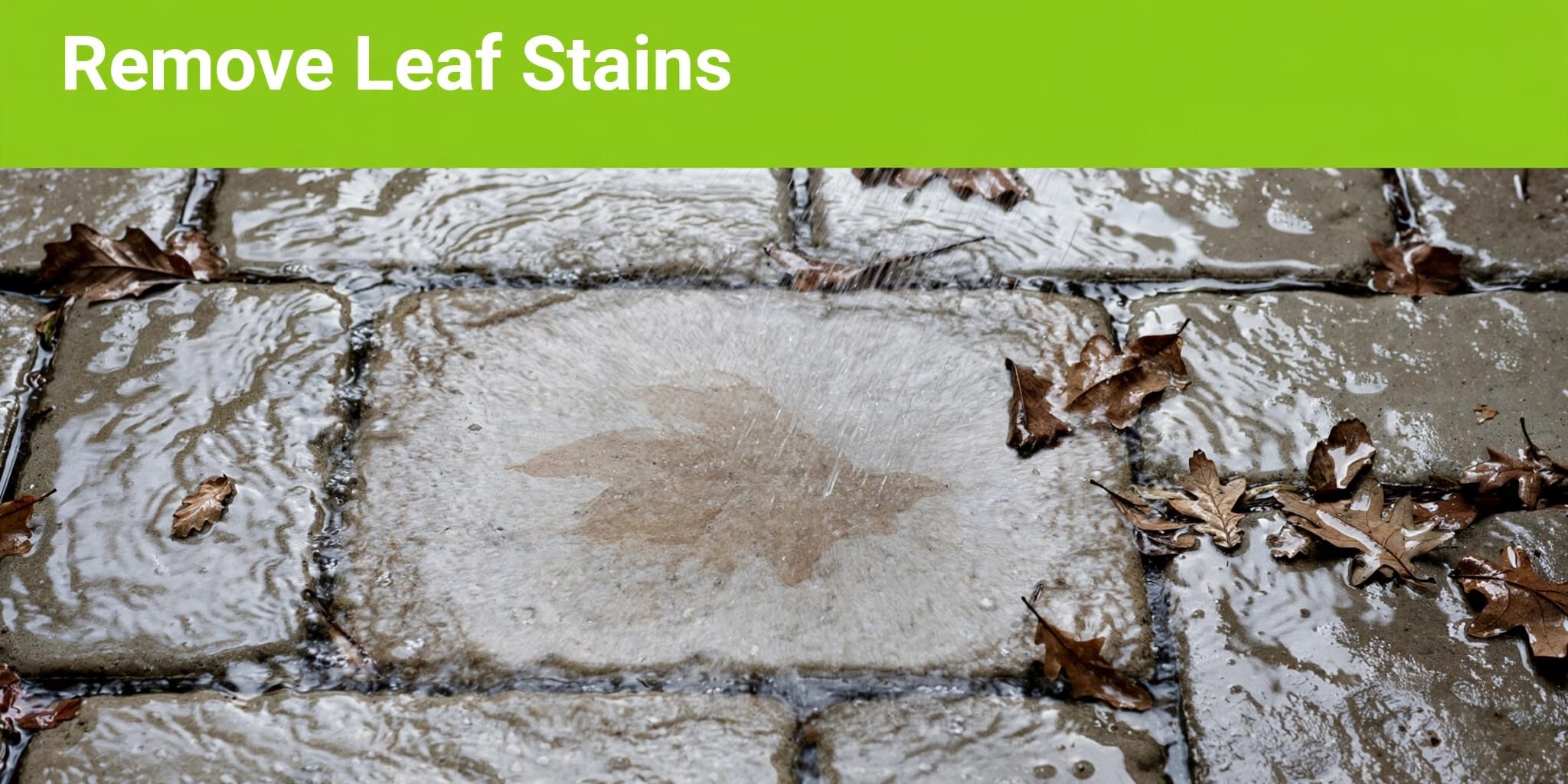
Leaf stains on pavers often respond to gentle washing followed by a compatible organic-stain cleaner. We recommend starting with the mildest suitable treatment, then inspecting the dry surface before using anything stronger.
Wet leaves can leave brown marks below the surface, so harder scrubbing isn’t always the answer. The right method depends on your paver material, the existing sealer, and how long the leaves remained.
Start by identifying the stain and the surface you’re cleaning.
Identify the Stain Before Choosing a Cleaner
How Leaves Create Brown Marks
Decaying leaves release tannins that bind to porous concrete, clay, and natural stone. Rain, irrigation, and standing moisture carry these compounds onto the paving.
When leaf sap remains for days or weeks, it can penetrate the pores. A fresh surface mark may wash away easily, while older tannin stains often need a targeted cleaner.
Leaf-shaped outlines and brown patches beneath accumulated debris suggest tannin staining. Remove the leaves first so you can see the full affected area. Photographing the dry surface also gives you a useful comparison after treatment.
Other Marks Need Different Treatment
Orange spots around metal furniture, fertilizer granules, or irrigation spray may be rust rather than leaf stains. Green or slippery black patches can indicate organic growth.
Color alone doesn’t establish the cause. Consider where the mark appeared and what was resting on the surface. Our guidance on removing rust from brick pavers covers those separate treatments.
A pale, dull patch on natural stone may indicate an etch from surface damage, rather than remaining discoloration. Don’t keep increasing cleaner strength when the surface texture or sheen has changed.
Match the Treatment to the Paver Material
Brick pavers aren’t always made from clay. Many brick-shaped units are concrete pavers, and natural stone needs separate care. Identify the material and any sealer before using chemicals.
The main differences are straightforward.
| Paver material | Suitable starting point | Main precaution |
|---|---|---|
| Concrete | Mild, pH-neutral soap and a nylon brush | Strong chemicals can alter color or damage coatings. |
| Clay brick | Gentle washing, then a compatible masonry cleaner | Avoid abrasive scrubbing and uncontrolled pressure. |
| Travertine, marble, or limestone | A cleaner approved for that stone | Some cleaners can etch the surface. |
A cleaner suitable for one surface may damage another. Compatibility can also vary between sealed and unsealed versions of the same material.
Tannins in leaf sap can etch stone that is sensitive to acidic substances if they remain on the surface. The Natural Stone Institute’s natural stone cleaning guidance recommends mild cleaners for calcium-carbonate materials.
We don’t recommend muriatic acid or straight vinegar for routine leaf-stain removal on concrete. Both can etch, discolor, or damage the surface. A professional should handle muriatic acid only when a separate condition requires it.
Test any cleaner on an inconspicuous area. Let the test dry completely, then compare its color, sheen, and texture with untreated paving. Stop if the finish changes.
Start With Gentle Washing
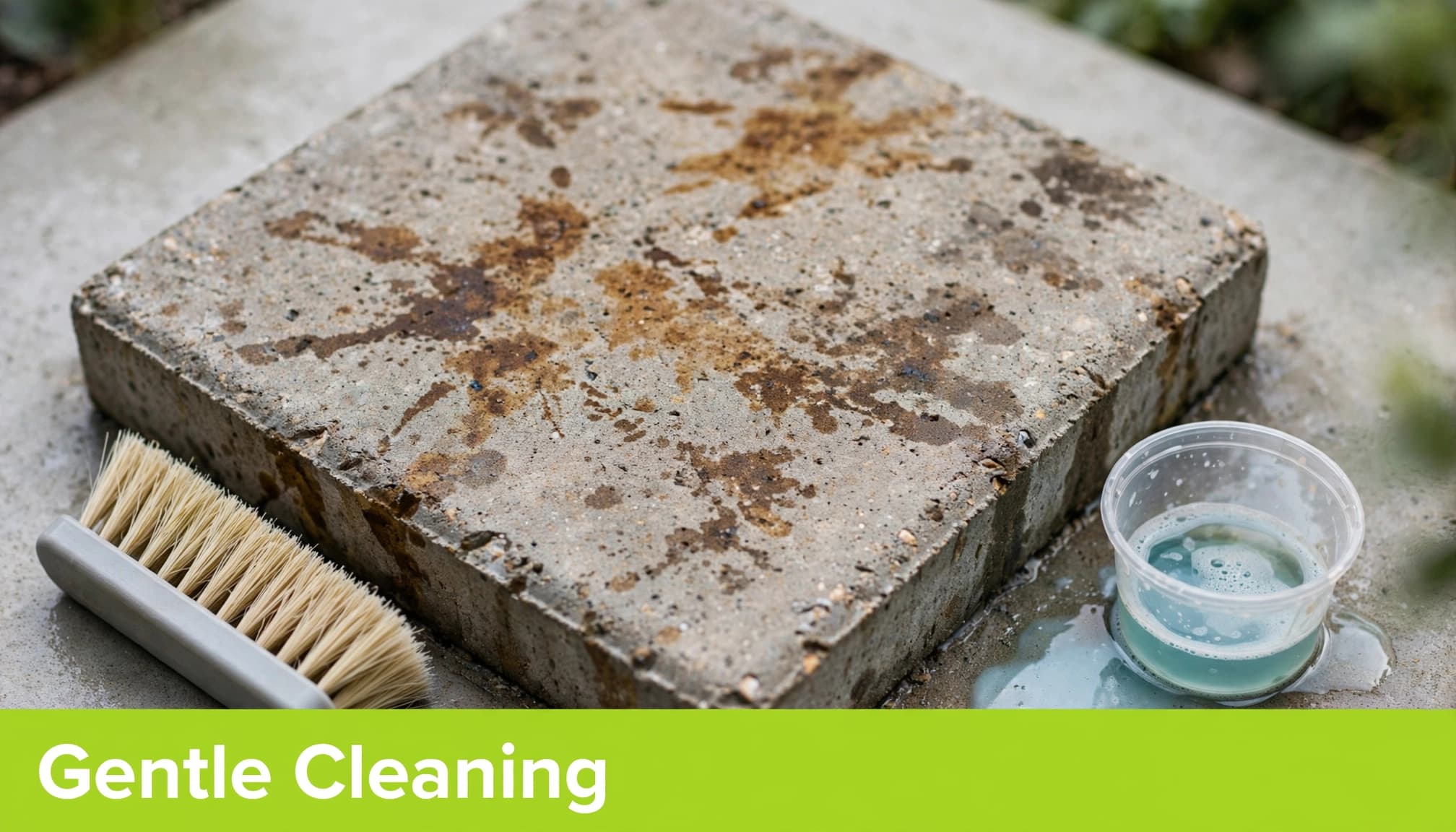
Gentle washing removes loose residue and surrounding dirt. It also helps you judge whether the remaining mark needs a stain-specific product.
Use this sequence:
- Move furniture and planters, then sweep or blow away leaves without directing a strong air stream into joints.
- Lightly dampen the paver faces if the cleaner’s directions require it. Don’t flood the joints.
- Apply a small amount of diluted, mild, acid-free soap if it’s compatible with the paver surface and finish.
- Scrub with a stiff nylon bristle brush, using lighter strokes near joints.
- Rinse with a garden hose and a broad, gentle spray before the solution dries.
Dawn dishwashing liquid may loosen ordinary surface grime, but it isn’t a dependable treatment for tannins absorbed into paving. Use it only when compatible with the surface and finish.
Work in small sections during cooler conditions. A hot patio in direct sun can dry cleaner before you finish scrubbing and rinsing.
Avoid wire brushes, which can scratch surfaces or leave metal particles behind. Stop rinsing if joint sand begins moving. Our safe brick paver cleaning methods explain how to protect the joints during routine washing.
Treat Set-In Marks With a Compatible Cleaner
Oxygen-Based Organic-Stain Cleaners
To remove stains left after gentle washing, use an alkaline cleaner in oxygen-based powder form to break down organic residue. Choose a product approved for your paver material and existing finish, especially for tannin stains that remain after washing.
Some products allow a paste treatment for localized stains. Use that method only when the directions permit it. Follow the stated mixing instructions and dwell time, then scrub and rinse as directed.
Don’t extend the dwell time because the stain looks stubborn. Keeping the product on longer can affect the finish without improving removal. Prevent it from drying during treatment when the directions require the surface to remain wet.
Allow the area to dry before deciding whether another application is needed.
Non-Acidic Degreasers
A non-acidic degreaser may help when leaf residue is mixed with greasy dirt, but it isn’t automatically right for tannin stains.
ZEP Purple Degreaser is a strong alkaline product, not a mild soap. Its non-acidic formulation doesn’t make it suitable for every stone, coating, or nearby material.
We recommend choosing by surface compatibility, rather than chemical strength or product name. Use it only when its approved applications match your paving and finish.
Protect surrounding plants and sensitive surfaces. Plan where rinse water will go before application, and keep chemical residue out of pools and storm drains. Don’t wash contaminated runoff across another part of the patio.
Use Bleach and Pressure Cleaning With Care
Bleach Is a Conditional Option
Bleach can lighten some organic staining on compatible concrete surfaces. It can also change concrete color or affect an existing coating, so it isn’t our first treatment.
Use it only when the product directions allow the application. Test a hidden area and inspect it after drying before treating visible leaf stains on pavers. Wear the required gloves and eye protection, and keep children and pets away.
Use a nylon-bristle brush for controlled scrubbing, then rinse as directed with a garden hose. Protect nearby plants and surfaces from splashes.
The CDC’s bleach safety guidance warns against mixing bleach with other cleaners or disinfectants. Rinse away earlier products before changing treatments.
We don’t recommend substituting Pool Shock for a labeled paving cleaner. Pool-treatment products vary in chemistry and concentration and aren’t interchangeable with household products. Don’t use muriatic acid as a shortcut for stubborn marks.
Stronger Pressure Isn’t a Reliable Next Step
A stronger pressure washer may remove surface residue, but it can also scar pavers, create stripes, and wash out joint sand. Water pressure alone may leave embedded tannins behind.
Brick pressure cleaning should use a pressure washer at the lowest effective pressure, with a moving spray and a method suited to the finish. Avoid directing water into joints. The Brick Industry Association’s brickwork cleaning guidance provides material-specific precautions.
Professional hot-water or steam cleaning may help with selected stubborn residues. Test heat compatibility in a controlled area, especially on sealed paving.
After using a pressure washer, inspect the joints and edges. Missing sand and loose units need attention before regular use resumes.
Prevent Leaf Tannin Stains Before They Set
Remove Debris Before It Stays Wet
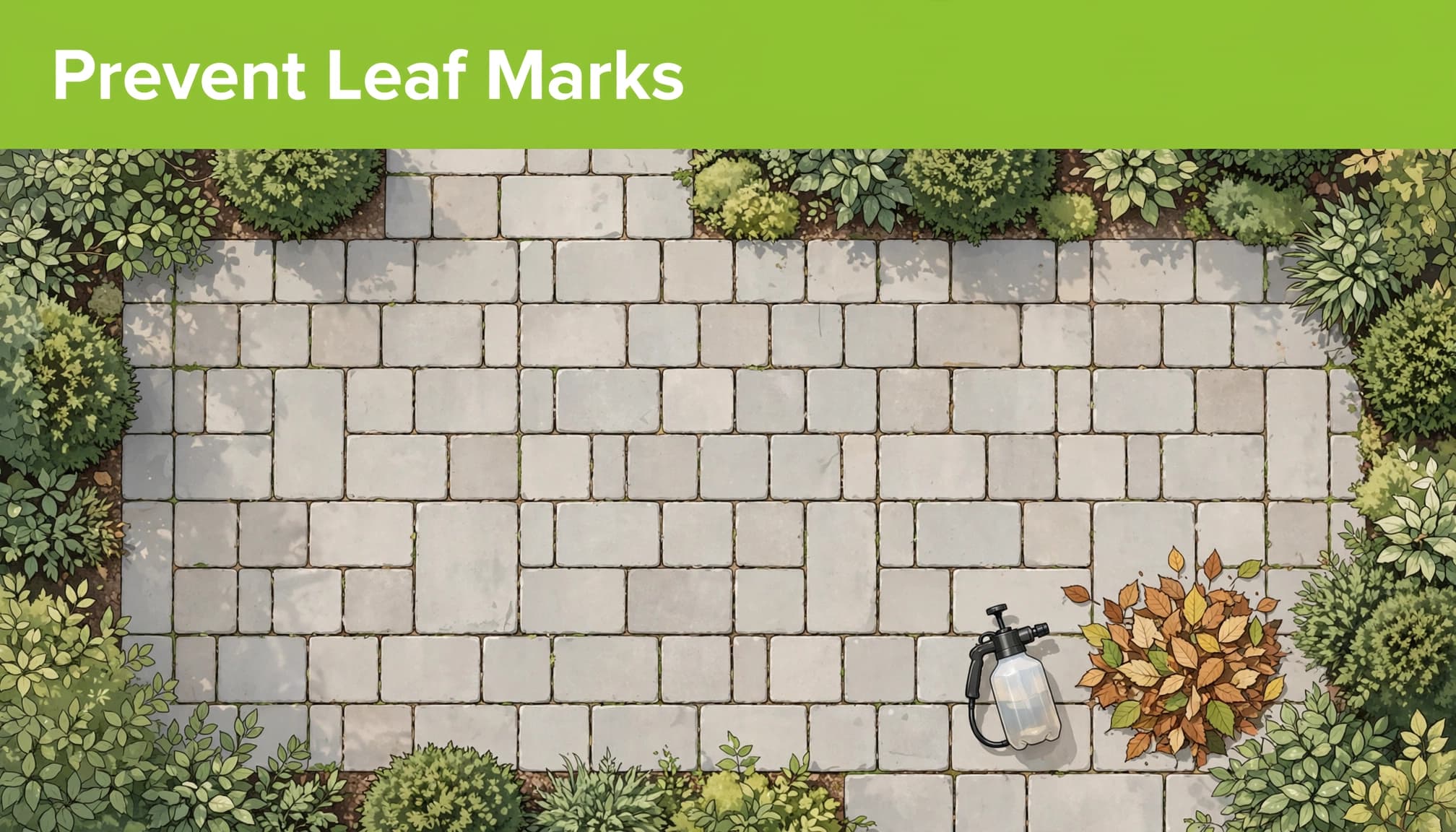
Sweep or blow fallen leaves, berries, and seed pods off paving promptly. During heavy leaf fall, inspect the area daily and remove debris before rain or irrigation wets it.
Pay attention beneath furniture, beside planters, and along shaded edges. These areas can hold damp debris longer than open patio sections.
Clear nearby drains and correct repeated wetting where possible. On brick driveways, remove leaves trapped along parked vehicles and edges. Commercial entrances also need regular attention where debris collects around landscaping.
Our Florida paver cleaning schedule covers how shade, rainfall, irrigation, and traffic affect maintenance timing.
Seal Only After Cleaning and Drying
A compatible impregnating or penetrating sealer repels water-based sap and reduces its entry into pores. It can make future staining easier to remove, but it doesn’t make paving stain-proof.
Existing discoloration can remain visible through an acrylic sealer on concrete. Applying another coat won’t remove it.
Address stains first, then allow the surface to meet the sealer’s preparation and drying requirements. Humidity and shade can extend drying time. Our brick paver sealing options explain the differences between finishes.
If a stain or cloudy finish returns soon after cleaning, arrange an inspection instead of adding another coat. The cause may involve trapped moisture, coating damage, or continued exposure.
Key Takeaways
- Identify the stain, paving material, and existing finish before selecting a treatment.
- Start with gentle washing, then use a compatible organic-stain cleaner only where needed.
- Test chemicals on a hidden area and inspect the dry result before treating a larger section.
- Protect joint sand, manage runoff, and remove wet leaves promptly to reduce repeat staining.
Frequently Asked Questions
Will the Brown Marks Fade Naturally?
UV light can gradually lighten tannin discoloration, but fading is slow and unpredictable. Some marks may wash away over time, though there’s no reliable timetable.
Light surface discoloration on exposed paving may improve without chemical treatment. Older marks on shaded, porous surfaces can remain. Remove the debris first so fresh tannins don’t add to the discoloration.
Why Does a Mark Remain After Cleaning?
The discoloration may be below the surface, or natural stone may have been etched by acidic leaf sap. An etched patch often looks dull or lighter after surrounding dirt is removed.
The Natural Stone Institute’s stain and etch guidance distinguishes these conditions. Repeated stain treatment won’t restore an etched finish; professional stone restoration may be needed.
Should Pavers Be Washed Before a Cleaning Appointment?
A light sweep is helpful, but leave stubborn marks visible. Avoid adding another chemical before the visit.
Tell the crew which cleaners you’ve used and what you know about the sealer. Point out returning stains, cloudy areas, missing joint sand, and standing water. These details help establish the appropriate cleaning and restoration plan.
Protect the Surface While Removing the Stain
Removing leaf stains on pavers requires controlled treatment, not unnecessary pressure or stronger chemicals. Start gently, match the cleaner to the surface, and assess each dry result before proceeding.
We provide cleaning, sealing, and restoration for Southwest Florida paving. Contact Us for a FREE Quote when persistent stains or an uncertain finish need assessment.
Prompt leaf removal and compatible protection reduce the need for repeated treatment.