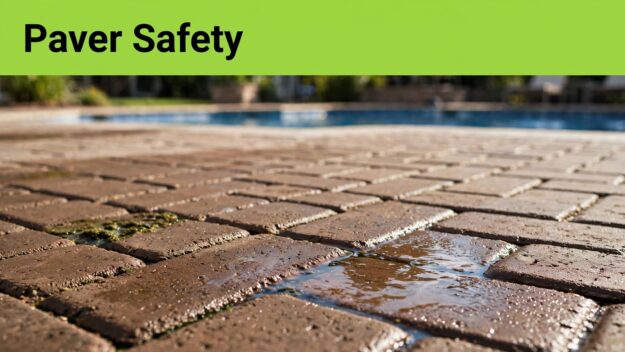
pool chemicals brick pavers

Can Pool Chemicals Damage Brick Pavers? Signs and Care

Yes, pool chemicals can damage brick pavers or their finish when products are mishandled or unsuitable cleaners are used. However, ordinary poolside exposure doesn’t mean a pool patio needs replacement, and a visible stain doesn’t automatically mean permanent damage. We recommend identifying the material and existing finish before treating a mark. Starting with gentle cleaning…

A lifted patio paver reveals ants and sand tunnels.

Ants Under Pavers: Why They Nest and How to Stop Them

Ants under pavers find shelter, warmth, and loose sand that they can excavate into nesting chambers. Removing them usually requires treatment first, followed by attention to damaged joints or shifting pavement. Small sand piles don’t automatically mean your patio needs rebuilding. However, recurring holes, rocking stones, and low spots deserve closer attention because water or…

Gray patio pavers with pollen, cleaning tools, and a hose beneath a green headline strip.

How to Clean Pollen Off Patio Pavers

To clean pollen patio pavers effectively, collect the loose powder first, then wash remaining residue with mild soap and a gentle hose rinse. We recommend removing pollen before adding water, because hosing a heavily coated patio can leave yellow puddles that dry into dust. You usually don’t need specialized cleaners or pressure washing. Start with…

White sealer haze and peeling on patio pavers beside clean stone.

Paver Sealer Haze: Why It Turns White or Peels

A white paver sealer haze can result from poor drying, application problems, or lost adhesion. White mineral deposits and polymeric sand residue can look similar, so identify the cause before treating the surface. We recommend stopping any planned recoating until the problem is clear. Another layer won’t repair a failing finish and can complicate restoration.…

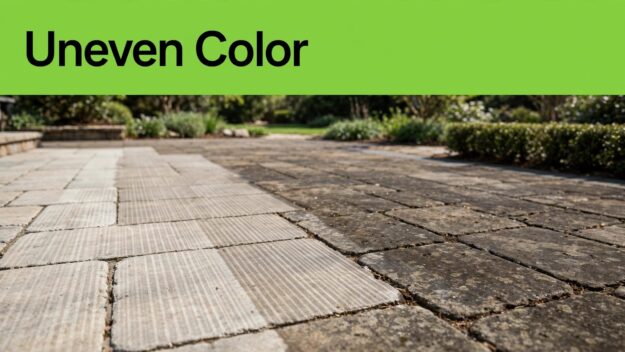
Dry patio pavers show subtle stripes beneath a lime-green “Uneven Color” banner.

Uneven Paver Color After Pressure Cleaning: Causes

Pressure cleaning can leave outdoor pavers looking uneven because different areas receive different cleaning intensity, retain moisture, or reveal natural color differences. Aggressive washing can also mark the surface, so patchiness alone doesn’t identify the cause. We recommend letting the paving dry completely before deciding whether it needs more cleaning or restoration. Another pressure-washing pass…