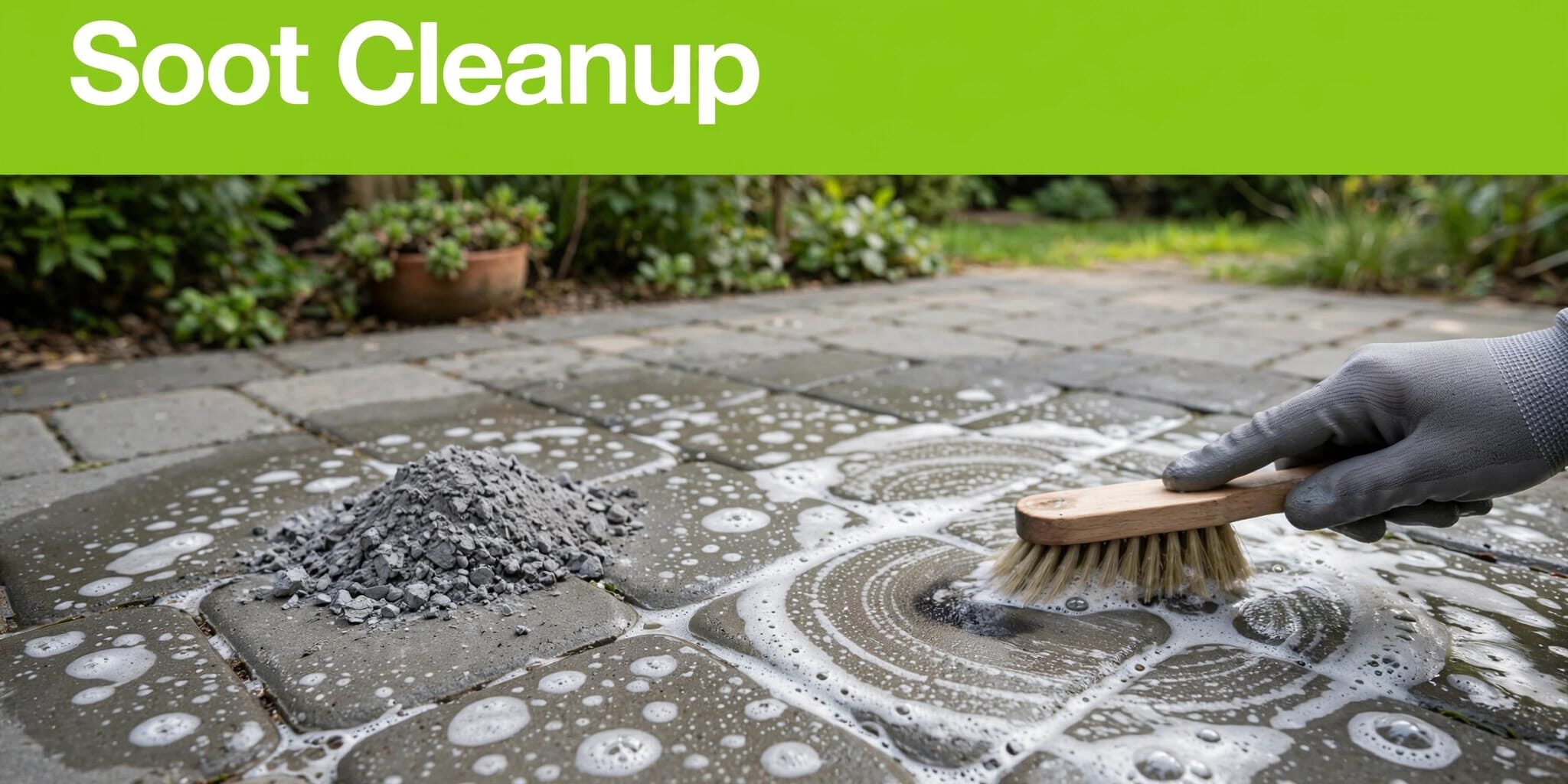
To remove soot from a paver patio, collect cold ash, wash with compatible mild soap, and rinse gently. Start with the least aggressive treatment because strong chemicals and concentrated water pressure can damage the surface or joints.
A black mark may be loose soot, oily residue, or damage that cleaning can’t repair. Identify the paving material and existing finish before choosing a treatment.
Key Takeaways
- Remove ash only after the fire pit and debris are completely cold.
- Test the selected product on one inconspicuous paver, then let it dry before comparing color and sheen.
- Start with mild, acid-free soap and a nylon brush rather than acid, abrasives, or concentrated pressure.
- Inspect dry joints after cleaning and stop if sand washes away or the surface changes.
Identify the Surface and the Black Mark
Concrete, Clay, and Coated Pavers Need Different Care
The term “brick pavers” can mean fired-clay brick or brick-shaped concrete, and each paver surface needs care suited to its material. Concrete contains cement-based components that acids can attack. Natural-stone coping needs treatment compatible with its specific material and finish, so acid-free guidance for concrete shouldn’t automatically be applied to stone.
An existing sealer also affects cleaner selection. A product suitable for uncoated paving may affect a coating. Test a hidden spot and let it dry completely before comparing its appearance.
PROSOCO’s patio-paver cleaning guidance distinguishes ordinary soil from stains that require a cleaner matched to the surface.
Loose Soot Differs From Surface Damage
Soot and ash can sit on the surface, while oily combustion residue may leave a more persistent dark patch. Heat can also leave damaged areas that won’t respond to washing.
Gently lifting loose particles helps assess what remains, but appearance alone doesn’t establish how deeply a stain has penetrated. Note cracks, pitting, or missing surface material before cleaning. If the paver is physically damaged, stronger stain treatment won’t restore it.
Clean Soot From Patio Pavers Step by Step
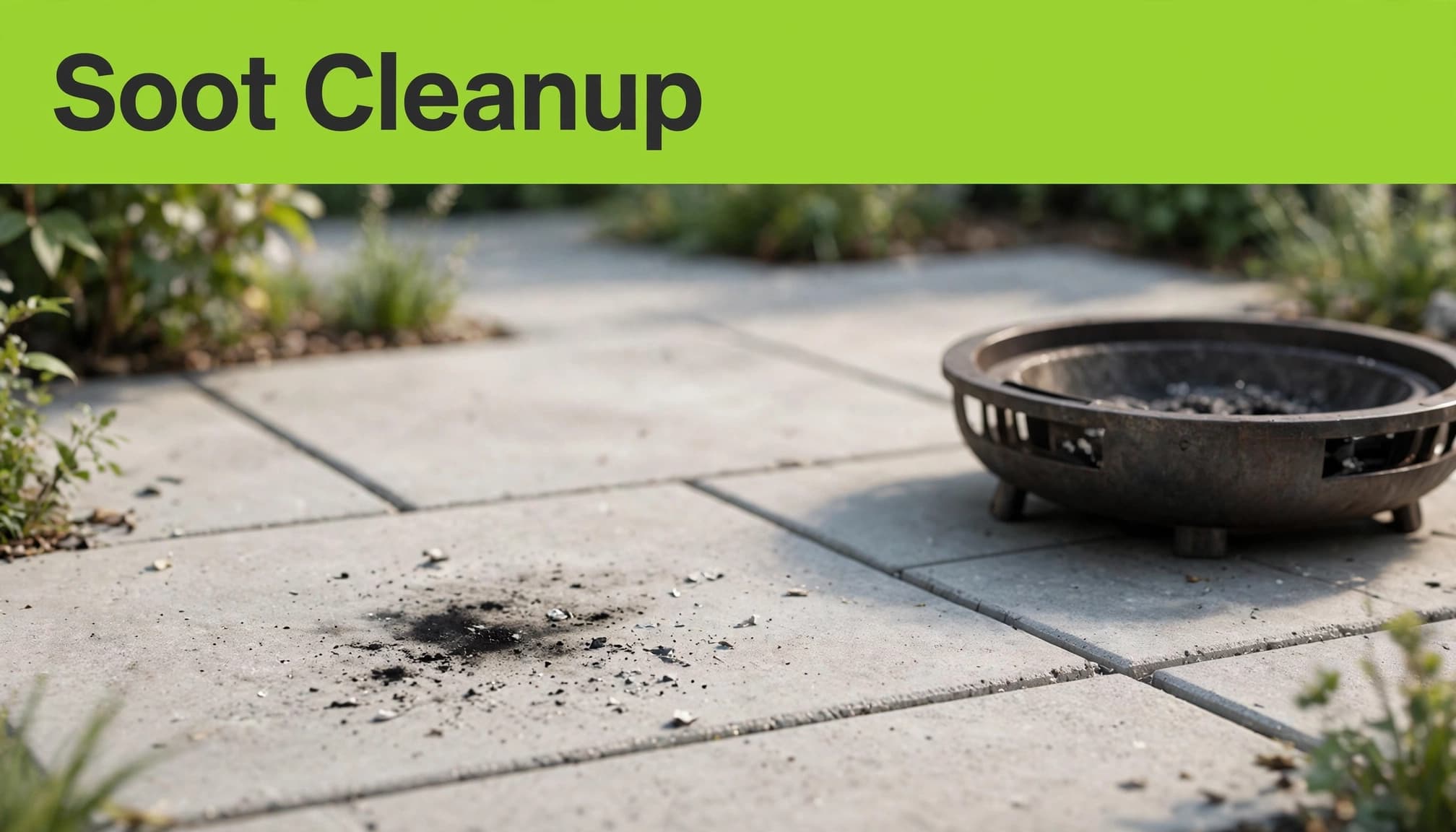
Work when the pavers are cool, not hot from direct sun. To clean patio pavers, wear eye protection, closed-toe shoes, and gloves required by the product.
- Clear the area after everything cools. Move furniture and planters. Carefully collect cold ash with a dustpan without grinding it into the paving. Don’t blow soot across the patio or toward doors and windows.
- Remove surrounding debris. Sweep leaves and grit, pull small weeds carefully, and brush away moss. Note loose pavers and depleted joints before adding water.
- Test one inconspicuous stone. Apply the selected product at its stated dilution, scrub gently, and wash away with water. Let the stone dry completely before judging its color, sheen, and texture.
- Wash a small section. Lightly wet the pavers with a garden hose and nozzle if the product directions call for it. Apply mild soap in warm water, then scrub with a scrub brush. Choose a stiff bristle brush with nylon or fiber bristles.
- Rinse before the product dries. Use a gentle shower or broad spray over the paver faces. Collect contaminated runoff where practical and keep it out of storm drains, pools, and planting beds.
PROSOCO cautions that products need dwell time, but they must never dry on the surface. Dried residue can resettle, cause streaks, and require more washing with water.
Treat only as much paving as you can scrub and rinse while the product remains wet.
Don’t extend contact time because the mark looks stubborn. After the area dries, decide whether it needs another permitted treatment.
Choose Cleaners in a Gentle-to-Stronger Order
Start With Soap, Then Use a Compatible Specialty Cleaner
Mild dish or hand soap in warm water is the first option for light dirt and some greasy surface residue. This soap and water approach is gentle, but check the paver and sealer instructions first.
Use this order rather than moving directly to a harsh treatment.
| Priority | Cleaner | Dilution | Appropriate use |
|---|---|---|---|
| First | Mild, acid-free soap | Use a small amount as directed | Light soot and ordinary surface grime |
| Next | Compatible masonry cleaner or degreaser | Follow the product’s stated ratio | Residue left after gentle washing |
| Separate treatment | Diluted bleach | 10 parts water to 1 part bleach, only where permitted | Certain organic stains, not a proven soot treatment |
Brand names alone don’t establish compatibility. Simple Green products have different formulations, and “chemical-free” isn’t an accurate description.
PROSOCO’s hardscape cleaning products illustrate why product choice depends on both the stain and the paving material.
Keep Bleach Separate From Soot Treatment
Nicolock lists a 10:1 water-to-bleach mixture for beverage, leaf, wood-rot, and tobacco stains. That means 10 cups of water to 1 cup of bleach. It isn’t an established recipe for soot or heat damage.
Bleach strengths vary, so that ratio doesn’t establish suitability for your patio. Use it only where the surface and product directions permit it. Never mix bleach with soap, ammonia, acids, or other cleaners.
For brown marks beneath trees, our leaf-stain removal guidance addresses a different cleaning problem.
Avoid Acid and Abrasive Burn-Mark Remedies
Online suggestions for charred pavers include 20% muriatic acid, oven cleaner, wire toothbrushes, and abrasive household products. These are anecdotal suggestions, not proven treatments for every paver or coating.
We don’t recommend a homemade muriatic-acid treatment for patio soot. Hydrochloric acid can attack cement-based paving, and an ordinary dust mask doesn’t protect against acid vapor.
Baking soda, Comet, and Bar Keepers Friend also appear in discussions of char marks. Don’t assume a household product is harmless because it’s familiar. Abrasive action or an incompatible formulation can change the surface.
Avoid wire brushes, grill brushes, and scouring pads. Use nylon or fiber bristles instead, and stop if the paving becomes rough or its appearance changes. More scrubbing isn’t a dependable answer when an approved treatment produces no improvement.
Control Pressure Washing and Protect Joint Sand
Use Pressure Only When the Surface Allows It
A garden hose and brush are safer starting points when preserving joints is the priority. Brick pressure cleaning requires a method suited to the material, age, finish, and condition.
If pressure washing or power washing is permitted, begin at the lowest effective setting. Use a broad spray, keep the wand moving, and avoid aiming into joints. Don’t use a narrow jet or turbo nozzle for routine cleaning. Powered equipment doesn’t make an aggressive setting safe.
Nicolock recommends the lowest setting with a round brush attachment. However, an attachment doesn’t make every surface safe or prevent sand loss. Test first and stop if stripes, roughness, or moving sand appear.
Inspect the Joints After Drying
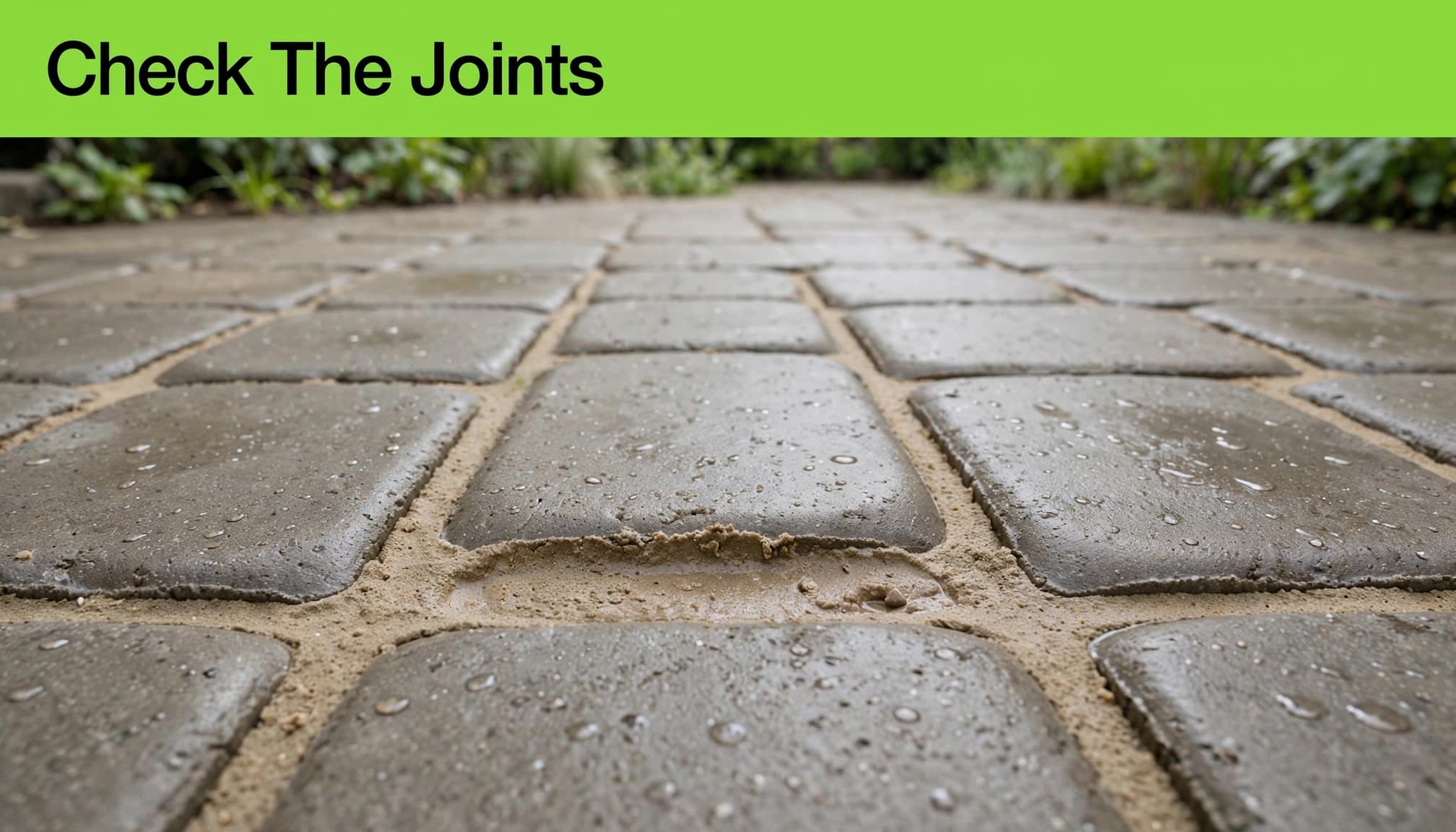
Scrubbing, hose rinsing, and pressure rinsing can all displace joint sand. Even a garden hose can move material when a concentrated stream stays in one place.
After drying, look for low joints, loose pavers, and sand collected downstream. Check whether the joints contain polymeric sand, and follow its product directions before wet cleaning or replacing material. Replace missing material with a compatible joint product, and address movement or repeated washout before further washing.
Our Florida paver maintenance guidance covers ongoing inspections. The same need for sound joints applies to patios and brick driveways, although traffic conditions differ.
Treat Other Stains Separately
Oil and Grease Need Targeted Degreasing
Fire-pit gatherings can leave cooking grease alongside soot. Oil enters porous paving, so a patch that stays dark or darkens again after rinsing may need targeted degreasing instead of another general wash.
PROSOCO’s oil-stain removal guidance addresses this separate problem. Don’t spread fresh grease across adjacent pavers with a hose. Collect accessible residue first, then use a degreaser that’s compatible with the paving and finish.
White Deposits and Rust Have Different Causes
Efflorescence forms when moisture carries soluble salts to the surface. As the water evaporates, it leaves a white deposit. It can return while moisture continues moving through the paver or base, so repeated washing alone may not resolve it.
Rust requires attention to its source before stain removal. Move or repair rusting furniture feet and address irrigation-related staining where relevant. Test the treatment first, and protect adjacent surfaces, including nearby paving, metal, and landscaping, from treatment and runoff. Flush the area thoroughly with water.
Don’t treat every pale patch as salt residue. A changed coating can also affect appearance and needs a different response.
Know When Cleaning Has Reached Its Limit
We recommend stopping when another permitted treatment produces no meaningful improvement. Repeatedly increasing pressure or chemical strength can turn a stain into a larger restoration problem.
Burned photographs, plastics, or other mixed materials can leave residues that differ from ordinary wood soot. Online claims about permanent silver-related staining from photographs are anecdotal, and pressure-washing claims conflict. Neither establishes whether your particular mark will disappear.
Assess the patio only after it dries. A freshly cleaned wet patch can look different from surrounding weathered paving. Don’t aggressively wash a larger area merely to disguise a stubborn mark.
Persistent discoloration may call for professional assessment. Cracked or damaged pavers may need repair or replacement instead of further cleaning. We can discuss restoration options when the surface condition, remaining stain, or uneven appearance makes routine cleaning unsuitable.
Frequently Asked Questions
Can Pressure Washing Remove a Burn Mark?
It may remove loose deposits, but it can’t repair heat-damaged paving or guarantee removal of an embedded stain. Poor technique can scar the surface and empty joints. We recommend gentle cleaning first, followed by a dry inspection before considering a stronger method.
Can Pavers Be Cleaned Without Removing Any Sand?
Careful washing can reduce sand loss, but no method guarantees zero loss from weak joints. Use controlled scrubbing and a broad, gentle flow of water. Stop when sand appears in the runoff, then inspect the dry joints before returning the patio to normal use.
Keep the Surface Clean and the Joints Sound
Safe soot cleanup starts with cold-ash removal, a compatible mild cleaner, and controlled rinsing. Judge the dry result before treating again, and give the joint condition as much attention as the stain.
If cleaning reveals damaged pavers, movement, or restoration needs, Contact Us for a FREE Quote. We can discuss appropriate repair or restoration work without relying on harsher cleaning to solve a structural or surface problem.