Sweep away granules, wash the pavers gently, and treat persistent rust marks with a compatible rust remover. Use a test-first approach because the wrong cleaner can change the paver color, texture, or sealer.
Iron in lawn products can leave an orange stain that ordinary washing won’t remove once it soaks in. Identify the stain and paving material before choosing a treatment for pavers or patio slabs.
Key Takeaways
- Orange or brown fertilizer marks usually need an iron-stain treatment rather than stronger water pressure.
- Lemon juice and citric acid may lighten stains, but acidic treatments can damage concrete, coatings, and sensitive stone.
- Test a compatible cleaner, inspect the dry result, and control fertilizer spills to prevent recurring marks.
Why Fertilizer Leaves Orange Stains on Pavers
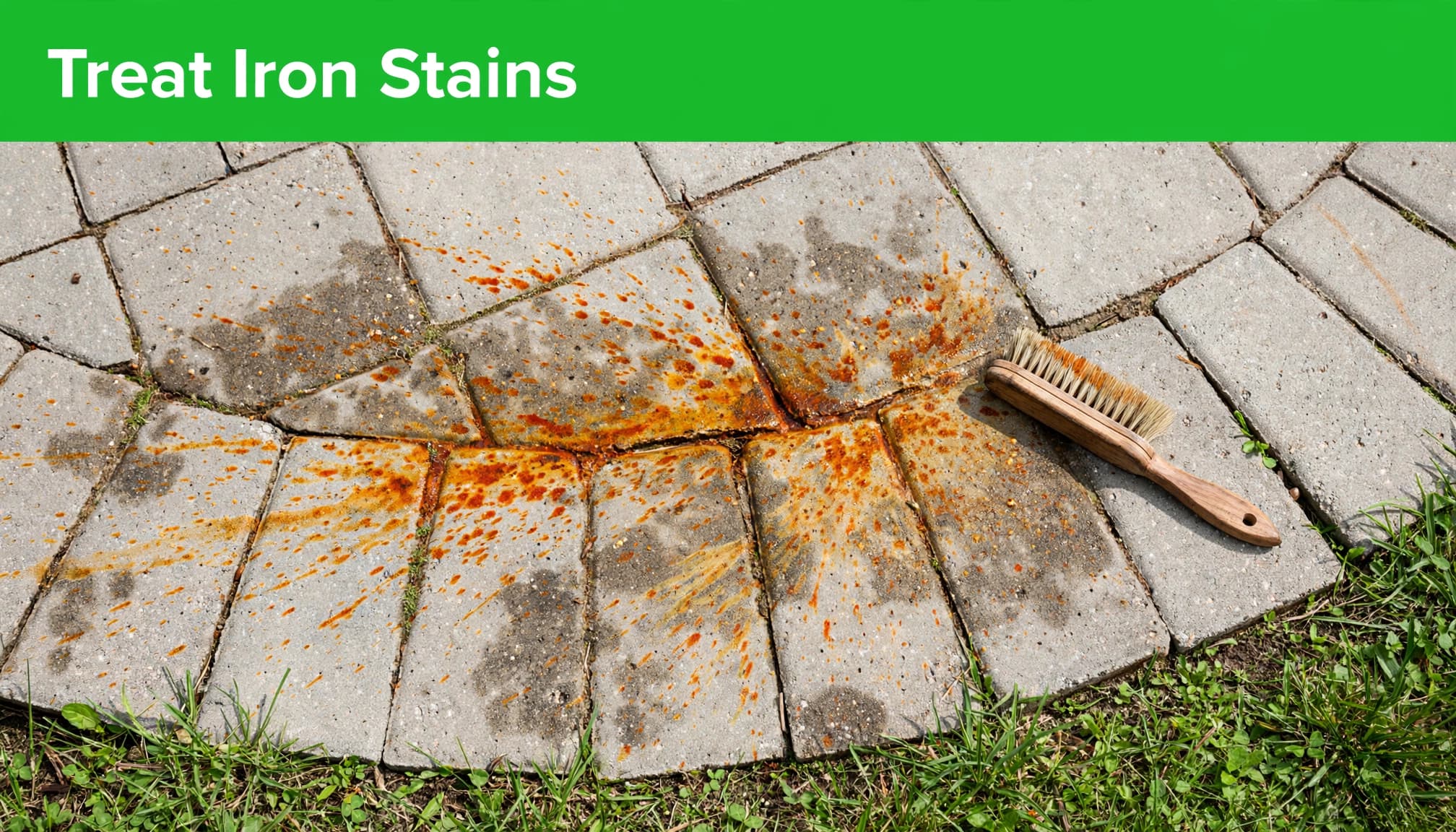
Iron Changes After the Granules Get Wet
Fertilizer, lawn sand, and some moss-control products, including moss killer, contain ferrous sulphate, also spelled ferrous sulfate. Ferrous sulphate is water soluble when wet.
As dissolved iron reacts with oxygen, it forms ferric compounds. Ferric sulfate can remain soluble, while brown ferric oxide and related rust deposits are poorly soluble. Those deposits explain why rain may rinse away the original fertilizer without clearing its stain.
Virginia Cooperative Extension’s Urban Nutrient Management Handbook warns that iron can stain concrete. Removing stray granules before watering reduces that risk.
The Pattern Helps Identify the Source
Scattered orange stain speckles often follow fertilizer granules thrown beyond the lawn. Footprint-shaped marks suggest someone tracked wet lawn treatment across the patio.
Broad staining that follows sprinkler coverage may come from iron-bearing irrigation water. Marks beneath furniture feet point toward rusting metal instead. We cover these related sources in our guidance on rust stains on brick pavers.
White, powdery deposits need separate assessment. Efflorescence, mineral residue, and coating problems shouldn’t automatically receive the same treatment as orange iron stains.
Match the Treatment to the Paver Material
Concrete, Clay, and Natural Stone Need Different Care
Brick pavers may be clay units or brick-shaped concrete. Their appearance alone doesn’t establish which cleaner is suitable.
On concrete slabs with visible granite aggregate, the porous sand-and-cement matrix may absorb more staining than the exposed stone chips. A granite-looking surface doesn’t mean the entire slab has granite’s chemical resistance.
Acids can attack cement-based surfaces. Travertine and marble are also acid-sensitive, so lemon juice, white vinegar, and acidic rust removers aren’t suitable general-purpose treatments around those materials.
An Existing Sealer Changes the Choice
A cleaner suitable for bare concrete may still discolor or soften its coating. We recommend a remover whose approved applications include both the paving material and existing finish.
An inconspicuous test should include a small stained portion where practical. Let it dry completely before comparing color, sheen, and texture. Stop if the surface becomes pale, rough, cloudy, or sticky.
Pavingexpert’s paving stain-removal guidance also addresses cleaning across different paving surfaces. Material compatibility matters as much as the stain itself.
Remove Fertilizer Stains in a Controlled Sequence
We recommend this sequence for established iron stains. Work during cooler conditions so Florida heat doesn’t dry the cleaner before treatment is complete.
- Remove loose contamination. Move furniture and planters, then collect fertilizer granules and loose dirt. Don’t hose unused fertilizer into the lawn, joints, planting beds, or storm drains. Keep children, pets, and customers outside the work area.
- Wash away ordinary grime. Use diluted, mild, acid-free soap compatible with the paving and finish. Scrub with a nylon or fiber-bristle brush, then rinse gently. Don’t use a pressure washer for this initial wash, since it can disturb joint sand or damage the paver surface. This removes surrounding dirt so you can assess the remaining orange marks.
- Test a masonry-compatible rust remover. Ferric oxide is poorly soluble in water, so ordinary washing may leave the stain behind. Wear the gloves and eye protection required by the product. Apply the stated dilution, if dilution is required, and use only its specified contact time. Complete the rinsing procedure and inspect the dry test area.
- Treat manageable sections. After a successful test, apply the same method to the affected paving. Scrub only as directed. Don’t increase concentration or extend contact time because the stain remains visible while wet.
- Control residue and assess the result. Collect loosened contamination where practical and keep chemical runoff out of pools, planting beds, and storm drains. Let the paving dry before deciding whether another permitted application is worthwhile. A cleaner patch may look uneven against surrounding pavers, so don’t scrub hard to force a result.
Stop rinsing if joint sand begins moving. Our safe brick paver cleaning methods explain how to protect joints during routine washing.
Wet paving can hide discoloration and uneven finish changes. Judge the result only after the treated area has dried completely.
Compare Lemon Juice, Citric Acid, and Rust Removers
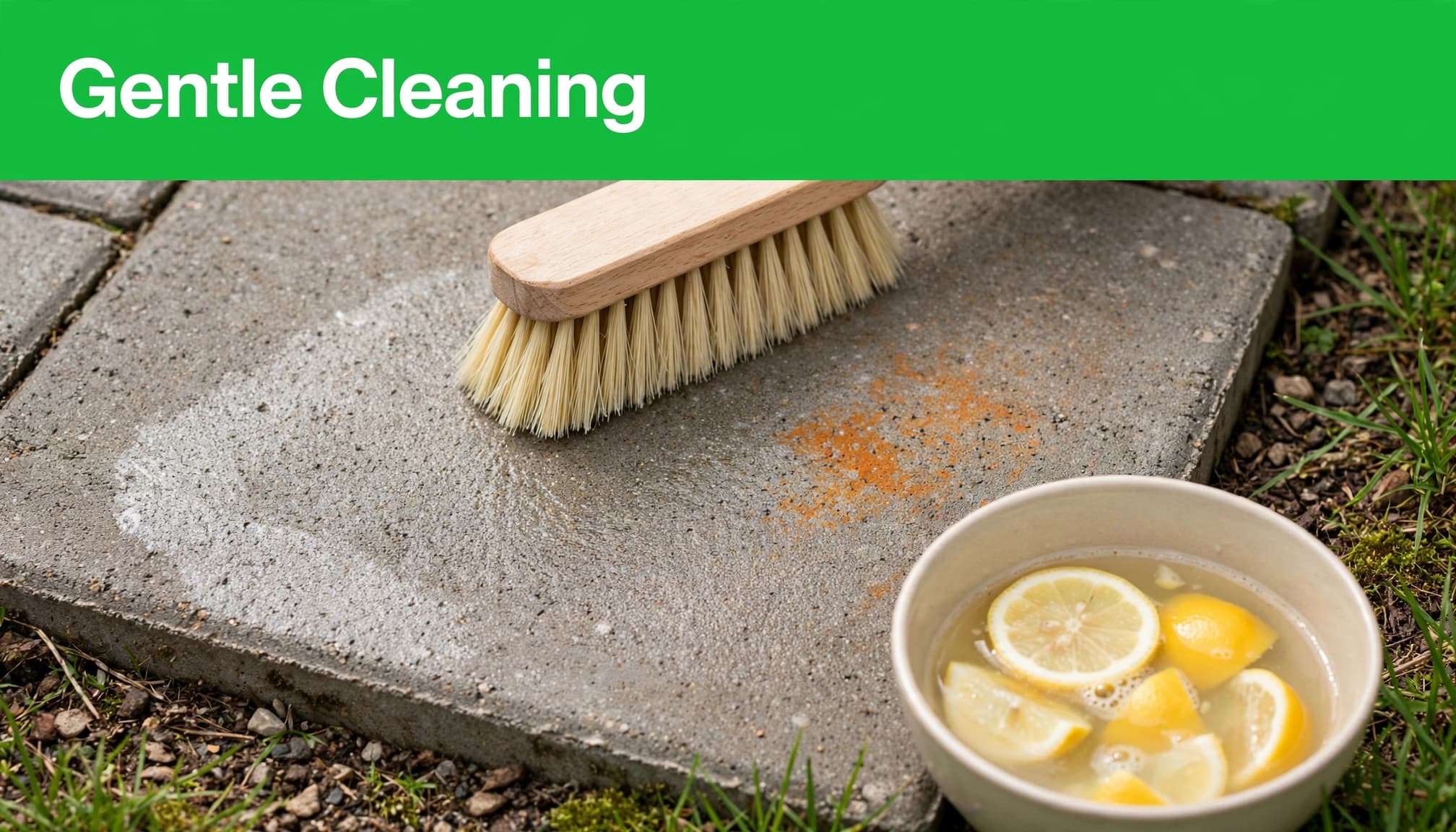
Household Acids Can Lighten Marks but Carry Risks
Lemon juice or citric acid worked with a brush is a common suggestion for orange fertilizer stains. It may partially lighten the discoloration without removing it completely.
However, food-safe doesn’t mean surface-safe. Both are acidic, and their effect depends on concentration, contact time, material, and coating. We don’t recommend pouring lemon juice across an unidentified patio.
White vinegar has similar compatibility concerns and isn’t a dependable substitute for a labeled masonry rust remover. There isn’t one household dilution or dwell time suitable for every slab.
Where the surface’s care instructions expressly permit a citric-acid treatment, follow those instructions and test first. Use a nylon brush rather than wire, which can scratch paving or leave metal particles that later rust.
Commercial Products Need Surface-Specific Approval
Commercial rust removers such as Stontex Rust Off are another option, but a product name doesn’t establish suitability for every paver or sealer.
Use a formulation labeled for the material, finish, and iron staining involved. Its instructions must also address nearby grass, plants, and other vulnerable surfaces.
Rust treatment can remove surrounding dirt and leave a cleaner patch. After a successful test, gentle washing across the surrounding area may improve consistency. Don’t expand aggressive chemical treatment simply to make the whole patio match.
Avoid Bleach and Aggressive Pressure Cleaning
Neat Toilet Bleach Isn’t a Suitable Starting Point
We don’t recommend a small test patch of neat household toilet bleach for fertilizer rust. A limited application can still damage a finish, and bleach isn’t a reliable treatment for iron deposits.
Toilet-cleaning formulas also vary. Some contain bleach, while others contain acids or different ingredients. They aren’t interchangeable with masonry cleaners.
Never mix rust remover, lemon juice, citric acid, or white vinegar with bleach. Dangerous vapors can result. Keep cleaning chemicals separate and follow each product’s removal instructions before considering another treatment.
Stronger Water Pressure Can Damage the Surface
We don’t recommend using a pressure washer on these stained slabs as the first response. Absorbed iron staining needs appropriate chemistry, and high pressure can damage the surface before removing the discoloration.
Aggressive brick pressure washing can expose aggregate, disturb joint sand, and create conspicuous cleaning tracks. Even undamaged paving may show a much cleaner patch beside weathered slabs.
A garden hose with a broad, gentle spray is usually the better rinsing method for initial cleaning. Specialist pressure cleaning should depend on the paving’s condition and permitted cleaning method, rather than the stain’s darkness.
Prevent Repeat Stains and Know When to Stop
Sweep fertilizer off patios, walkways, and brick driveways before watering, and follow the lawn product’s directions. After lawn treatment, keep spreader turns and loading areas away from paving, and clean footwear.
Check the lawn sand label for iron listed as ferrous sulphate or ferrous sulfate, since iron can leave the same orange marks as lawn feed. High-nitrogen spring lawn sand belongs in its intended turf application, not as backfill in a planting hole. Nitrogen content doesn’t prevent iron staining.
If orange marks return after rain, inspect sprinkler coverage, metal furniture, and runoff paths before repeating treatment. Photographs taken before cleaning and after rainfall can help reveal a recurring pattern. A faint mark may overwinter; sometimes it weathers out on its own, but this isn’t guaranteed.
Stop DIY treatment when permitted repeat applications produce no improvement or the surface begins changing. Widespread staining, unidentified coatings, and nearby sensitive stone deserve professional assessment.
At West Coast Pavers, we provide paver restoration and repair in Southwest Florida. Contact Us for a FREE Quote when staining or surface damage needs professional attention.
Frequently Asked Questions
Can Dawn Dish Soap Remove Fertilizer Stains?
Dawn or another compatible mild dish soap may remove dirt and loose fertilizer residue. It isn’t a dependable treatment for established iron stains. Use soap for the initial wash, rinse thoroughly, and assess the dry surface before applying a separate rust treatment.
Does WD-40 Remove Rust From Paving Slabs?
We don’t recommend WD-40 as a routine fertilizer-stain treatment. Its usefulness on metal doesn’t establish suitability for porous paving. An oily residue can create another cleaning problem. Choose a remover approved for the paver material and finish instead.
Will the Stains Disappear Over Winter?
Weathering may soften the appearance, but complete removal isn’t assured. Insoluble iron deposits can remain despite repeated rain.
Leaving stains to overwinter is sometimes suggested where rain and frost affect outdoor slabs. A minor surface mark may weather out, but it may persist, and frost isn’t a dependable cleaning method in Southwest Florida.
Restore the Pavers Without Unnecessary Damage
Removing fertilizer stains starts with identifying the iron source and protecting the paving during treatment. We recommend a compatible rust remover, a small test, and controlled rinsing instead of stronger acids or pressure.
The dry result should guide every next step. Once the stain is addressed, keeping fertilizer granules and recurring rusty runoff off the surface provides the most dependable protection against another orange mark.