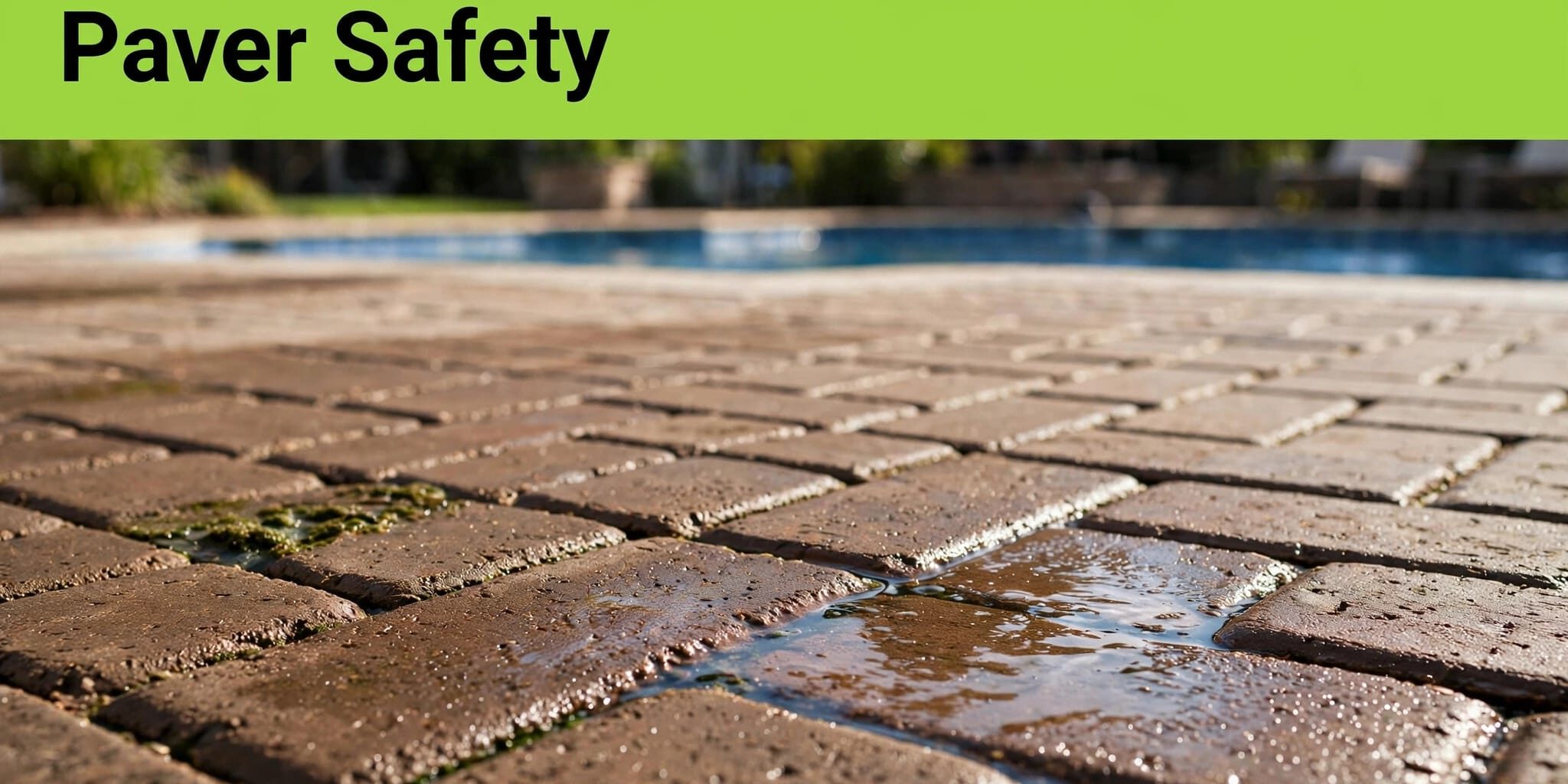
Yes, brick pavers can become slippery when wet, especially when algae, sunscreen residue, or excess sealer covers their texture. Slippery brick pavers don’t always need replacement. We recommend finding the cause first, then using the least aggressive suitable treatment.
A pool deck and adjoining patio need dependable grip for bare feet while staying comfortable to walk on. Start by separating a cleaning problem from a coating or drainage problem.
Key Takeaways
- Clean algae, oily residue, and other contaminants before considering a new coating.
- A penetrating sealer generally preserves surface texture better than a thick topical film.
- Persistent dampness and standing water need attention because cleaning alone won’t prevent recurring slippery buildup.
Why Brick Pavers Become Slippery When Wet
Surface Texture and Moisture Both Matter
“Brick pavers” can mean clay brick or brick-shaped concrete pavers. Their materials, finishes, and cleaning requirements differ. Smooth clay surfaces can become hazardous when wet, while textured pavers generally provide better footing. A clean, textured finish can also be more slip-resistant, though conditions still matter.
Porosity doesn’t guarantee slip resistance. A porous surface can retain moisture and support algae in shaded areas. Dirt and organic material in the joints also hold moisture, especially where irrigation repeatedly wets the paving.
Contamination Can Cover the Original Texture
Algae, mildew, fallen leaves, food grease, and sunscreen can create a slippery layer over an otherwise serviceable surface. Pool splash-out keeps these areas wet and spreads residue along frequently used paths.
A deck that became slick immediately after sealing needs a different assessment. Excess coating can fill surface texture and leave a smooth film. Gloss alone doesn’t prove the surface is unsafe, but pooled coating, roller overlaps, or newly less secure footing deserve attention.
Step 1: Clean the Surface Gently
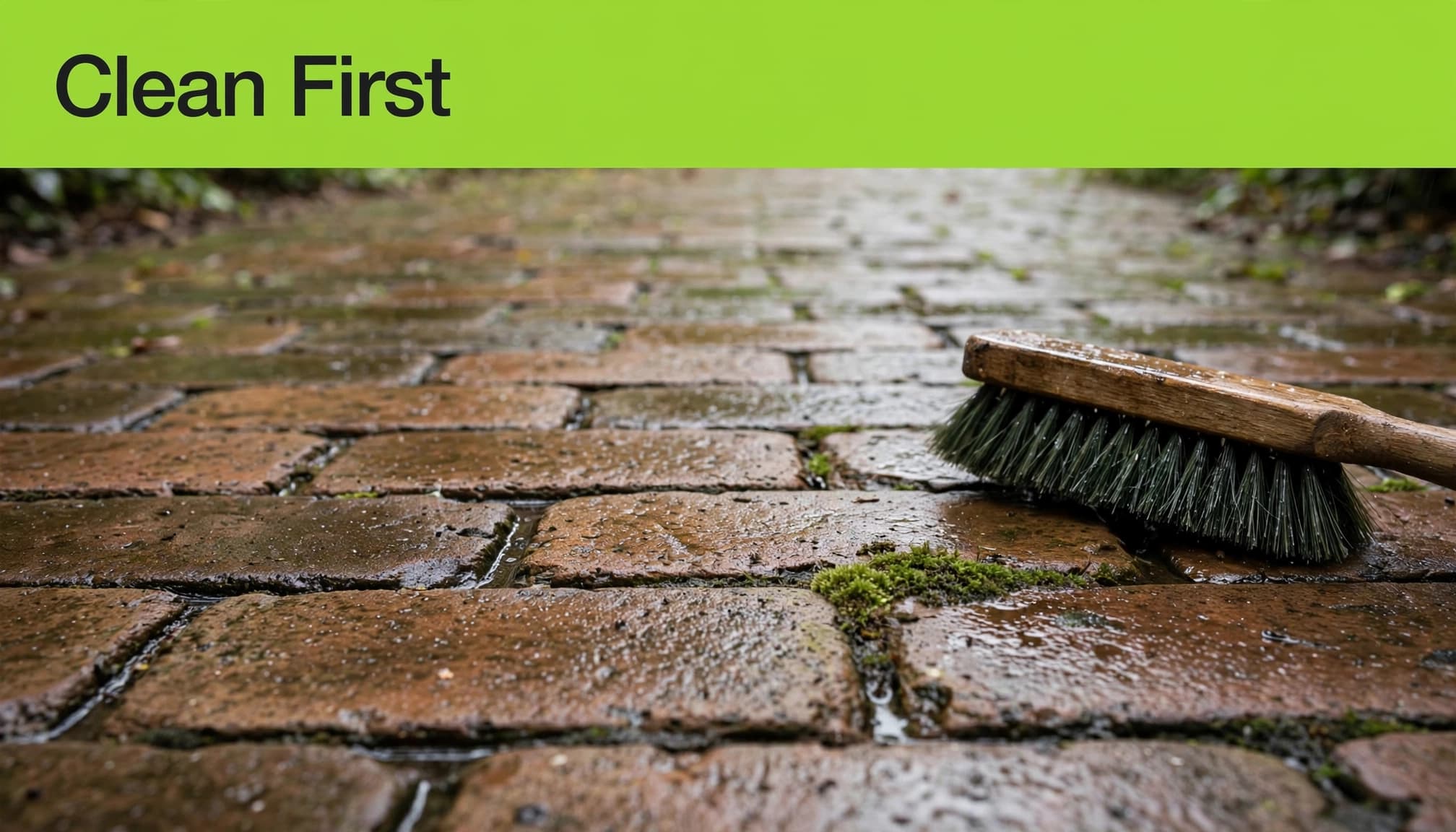
Start With Soap, Scrubbing, and Controlled Rinsing
We recommend gentle cleaning before chemical treatment or brick pressure cleaning. Keep people away from the affected area while you work.
- Sweep away leaves and loose debris without digging into the joints.
- Apply mild, acid-free soap diluted with water when suitable for the paver and existing finish.
- Scrub with a stiff nylon or fiber-bristle deck brush.
- Rinse gently before the solution dries, stopping if joint sand begins moving.
Oily poolside deposits may need a compatible degreaser. Our guidance on removing sunscreen residue covers this common source of slippery buildup.
Treat Moss Without Damaging the Pavers
Don’t use a blanket recipe of 30% bleach and 70% water with a 15 to 20 minute dwell. Household bleach strengths vary, and that treatment may damage coatings, plants, or nearby materials.
Use a cleaner approved for the surface at its stated dilution and contact time. Wear the required protective equipment. The CDC’s bleach safety guidance warns against mixing bleach with other cleaners or disinfectants.
Avoid using a pressure washer on moss-covered brick. It can remove joint sand that helps adjoining pavers resist movement. That sand isn’t structural glue, but depleted joints can reduce pavement performance.
Step 2: Reduce Persistent Dampness
Cleaning removes growth, but moisture conditions determine how quickly it returns. In Southwest Florida, shaded pool decks and areas beside planting beds often stay damp longer than open paving.
Keep drains clear, remove accumulated leaves, and adjust sprinklers that repeatedly spray the deck. Persistent puddles or low areas need professional assessment. A sealer won’t correct standing water.
Inspect joints after cleaning. Polymeric sand contains binders that harden after proper wetting. It can reduce sand loss and discourage weed establishment, but it doesn’t make joints waterproof or prevent all moss growth.
Our Florida paver maintenance guidance covers ongoing care for damp outdoor surfaces. The same inspection approach helps on brick driveways, where vehicle fluids create different traction problems.
Step 3: Correct the Sealer Before Adding More
Applying another coat over slippery brick pavers can make the problem worse. First determine whether the existing coating is compatible, sound, and excessively thick.
Before applying a paver sealer, identify the existing finish. A thick sealer film can fill the paver’s surface texture.
Penetrating Sealers Preserve More Surface Texture
A penetrating sealer enters the pores instead of building a substantial surface film. When properly selected and applied, it generally has less effect on the paver’s surface texture than a thick topical coating.
A topical sealer forms a film and may provide stronger color enhancement. For wet pedestrian areas, use a compatible, slip-resistant system with an approved anti-slip additive.
Apply thin coats at the product’s stated coverage rate. Prevent puddles and overlapping buildup, and allow the required drying and curing time. Dry to the touch doesn’t necessarily mean ready for pool traffic.
Additives Need Durability and Even Distribution
Sand and aluminum oxide are hard-wearing options, but they can settle during application and remain visible in clear coatings. Polypropylene is lighter and easier to suspend, although its wear resistance depends on the product and traffic.
CoverTec markets its polycarbonate CoverGrip additive as a balance between durability and suspension. That description doesn’t make it suitable for every sealer.
We recommend an additive approved for the selected coating and wet, barefoot use. It must remain evenly distributed without producing an uncomfortable surface. Ordinary sand mixed into an unknown clear finish isn’t a dependable substitute.
Sherwin-Williams’ guide to coating slip resistance provides useful background on textured flooring systems.
Step 4: Consider Professional Surface Treatment
If cleaning doesn’t restore secure footing and the coating is the cause, professional stripping may be necessary. Applying more sealer over an unsuitable film can complicate removal.
Mechanical treatments, including sandblasting, can roughen some surfaces. They can also change color, expose aggregate, or damage the paver face. A small treatment area should establish the result before broader work proceeds.
We don’t recommend a DIY acid etch with vinegar or roughly 10% muriatic acid. Acids can attack cement-based concrete pavers and acid-sensitive stone, including nearby travertine or marble. Uneven etching can leave permanent marks without producing reliable footing when wet.
Exposed-aggregate overlays can provide textured footing on suitable concrete surfaces. They aren’t a universal coating for individual pavers because joints, movement, and compatibility still matter.
Compare the Cost Before Choosing a Fix
The least expensive useful treatment depends on the cause, not the size of the slippery area alone.
| Treatment | Relative cost | Suitable situation |
|---|---|---|
| Gentle cleaning | Usually lowest | Algae, dirt, or fresh residue |
| Compatible cleaner or degreaser | Low to moderate | Persistent organic or oily buildup |
| Coating correction | Moderate to high | Excess or unsuitable sealer |
| Professional surface treatment | Higher | Persistent smoothness after cleaning |
| Targeted replacement | Usually highest | Material remains unsuitable for wet use |
These are cost comparisons, not project prices. Stripping an unknown coating can require more work than routine cleaning. We recommend identifying the material and finish before committing to a treatment.
Choose Pool Deck Materials by Finish and Wet Performance
Texture Matters More Than the Material Name
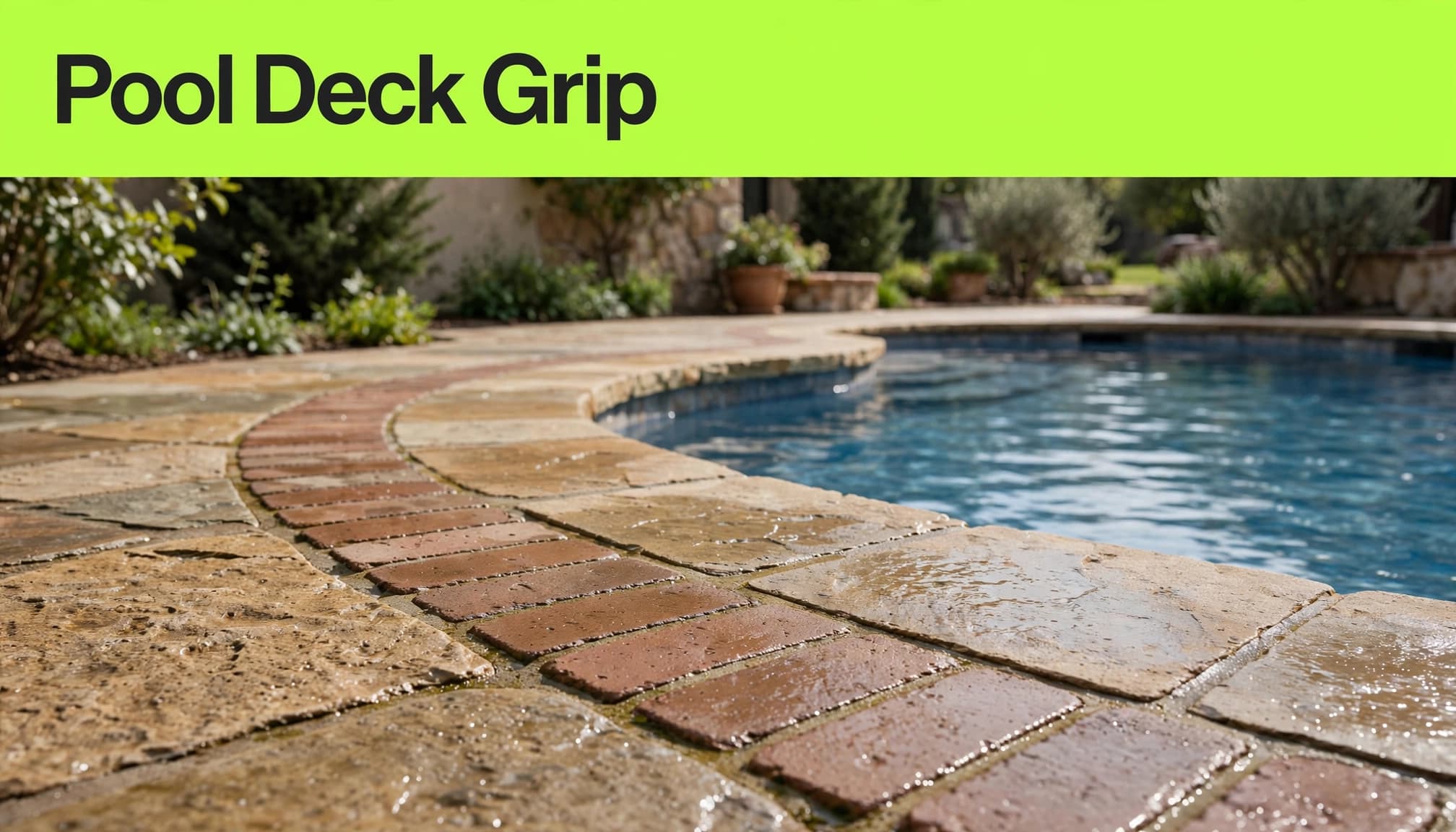
Textured concrete pavers, rough-finished natural stone, and suitable textured clay pavers can all provide practical footing on pool decks. Splash-out, sunscreen residue, and bare-foot traffic can increase slip-and-fall risk, so routine cleaning matters. A non-slip label alone doesn’t guarantee a surface will stay slip-resistant under water, contamination, and wear.
Travertine, limestone, marble, and porcelain vary substantially by finish. A polished surface behaves differently from a textured version of the same material. Choose a textured finish suited to a pool deck or patio, with enough roughness for wet footing and enough smoothness for bare feet.
Our comparison of pool deck paver materials covers common choices. Include heat exposure and cleaning needs in that decision, rather than choosing by appearance alone.
Professional Testing Provides Better Evidence
Don’t judge wet friction by rubbing a hand across a sample or deliberately sliding barefoot across the deck. Neither provides a dependable measurement.
A qualified slip-testing professional can assess the finished surface using a method suited to its location and expected use. Testing measures friction under defined conditions. ASTM-published research discusses British pendulum testing procedures, which support instrument-based surface assessment.
A slip-resistance rating applies to particular test conditions. It doesn’t guarantee that an outdoor pool deck is safe under every wet or contaminated condition.
For commercial properties, document cleaning, inspections, and corrective work. Testing should support routine maintenance, not replace it.
Frequently Asked Questions
Can a Brick Patio Be Made Less Slippery Without Replacement?
Often, yes. Cleaning can remove algae and oily deposits, while coating correction can address excess sealer. Recurring growth also requires attention to moisture.
Replacement becomes more reasonable when the clean, properly treated surface remains too smooth for its use. We recommend addressing the identified cause before removing otherwise serviceable pavers.
Which Pavers Suit a Shaded Walkway That Stays Damp?
Choose a textured surface intended for exterior wet use. Rough-finished stone or textured concrete may suit the area, but material names alone aren’t enough.
Persistent shade also requires regular debris removal and moisture control. Even a coarse surface can become slippery beneath algae. For shaded side yards, dependable drainage and accessible cleaning matter as much as the initial texture.
Restore Traction Before Adding Another Coating
Slippery brick pavers need a cause-based solution. Clean contamination first, address persistent moisture, and correct unsuitable coatings before considering more permanent treatment.
At West Coast Pavers, we provide paver restoration and repair for Fort Myers and surrounding Southwest Florida communities. Contact Us for a FREE Quote to discuss an existing pool deck that needs professional attention.