To remove red clay stains from brick pavers, brush away dry soil, wash off loose dirt, then treat remaining discoloration with a stain remover compatible with the paver material and finish. We recommend a test-first approach because strong acids and excessive pressure can damage the paving or its finish.
The reddish color comes largely from iron oxide, so ordinary soap often leaves an orange shadow behind. Start by identifying the paving material and stain before choosing a stronger cleaner.
Key Takeaways
- Let fresh clay mud dry, then gently brush off loose material before washing.
- Use a stain-specific cleaner approved for the paver material and existing sealer.
- Protect joint sand, nearby plants, and drainage areas during treatment.
- Judge results after drying, and stop if the finish changes or another permitted treatment produces no improvement.
Why Red Clay Stains Persist
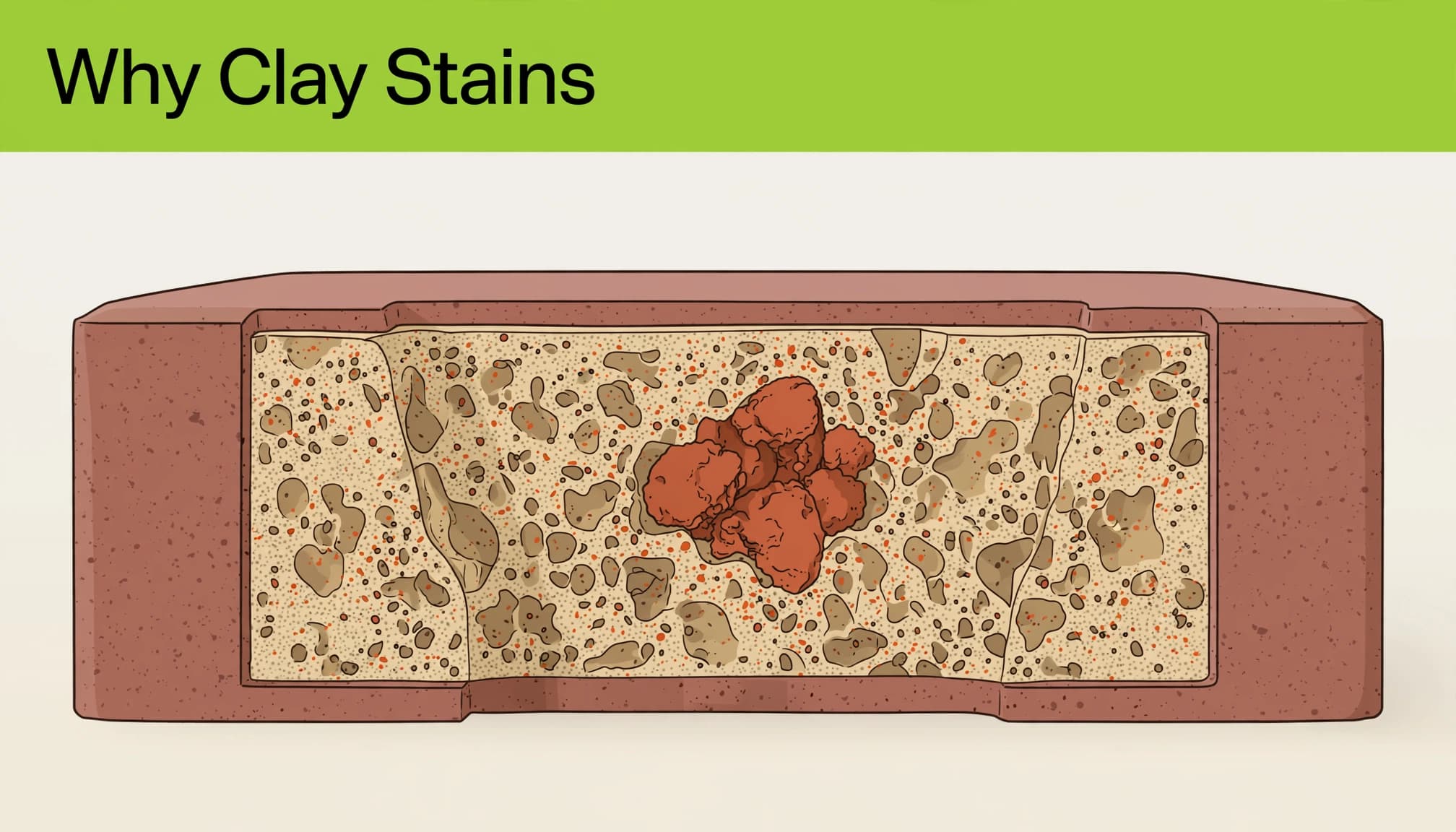
Iron Oxide Remains After Dirt Washes Away
Red clay contains fine mineral particles colored by iron oxides. Those particles can settle into porous surfaces, leaving discoloration after the visible mud disappears.
Because the remaining stain behaves more like a mineral or rust deposit than ordinary grime, detergent alone often falls short. Water can carry away loose clay without removing everything embedded in the surface.
Increasing pressure at that point may damage the pavers without solving the stain.
Color Alone Doesn’t Identify the Source
Clay usually follows muddy footprints, landscape runoff, or soil deposits. However, orange marks can also come from irrigation water, fertilizer, or metal furniture.
We recommend comparing the stain pattern with nearby conditions before treating it. Our guidance on removing rust from pavers covers those other iron sources.
White, powdery deposits need a different approach. They may be efflorescence rather than clay residue.
Choose a Cleaner for the Actual Paver Material
Clay Brick and Concrete Need Different Care
“Brick pavers” can mean fired-clay brick or brick-shaped concrete. Concrete contains cement-based components that acids can attack, while clay brick and existing coatings also have compatibility limits.
Nearby travertine, marble, and limestone require extra protection. The National Park Service’s surface-cleaning guidance distinguishes acid-sensitive materials from other surfaces that may tolerate selected acidic cleaners.
Therefore, a cleaner suitable for one patio isn’t automatically suitable for another.
Product Names Don’t Establish Compatibility
Some rust removers use oxalic acid, which can help dissolve iron-related staining. Other products use different acids, so “rust remover” doesn’t describe one interchangeable formula.
Krud Kutter Red Clay Stain Remover is a stain-specific product name, while Behr Concrete and Masonry Cleaner describes a broader cleaning category. Neither name alone establishes suitability for sealed pavers.
Whink Rust Stain Remover also shouldn’t be treated as an oxalic-acid equivalent. Some Whink formulations contain hydrofluoric acid and require particular caution.
We recommend a product explicitly approved for the stain, paving material, and finish. Don’t substitute a toilet, fabric, or metal rust remover simply because it removes rust elsewhere.
Prepare the Area and Test Before Cleaning
Protect People, Plants, and Runoff Routes
Wear the chemical-resistant gloves and eye protection specified for the cleaner. Keep children, pets, and customers outside the work area until rinsing and any required drying are complete.
Move furniture and protect nearby metal, glass, painted surfaces, and planting beds as the product directs. Keep contaminated rinse water out of pools, lawns, and storm drains.
Work during cooler conditions. In Southwest Florida, a sun-heated patio can dry cleaning solution before treatment is complete, so small shaded sections are easier to manage.
Compare the Test Area After It Dries
Apply the intended dilution to a small, inconspicuous area that includes some staining. Use the stated contact time, then rinse as directed.
Let the test dry completely before comparing its color, sheen, and texture with untreated paving. Wet pavers, including wet concrete, can temporarily hide stains and finish changes.
Stop if the surface becomes pale, rough, cloudy, sticky, or patchy. An unknown or failing sealer needs assessment before stronger treatment.
The Brick Industry Association’s brickwork cleaning guidance addresses cleaning methods for brickwork and brick pavements.
Remove Red Clay Stains in a Controlled Sequence
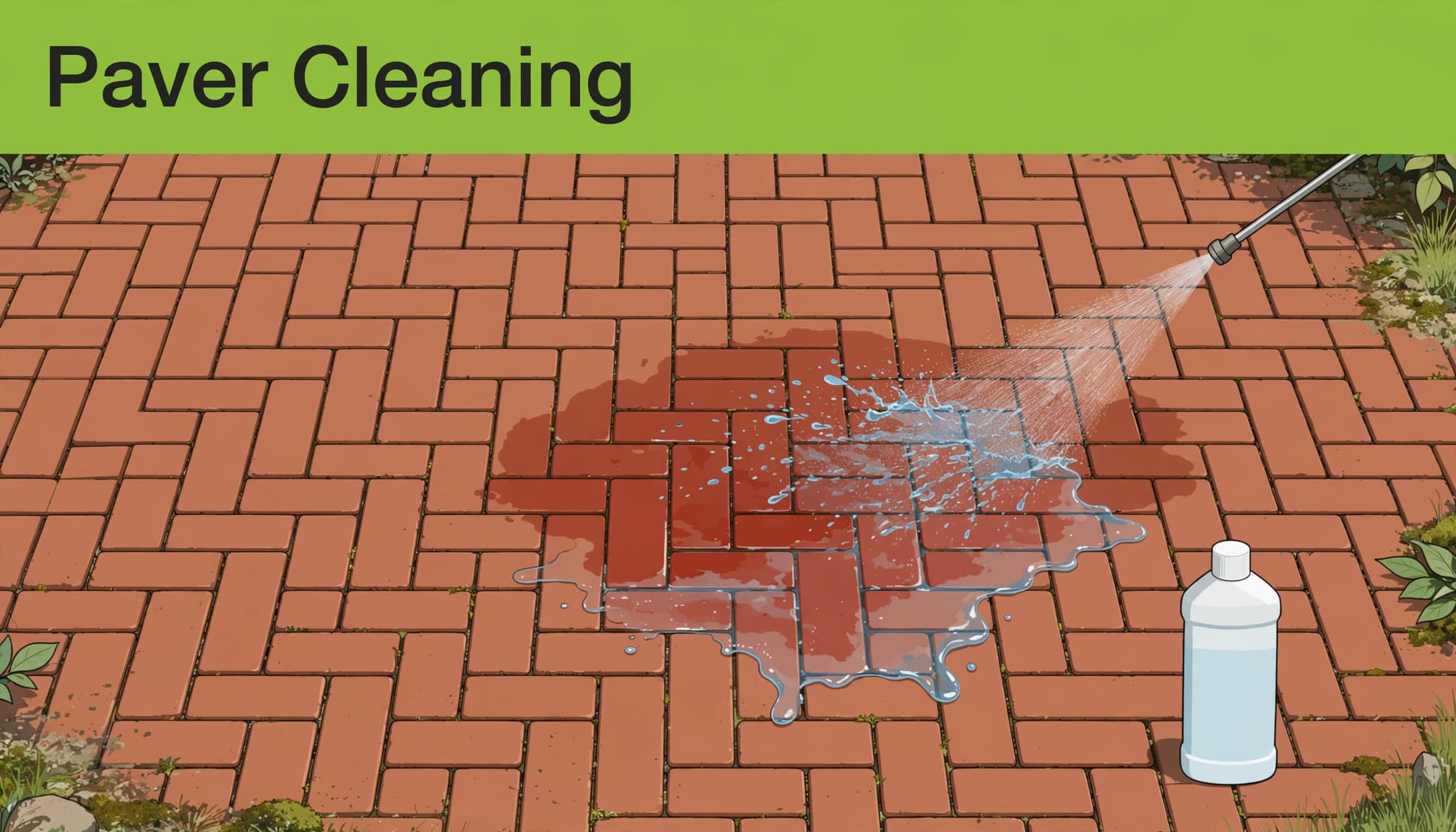
Once the test succeeds, repeat that method across manageable sections. We recommend this sequence rather than treating the entire driveway at once.
- Remove dry solids first. Let fresh clay mud dry completely, then gently lift or brush away the excess. Use nylon or fiber bristles, not a wire brush. Collect the dirt instead of sweeping it into joints.
- Wash away ordinary grime. Use compatible mild, acid-free soap and gentle scrubbing where needed. Rinse with a broad garden-hose spray so you can see which discoloration remains.
- Pre-wet when directed. Many cleaning methods call for dampening the surface before application. Wet the paver faces without flooding the joints or leaving standing water.
- Apply the approved stain remover. Use its stated dilution and dwell time. Keep the treatment wet as directed, and don’t let it dry on the paving. Scrub only with an approved brush.
- Rinse and assess after drying. Remove cleaning residue thoroughly while controlling runoff. Repeat treatment only when the product permits it and the surface remains unchanged.
There isn’t one safe dilution or dwell time for every acid cleaner. Ready-to-use products and concentrates require different handling.
Additional applications may lighten absorbed staining, but complete removal isn’t guaranteed. Stop when another permitted application produces no improvement.
Avoid Stronger Chemicals and Excessive Pressure
Bleach and Vinegar Aren’t Reliable Substitutes
Chlorine bleach treats organic material, but it generally doesn’t remove the iron oxide responsible for persistent clay discoloration. It can also affect color, coatings, plants, and nearby materials.
Oxalic acid is sometimes called a bleaching agent, but that doesn’t make it equivalent to household chlorine bleach. Never mix cleaners, especially bleach and acids.
Vinegar is acidic and can affect cement-based paving or calcium-based stone. We also don’t recommend muriatic acid as a general homeowner treatment for clay stains.
Pressure Washing Has Limits
Brick pressure cleaning requires control because concentrated spray can roughen surfaces and remove joint sand. A more powerful pressure washer isn’t a substitute for the correct stain treatment.
Some cleaners permit application through a pressure washer’s detergent system. Use that method only when both the cleaner and equipment allow it; never feed an incompatible acid through the pump.
For localized stains, a brush and garden hose offer better control. Stop rinsing if joint material begins moving.
Seal Only After Cleaning and Drying
A compatible penetrating sealer can reduce absorption and make later cleanup easier. On concrete pavers, choose a concrete sealer that’s compatible with the surface and any existing finish. A sealer won’t remove existing discoloration or make the paving stain-proof.
We recommend sealing only after the stain treatment is complete, cleaning residue is gone, and the surface meets the sealer’s drying requirements. Humidity and shade can extend drying time.
Some penetrating sealers call for two applications or coats, while others don’t. Apply the specified amount rather than assuming every surface needs two coats.
For brick driveways, prevention also means controlling repeated soil deposits. Sweep tracked clay promptly and address landscape runoff that keeps carrying dirt onto the paving.
Our brick paver maintenance guidance covers broader upkeep. Don’t apply another coating to conceal an unidentified stain or cloudy finish.
Remove Red Clay From Clothing Separately
The cleaner used on your patio isn’t automatically safe for work clothes. Keep fabric treatment separate from paver cleaning.
Let muddy clothing dry, then brush off loose clay. Apply liquid laundry detergent or a fabric-approved product to pretreat the stain. Follow the product’s stated wait time, then wash in cool water rather than hot water.
For stubborn marks, fabric-safe hydrogen peroxide can be used as a separate pretreatment after a colorfastness test. Oxygen-based boosters such as OxiClean can also help. An overnight warm-water soak is appropriate only when both the garment and product instructions permit it.
White Brite powder mixed with water is another option for suitable white fabrics. Never combine it with bleach or other cleaning chemicals.
Avoid hot washing and high-heat drying until the stain disappears because heat can make remaining discoloration harder to remove. Air-dry between attempts so you can inspect the fabric without adding dryer heat.
Frequently Asked Questions
Does Dawn Dish Soap Remove Red Clay Stains?
Dawn dishwashing liquid can loosen ordinary dirt and oily residue, but it isn’t a dependable treatment for embedded iron oxide. Home Depot’s brick-cleaning guidance includes dish soap for general grime. Persistent orange staining usually needs a different treatment.
Can Oxalic Acid Safely Clean Concrete Pavers?
An oxalic-acid masonry cleaner may help, but its suitability depends on the formulation, dilution, paver material, and coating. Use only an approved product after a successful hidden-area test. Raw acid isn’t a universal paver-cleaning solution.
When Should Cleaning Stop?
Stop if the finish changes, the surface becomes rough, joint sand washes out, or another permitted application produces no improvement. Leave the remaining stain visible for assessment and identify every cleaner already used.
Protect the Pavers While Removing the Stain
The dependable approach is controlled, stain-specific treatment after removing loose clay. Preserving the finish and joints matters more than forcing out every trace of color.
We can assess persistent staining and paver restoration needs in Fort Myers and surrounding Southwest Florida communities. Contact Us for a FREE Quote when routine cleaning isn’t enough.