Ants under pavers find shelter, warmth, and loose sand that they can excavate into nesting chambers. Removing them usually requires treatment first, followed by attention to damaged joints or shifting pavement.
Small sand piles don’t automatically mean your patio needs rebuilding. However, recurring holes, rocking stones, and low spots deserve closer attention because water or lost support may also be involved.
We recommend separating the pest problem from the repair problem so each receives the right treatment.
Why Patio Pavers Attract Nesting Ants
The narrow gaps beneath patio pavers shelter soil from weather and surface disturbance. Nearby planting beds, outdoor meals, pet food, and moisture can make these protected spaces attractive nesting sites.
Workers carry fine particles out of their tunnels and leave them above the surface. Small piles can reappear along the same joints even after sweeping.
In Southwest Florida, sandy soils, heavy rainfall, and frequent irrigation affect nesting conditions. Landscaped borders provide moisture, while sheltered spaces beneath pavers protect colonies from surface disturbance.
Brick pavers themselves aren’t usually the ants’ target. Ants excavate material beneath and between them rather than eating the paving units, and lost material can add to small voids where joints or supporting layers are weak.
We also check for drainage problems because ants and settling pavers can occur together, even when ants aren’t the main cause of movement.
Identify the Ants and Assess the Surface
Pavement ants measure approximately 1/16 to 1/8 inch long. They range from brown to black and have paler legs and antennae. They commonly nest beneath sidewalks, driveways, and building slabs, leaving excavated dirt around pavement openings.
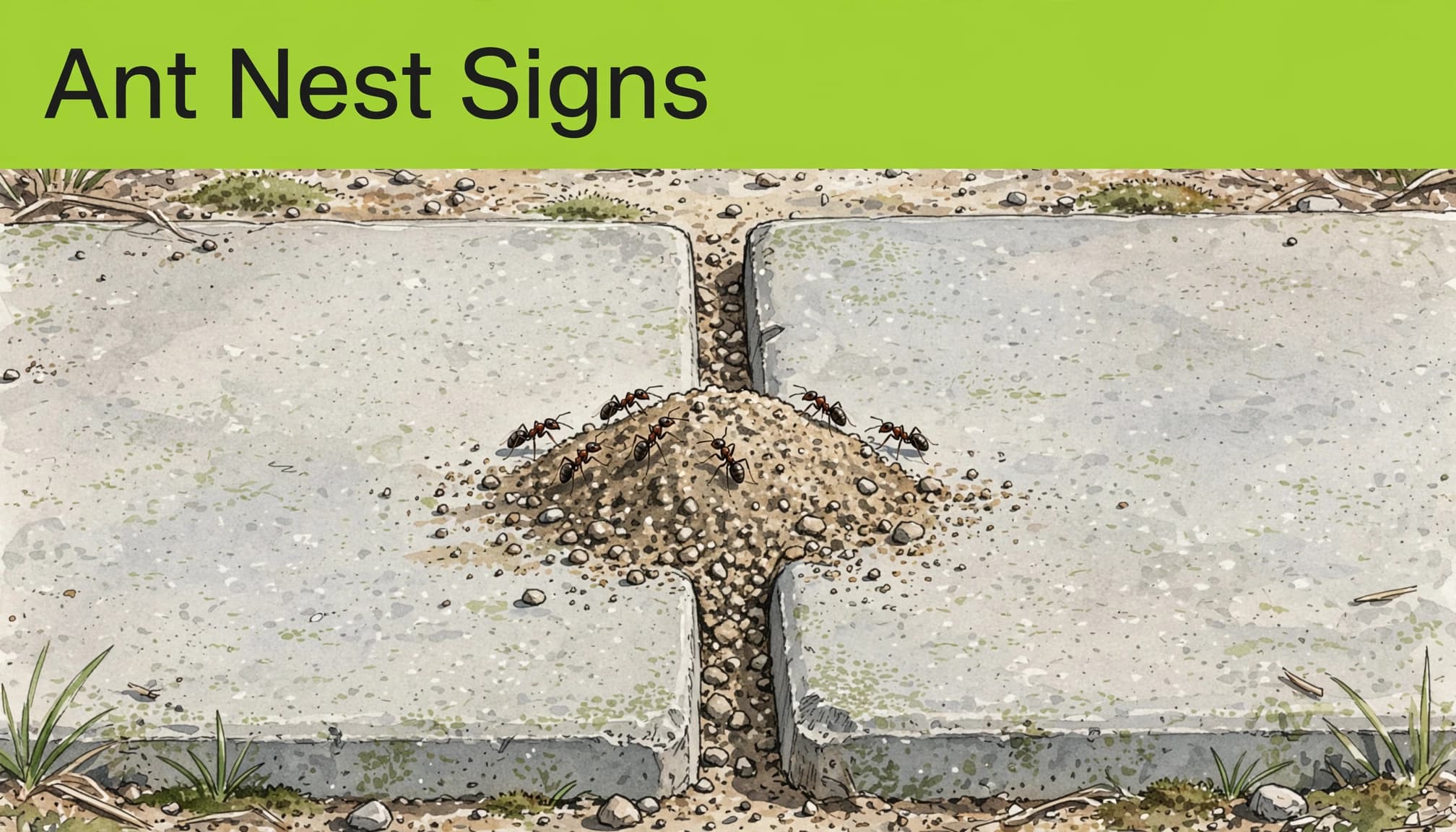
Follow active workers toward the joints without flooding or probing the openings. Repeated entry and exit at one joint, fresh sand piles, or workers carrying particles out suggest nesting. Ant trails without excavation or a consistent entry point may indicate ants are passing through. A size-reference photo can help a pest professional distinguish pavement ants from smaller ghost ants or other species.
We use the surface condition to separate routine treatment from repair needs.
| What you see | Appropriate response |
|---|---|
| Fresh sand piles, but firm, level pavers | Identify the ants and begin nest treatment. |
| Low joints without movement | Treat activity, then restore compatible joint material. |
| Rocking or sunken pavers | Arrange a support and drainage assessment. |
| Repeated washout after rain | Correct the water source before re-sanding. |
One opening may connect to a larger nest, so treating only the visible mound can leave ants active. Conversely, widespread settlement shouldn’t be blamed on insects without examining the support below.
Step 1: Target the Colony With Bait
Place Slow-Acting Bait Beside Active Routes
Liquid ant bait works slowly, so workers can feed and carry it back to other colony members, including the queen. The University of Minnesota Extension’s ant identification and control guidance explains why eliminating the queen matters.
Terro Outdoor Liquid Ant Bait Stakes are one slow-acting option for pavement ants. Place labeled outdoor stations near active routes, using adjacent soil when the stake design requires it. Don’t force stakes into narrow paver joints or leave loose bait across walking surfaces.
Enclosed liquid stations suit activity beside patios, while labeled granular baits may suit broader soil or lawn areas. Choose a product labeled for the target ant and treatment location.
Avoid spraying foraging ants around bait stations because workers need to reach the food and return to the nest. Bait acceptance varies with species and feeding preferences, so ignored bait may require a different labeled formulation.
Reserve Dust for Suitable Treatment Locations
Insecticidal dust can suit a labeled crack, crevice, or nest treatment where bait placement is impractical. Broadcasting powder across an occupied patio creates unnecessary exposure.
Terro Ant Dust is marketed as waterproof, resistant to rain washout, and effective for up to eight months when used according to its label. That residual claim doesn’t mean the nest will disappear immediately.
We recommend professional pest control when identification is uncertain, activity persists, or treatment would involve inaccessible spaces near a building.
Protect Children, Pets, and the Paver Surface
An enclosed bait station reduces access, but it isn’t automatically childproof or petproof. Place stations where children and animals can’t reach, chew, or dislodge them. Keep pest control products in their original containers, and follow label directions for protective equipment and re-entry.
Don’t mix household cleaners, bleach, fuel, acids, or unverified powders to make a stronger treatment. Homemade borax mixtures lack the controlled formulation and exposure directions of a registered bait.
Don’t flood nest openings with large amounts of water. Water can push bedding sand deeper into the base or wash support material away.
Aggressive pressure cleaning isn’t a nest treatment and can displace joint material without reaching the queen. Assess the surface before cleaning, and plan to restore the joints where needed.
Step 2: Repair Movement Before Refilling Gaps
Recognize What the Supporting Material Allows
A dense graded base such as Granular A contains 3/4-inch crushed stone and fine particles. Combined with bedding sand, those fines give ants material to excavate.
An open graded base uses 3/4-inch clear crushed stone, often with 1/4-inch clean chip high-performance bedding, or HPB. These aggregates contain no fines, so they offer less suitable material for tunneling. They don’t make a patio ant-proof.
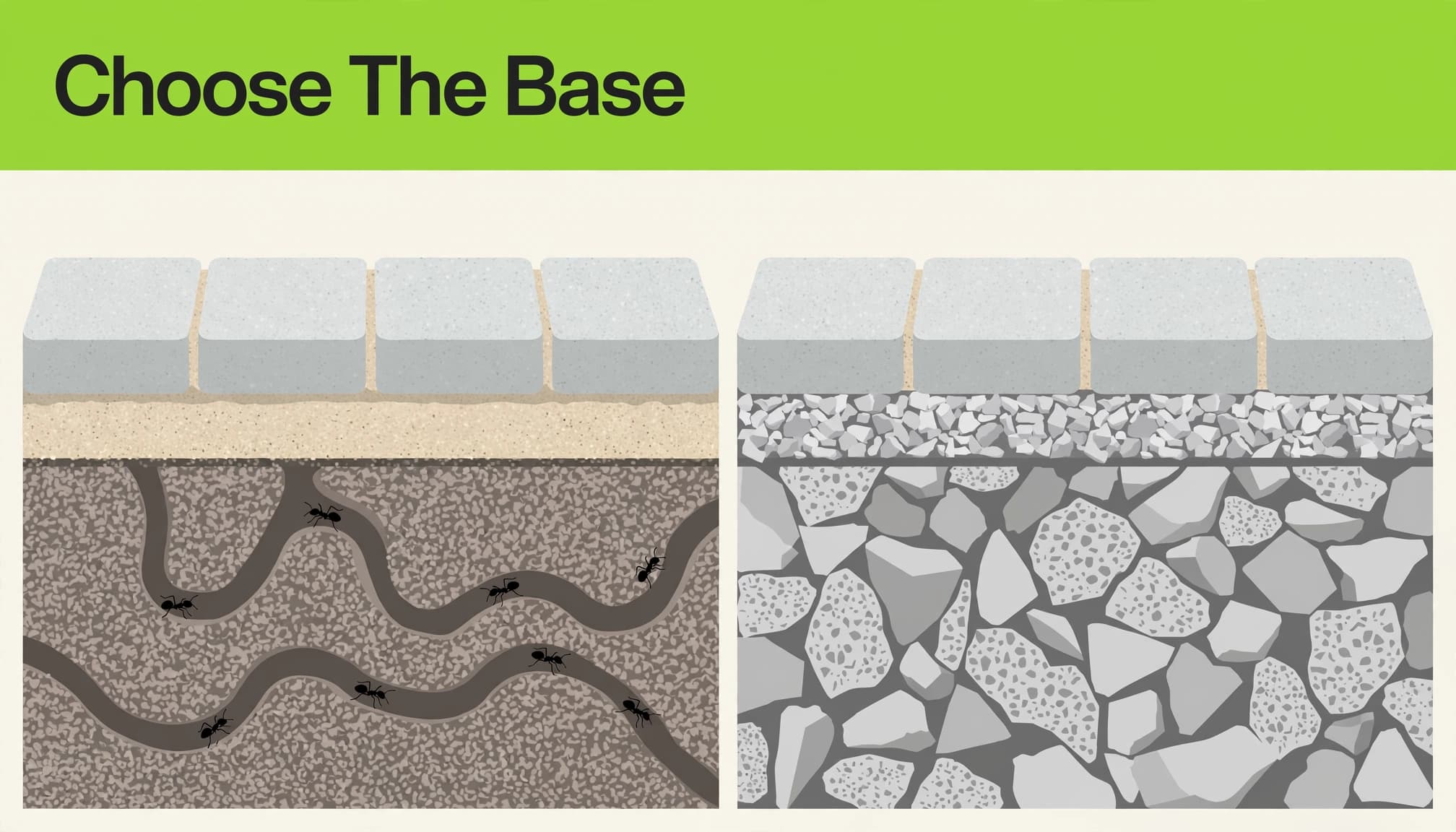
This difference helps explain where ants nest, but a stable patio doesn’t need wholesale reconstruction.
Restore Only the Area That Needs Repair
When pavers rock or sink, address the cause instead of repeatedly adding surface sand. A localized repair can preserve sound pavers and the existing pattern.
Lift the affected units and inspect the support, water source, and edge movement. Restore stable support with proper compaction, then reset reusable pavers and refill compatible joints.
Bedding sand can’t replace a failed aggregate base. Our guidance on repairing a failing paver base explains when settlement requires more than surface leveling.
Check downspouts, irrigation heads, and nearby drains. Runoff can remove material and cause a repaired low spot to return. Address movement promptly where it creates a trip hazard or affects vehicle loads.
Choose Joint Materials That Discourage Return
Polymeric Sand Helps Protect Sound Joints
Polymeric sand contains binders that harden after proper activation and curing. It helps limit excavation and washout, but it doesn’t eliminate an active nest. Unilock’s polymeric sand guidance describes its joint-locking purpose and the importance of curing conditions.
Don’t cap active holes and assume the problem is solved. A hardened surface can hide continued movement underneath.
Once treatment and necessary repairs are complete, our guidance on replacing depleted joint sand covers maintenance choices for otherwise stable paving.
Resin Compounds Require a Compatible Base
Semi-permeable resin-based jointing compounds generally remain solid longer than polymeric sand. However, these systems require a compatible open-graded or synthetic base, not a dense-graded base that restricts drainage beneath the joint.
Existing patio construction therefore limits the options. Changing the surface filler alone doesn’t change how the underlying pavement drains.
Standard joint sand remains another maintenance option where appropriate, but its loose particles are easier for ants to excavate and may need replenishment more often. We favor compatibility with the existing pavement over choosing a product solely for an ant-resistance claim.
Key Takeaways for Controlling Ants Under Pavers
- Treat the ants before restoring joints, because sealing an entrance doesn’t reliably reach the queen.
- Separate fresh ant mounds from structural symptoms such as rocking units, repeated sinking, and washout.
- Maintain drainage and compatible joint material rather than relying on repeated surface treatments.
Frequently Asked Questions
Can Ants Be Removed Without Tearing Up the Patio?
Yes. If the pavers remain firm and level, colony treatment and joint maintenance may be enough. Even isolated settlement can often receive a localized repair. No outdoor treatment guarantees permanent exclusion because nearby nests can form later.
Does Dawn Dish Soap Kill Ant Hills?
Soapy water can kill ants it directly contacts, but it doesn’t reliably reach a protected queen beneath pavers. Pouring large quantities into joints also risks washing material away. We recommend labeled bait products instead of treating dish soap as a dependable nest treatment.
What Is the Best Ant Spray for Pavers?
For an active colony, we generally favor slow-acting bait over a surface spray. A spray may kill exposed workers without eliminating the nest. If a targeted insecticide is necessary, its label must permit the ant species, outdoor location, and application method.
When Should Polymeric Sand Be Replaced or Sealed?
There isn’t a fixed replacement interval. Inspect monthly and after storms or washing; replace material when it cracks, loosens, or washes out. Polymeric sand sealing guidance describes a common minimum wait of 30 days before sealing. Longer product-specific curing requirements still apply. A compatible sealer may add protection, but it won’t eliminate a nest.
Address the Colony and the Cause
Ants choose paver joints because the space beneath them offers protection and workable material. Colony control addresses the infestation, while sound joints and drainage help reduce recurring trouble.
If pavers keep sinking or washing out, another layer of sand won’t correct the cause. For assessment of paver repair, re-leveling, or drainage correction, Contact Us for a FREE Quote.