A white paver sealer haze can result from poor drying, application problems, or lost adhesion. White mineral deposits and polymeric sand residue can look similar, so identify the cause before treating the surface.
We recommend stopping any planned recoating until the problem is clear. Another layer won’t repair a failing finish and can complicate restoration.
Start by separating residue on the pavers from cloudiness inside the sealer.
Key Takeaways
- White powder on unsealed paving may be efflorescence, while cloudiness beneath a glossy coating points toward a finish problem.
- Peeling, tackiness, and patchy gloss need coating assessment before additional cleaning or sealing.
- Match treatment to the paver material and existing finish, then judge the result only after the test area dries.
Tell Sealer Haze From Surface Residue
The location and texture of the white mark provide useful clues. However, appearance alone doesn’t establish which cleaner or repair will work.
Cloudiness Within a Coating
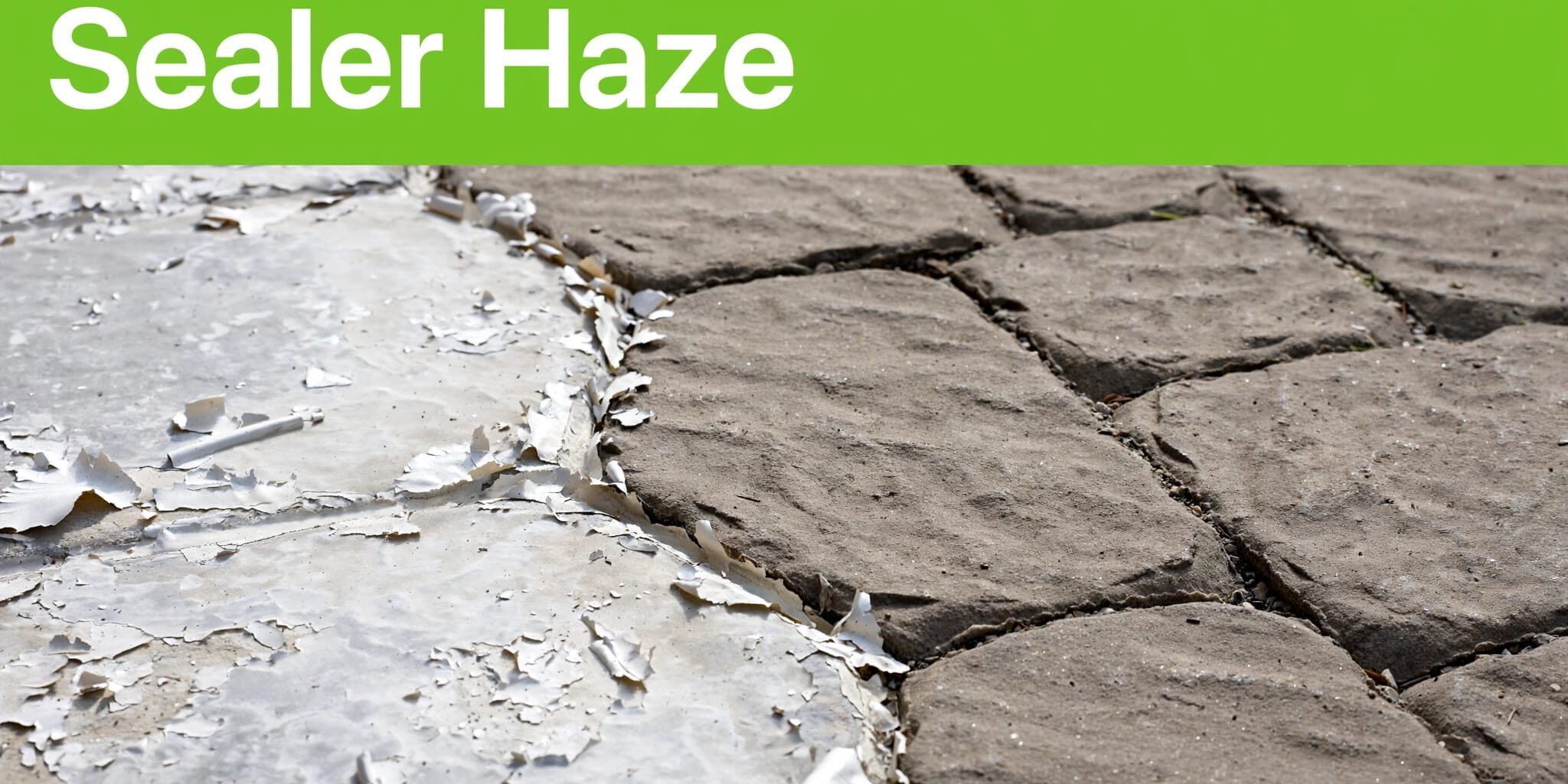
Cloudiness within the coating often looks like a white haze beneath an otherwise smooth surface. A white paver sealer finish may also have glossy patches, lifting edges, or flakes where the coating has separated.
Unlike loose mineral powder, this cloudiness generally won’t brush away. Scrubbing harder can damage the finish without reaching the underlying problem.
We recommend noting whether the haze appeared immediately after sealing, after rain, or following a maintenance treatment. That timing helps narrow the cause without assuming every white patch needs chemical cleaning.
Powder on an Unsealed Surface
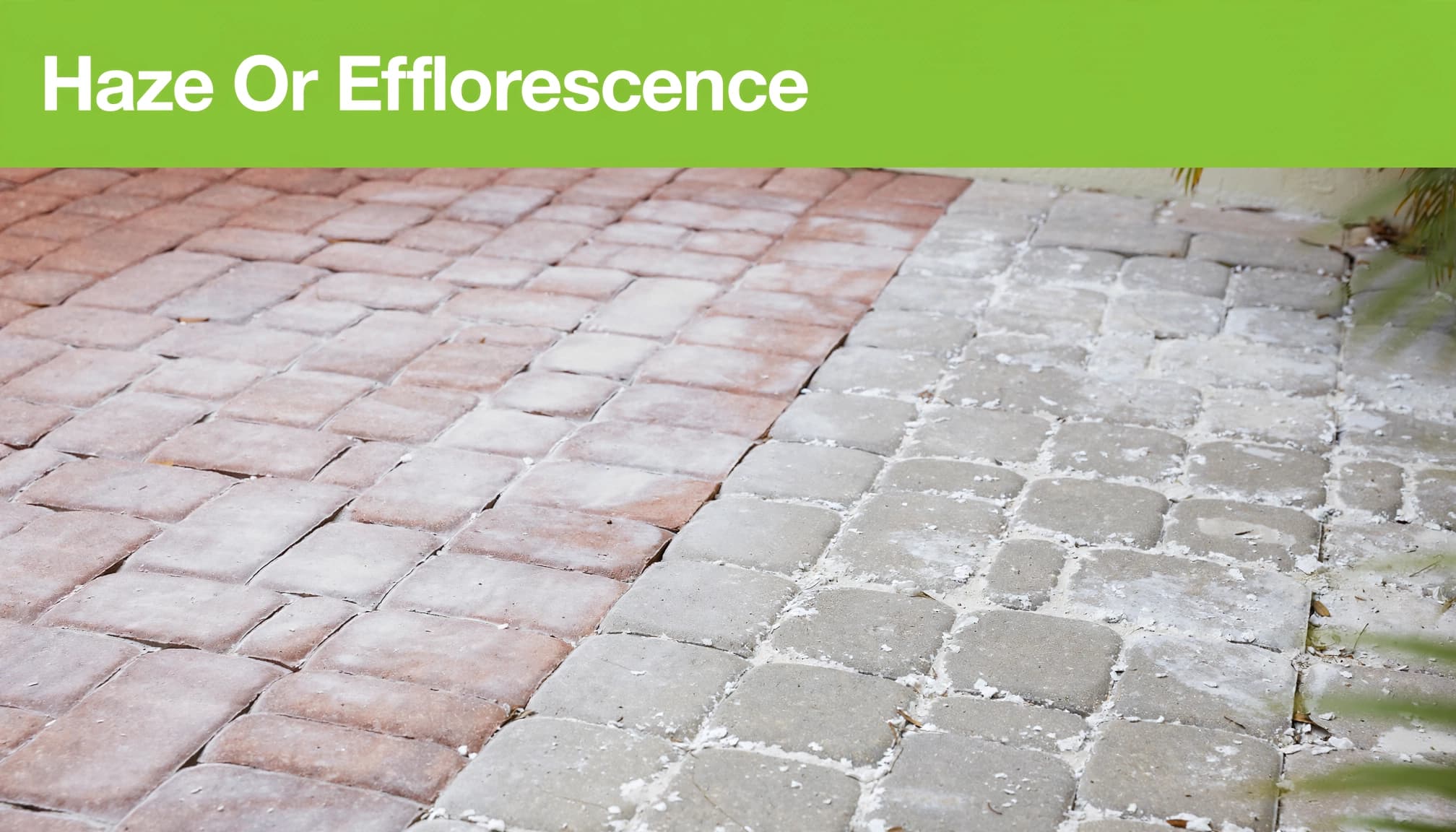
Efflorescence forms when water carries salts through masonry and leaves deposits as the water evaporates. The CMHA bulletin on masonry deposits describes these usually white deposits on masonry and concrete.
On a dry, unsealed area, gently brush a small spot with a stiff nylon brush. Loose powder supports a surface-deposit diagnosis, although stubborn deposits may remain.
These deposits alone don’t prove structural damage. Separately inspect for cracked units, movement, standing water, and missing joint sand.
Why Paver Sealer Turns Hazy or Peels
Once the white appearance belongs to the coating, the next question is what affected its drying, bonding, or condition.
Moisture Interfered With the Finish
Dampness beneath the coating can produce a cloudy or milky appearance. This hazing can follow rain, irrigation, washing, or water moving through the paving before application.
Florida’s humidity also slows evaporation. A surface that looks dry may still be damp, particularly in shaded areas.
Brickform’s sealer troubleshooting guidance identifies moisture beneath concrete sealer as a cause of cloudiness. Similar symptoms on pavers still require assessment of the actual coating and material.
Application Left an Unsound Film
Heavy application, overlapping buildup, and unsuitable drying conditions can leave an uneven finish. A thick or overlapping film can also trap moisture beneath the coating and reduce surface texture, which matters around wet pedestrian areas.
Hot paving can make a sealer application dry too quickly at the surface. Insufficient curing time can also leave the finish vulnerable to traffic.
Peeling is sealer failure caused by lost adhesion, not ordinary fading. Cleaning may remove dirt from that area, but it can’t restore the missing bond.
The New Product Didn’t Suit the Existing Finish
Product base alone doesn’t establish compatibility between a water-based sealer and a solvent-based product. Coating chemistry, condition, and manufacturer guidance also matter.
Applying incompatible sealers over an unidentified finish can produce uneven gloss, softening, or adhesion problems. Even a suitable product won’t correct a loose underlying layer.
We recommend identifying the existing coating before any new application. When its history is unknown, a controlled compatibility test helps determine the appropriate repair scope.
Match the Cleaning Method to the White Deposit
Surface residue needs a different approach than failed sealer. Avoid treating both conditions with the same cleaner.
Start Gently With Confirmed Efflorescence
For a small powdery deposit on unsealed brick pavers, begin with dry brushing. If residue remains, use a stiff fiber or nylon brush and water where the material permits it.
If dry brushing fails, consider an efflorescence cleaner labeled for your paving material. Test the product on an inconspicuous spot and follow the label directions.
Let the area dry before judging the result. Wet paving can temporarily hide white marks and make an unsuccessful treatment appear complete.
Our guidance on safe efflorescence removal covers material differences and cautious cleaning. Persistent deposits also deserve attention to nearby water sources, including irrigation overspray and downspouts.
Treat Polymeric Haze as a Separate Problem
White or gray residue after joint maintenance may come from joint stabilizing sand. Excess material on paver faces or binder carried across the surface during activation can leave haze.
Don’t assume an efflorescence treatment will remove it safely. Identify the joint stabilizing sand product before choosing a cleaning method, since the paving material and any existing coating also affect the right approach.
We don’t recommend repeated pressure washing or an unapproved acid treatment. Those approaches can damage the surface or joints while leaving the original residue in place.
Correct Failed Sealer Before Recoating
A failed sealer needs a repair plan that addresses the finish itself. Another coat doesn’t reconnect a loose film to the paver beneath it.
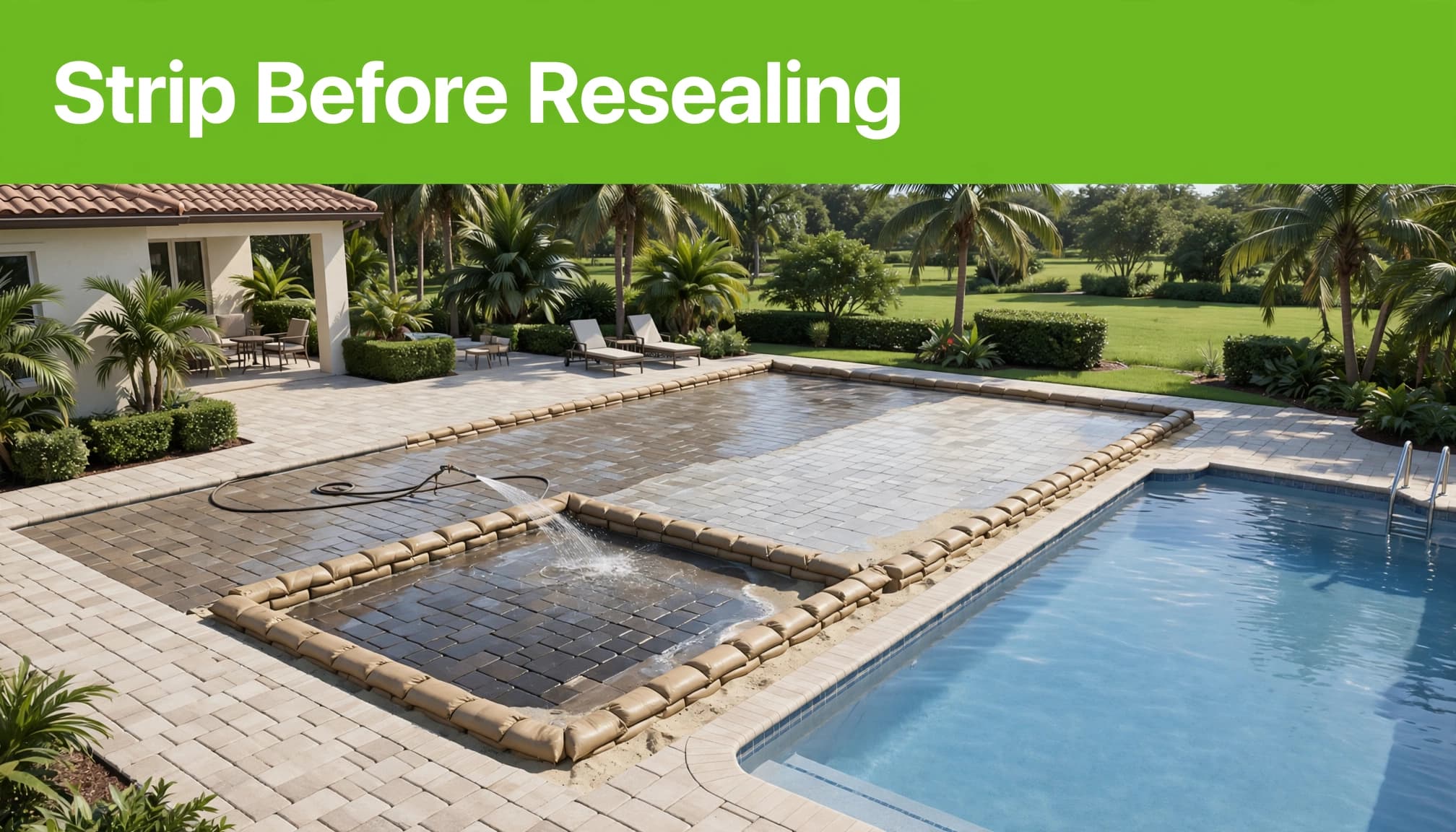
We recommend this assessment sequence:
- Identify the paving material, existing coating, and any cleaners or treatments already applied.
- Determine whether the problem involves surface residue, localized coating damage, or widespread adhesion failure.
- Test a compatible treatment in an inconspicuous area and let it dry before judging appearance and adhesion.
- Address unsound coating and underlying maintenance problems before the surface is resealed.
Some coating problems have product-specific treatments. For example, Brickform describes Rescue+ as a product that can re-emulsify existing solvent-based concrete sealers. A sealer stripper may suit some failed coatings, but it isn’t a universal fix. Check product compatibility before treatment.
Product directions may specify xylene for a particular coating. Xylene isn’t a general-purpose remover, and you shouldn’t use it without confirming the coating manufacturer’s guidance.
Removal methods, including stripping, depend on the coating and paving material. A contractor should select a compatible process rather than assume every peeling finish responds to the same approach.
Euclid Chemical’s sealer problem guide distinguishes several coating defects, including bubbling. Accurate diagnosis matters because similar-looking defects don’t necessarily share one repair.
If a small treatment changes the gloss, softens the finish, or exposes lifting edges, stop before expanding the work area.
Select a Compatible Sealer and Application Window
A replacement finish should suit the paving, expected traffic, and site conditions. Product strength alone doesn’t establish suitability.
Choose by Material and Finish Type
Penetrating products enter the pores rather than building a substantial surface film. Film-forming products create a surface coating and may provide stronger color enhancement or gloss.
Some products are marketed as breathable, but check their vapor-transmission specifications. A breathable label alone doesn’t confirm how much vapor a finish allows through.
Both water-based and solvent-based products have appropriate uses. Neither category guarantees freedom from haze, peeling, or maintenance.
We recommend choosing by compatibility, desired appearance, and exposure. Poolside paving also needs appropriate wet-use traction. On brick driveways, vehicle traffic and oily stains create different demands than those on a sheltered walkway.
Allow Suitable Drying and Curing Conditions
During sealer application, follow the product’s requirements for surface moisture, coverage, and curing. There’s no single drying interval that fits every material, coating, and weather condition.
Humidity, shade, and recurring irrigation can extend drying. Meanwhile, strong sun and hot paving can create application problems of their own.
ICPI’s pavement care guidance addresses maintenance and restoration of concrete paving. Sound preparation remains essential before selecting the final appearance. Check the manufacturer’s requirements and warranty before cleaning, stripping, or recoating.
Once the paving is resealed, keep furniture, pedestrians, and vehicles off the finish until its specified cure period ends. Rushing use can damage a finish before it develops its intended properties.
Know When DIY Cleaning Should Stop
A small powdery patch on an unsealed surface is a reasonable place for gentle brushing. Widespread cloudiness, peeling, or an unknown coating calls for professional assessment.
We also recommend professional help around pools, on sensitive natural stone, or when an earlier treatment made the appearance worse. Nearby coping and adjoining materials may need different protection and cleaning methods.
For brick pressure cleaning, aggressive washing can remove joint sand or leave uneven marks. Our guidance on cleaning without losing joint sand explains why surface cleaning and joint care belong together.
Before hiring a sealing contractor, ask which finish they propose and how they handle Southwest Florida’s humidity. The scope should address the existing coating and moisture conditions, rather than promise that another coat will cover the problem.
Frequently Asked Questions
Can Another Coat Make White Sealer Clear Again?
Another coat won’t repair a failed underlying finish. It adds material without correcting adhesion, trapped moisture, or incompatible layers. We recommend identifying the defect first, then selecting treatment based on the coating’s condition rather than its appearance alone.
Will Vinegar Remove Polymeric Sand Haze?
Vinegar isn’t a universal treatment for polymeric residue. Its acidity can affect paving materials and nearby stone, while the binder may need a different cleaning approach. Use a treatment intended for the identified residue and compatible with the surface.
Is There a Downside to Sealing Pavers?
Sealing is optional and creates an ongoing maintenance responsibility. An unsuitable product or excessive film can change appearance, affect traction, or fail prematurely. Appropriate selection and preparation reduce those risks, but sealing doesn’t correct drainage defects, loose pavers, or damaged joints.
Restore the Finish Without Adding Another Problem
The most dependable response to paver sealer haze is cause-based treatment. Separate mineral residue from coating failure before choosing a cleaner or another finish.
We provide paver restoration and repair in Fort Myers and surrounding Southwest Florida communities. An assessment can identify whether your surface needs coating attention, joint care, or repairs beyond cleaning.
Contact Us for a FREE Quote to discuss the condition of your driveway, patio, or pool deck.