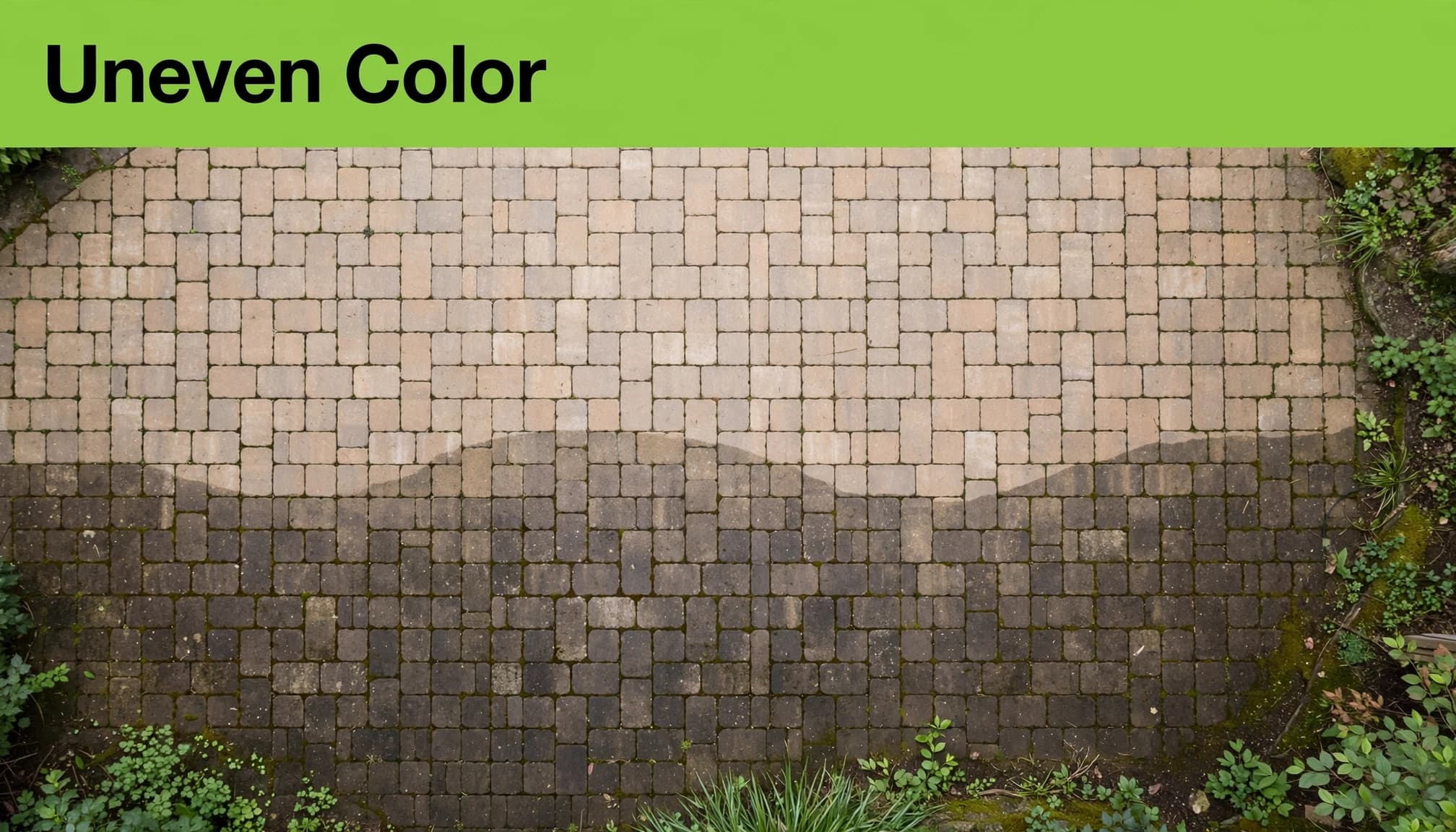
Pressure cleaning can leave outdoor pavers looking uneven because different areas receive different cleaning intensity, retain moisture, or reveal natural color differences. Aggressive washing can also mark the surface, so patchiness alone doesn’t identify the cause.
We recommend letting the paving dry completely before deciding whether it needs more cleaning or restoration. Another pressure-washing pass may make the contrast worse if the surface already shows damage.
Start with the pattern, surface feel, and condition of the affected areas.
Key Takeaways
- Uneven cleaning passes can leave stripes, while damp sections can temporarily look darker.
- White deposits, remaining discoloration, and cloudy finishes need different assessments.
- Natural stone variation may become more visible after dirt washes away.
- More pressure and another coat of sealer aren’t dependable corrections for unexplained discoloration.
Why Pressure Cleaning Leaves Uneven Paver Color
Cleaning changes what you see on the surface. However, a difference in appearance doesn’t always mean the pavers have lost their original color.
Uneven Passes Leave Different Cleaning Results
Changes in nozzle distance, travel speed, or overlapping passes can remove more buildup in one area than another. The result may look like stripes, arcs, or sharply defined clean patches.
A lighter section may simply have less surface dirt. However, excessive pressure, a concentrated spray, or prolonged spraying in one place can scar pavers.
We recommend comparing both color and texture. A roughened strip or visible surface mark deserves assessment before further washing. Increasing pressure won’t reliably correct an embedded stain or restore a damaged finish.
Moisture and Remaining Dirt Change the Contrast
Wet pavers often look darker than dry ones. Therefore, judging the result while parts of a patio remain damp can give a misleading impression.
Shaded edges, low spots, and areas beside planters may dry differently. Let the entire surface dry before comparing sections in consistent daylight.
Cleaning can also reveal differences that dirt previously concealed. Quarried stone doesn’t necessarily have a uniform base color, and removing buildup may make its existing tonal variation easier to see. That distinction matters before you choose another treatment.
Read the Marks Before Choosing a Treatment
The shape and location of discoloration offer useful clues. However, several conditions can look similar, so appearance alone shouldn’t determine the cleaner.
White Deposits Need a Different Approach
White, powdery material may be efflorescence, which develops when moisture carries salts to the surface. The deposit can return while that movement continues.
The CMHA pavement maintenance guide explains that cleaners formulated for concrete pavers can remove efflorescence. It also warns that improper cleaning can cause damage.
A cloudy film, peeling finish, or pale surface isn’t automatically efflorescence. Our guidance on removing paver efflorescence safely explains why identifying the deposit comes before chemical treatment.
Avoid treating every white patch with the same product, especially where the paver material or existing finish differs.
Dark and Orange Marks May Remain After Washing
Green or black buildup often points to moisture and organic growth. Orange or reddish-brown spots may relate to metal, irrigation, or fertilizer.
Oil and leaf marks can also remain after surrounding dirt washes away. On brick driveways, this can make tire paths and parking areas look more pronounced after cleaning.
The Natural Stone Institute’s stone stain-removal guidance separates treatments by stain type. We follow that same principle: identify the mark before choosing a stronger treatment.
Leave persistent stains visible for assessment rather than covering them with sealer.
Choose a Cleaning Method That Protects the Surface
Brick pressure cleaning for outdoor pavers requires a method suited to the actual material and surface finish. There isn’t one safe pressure setting for every patio, driveway, or commercial entrance.
Test Gently and Judge the Dry Result
We recommend the lowest effective cleaning intensity permitted for the pavers. When pressure washing is appropriate, a broad spray and controlled movement reduce unnecessary concentration on one spot.
Test a small, inconspicuous area first, then let it dry before judging the result. Damp paving can temporarily conceal white marks or make a treated patch look more uniform.
For quarried-stone paving, the Natural Stone Institute’s care guidance provides material-specific cleaning considerations. Acid-sensitive stone and coated surfaces need particular care.
Stop if the surface develops stripes, scarring, or a noticeable texture change. Repeated washing isn’t a repair method for those conditions.
Protect Joints and Separate Additional Work
Avoid directing spray into joints. A narrow jet or turbo nozzle is unsuitable for routine cleaning intended to preserve existing joint material.
A surface-cleaner attachment doesn’t automatically prevent joint-sand loss.
After washing, inspect edges and joints for missing material or loose pavers. Our safe brick paver cleaning methods explain these precautions in more detail.
Cleaning, stain treatment, joint work, sealer removal, and resealing are separate tasks. We recommend defining the necessary scope before work begins, because a clean surface may still need repairs or finish restoration.
Recognize Normal Variation in Natural Stone
Some uneven paver color reflects the material rather than the cleaning method. Monotone stone has little tonal variation, while multi-color stone contains different hues that add movement and texture.
Heron Bluestone, for example, offers a relatively consistent charcoal-gray palette. Lichen Split Stone has stronger variation, including copper, brown, and deep gray tones.
These materials shouldn’t produce the same visual result after cleaning. A naturally varied surface can remain clean while individual pieces look noticeably different.
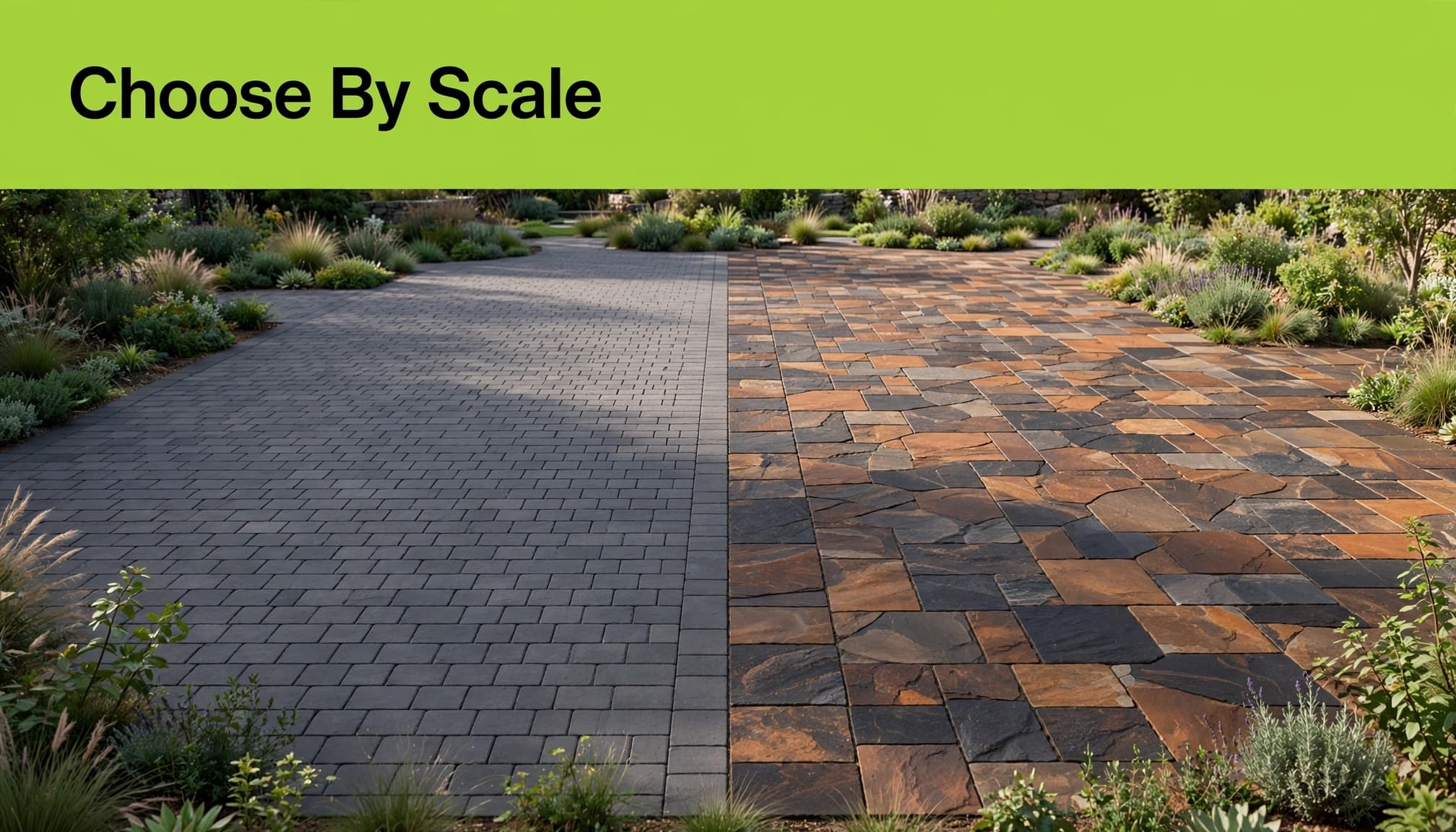
Tonal variation can also make ordinary dirt and blemishes less conspicuous. In contrast, a nearly uniform surface provides a clearer background for dark marks and pale deposits.
That doesn’t mean varied pavers require less maintenance. It means their color range can make everyday changes less visually distracting.
We recommend judging the cleaned paving against the material’s intended appearance. A uniform-color expectation isn’t appropriate for every type of stone paving.
Account for Sunlight, Shade, and Scale
Lighting affects how strongly differences stand out. Compare the paving under similar conditions rather than judging one section in sun and another in shade.
For replacement or redesign decisions, comfort also matters. A light paver across a large open area can create glare in direct sunlight. A dark paver may become hot under afternoon sun, making barefoot use uncomfortable.
In shaded areas, an entirely dark surface may feel visually heavy. Bluestone varies in color, and pieces with light-dark tonal variation may provide a more balanced appearance.
Scale changes the decision as well. A small sample can make a color seem more consistent than it looks across an expansive patio or driveway.
We recommend viewing several pieces together and considering the full paved area and its color palette. Even subtle tonal variation can work better across a large surface than a strictly monotone finish.
Also consider the viewing position. A color difference visible close up may look less distracting across the complete patio, while repeated cleaning stripes can remain obvious.
Use Texture and Surroundings to Guide Color Decisions
If persistent mismatch leads to a design change, color alone shouldn’t determine the replacement. Surface finish and format also affect how the paving reads.
A monotone paver can gain visual movement without a major color change. Fallow Granite’s natural flecks and Lichen Split Stone’s varied face add visual detail within a restrained palette.
Combining complementary tones or different formats creates another option. Outdoor Establishments used Raven Granite in a modular driveway pattern with Raven cobblestone edging. The format change added interest while maintaining a coordinated appearance.
A bluestone border beside Raven Granite can define an edge without adding another paving format.
Consider the architecture, interior finishes, and hardscape alongside planting. Assess the hard and soft landscape together, including how paving relates to planting. Stone color can connect the outdoor area with adjacent interior spaces.
A complementary tone doesn’t have to match every surrounding material exactly. It should fit the overall color palette and support a cohesive space without introducing another competing color.
These are design choices, not cleaning corrections. Sealer doesn’t reliably correct a mismatch in color, surface character, or size.
Frequently Asked Questions
Will Another Wash Make the Color Even?
Another wash may help where ordinary dirt remains, but it can worsen scarring or joint loss. Let the paving dry first and identify whether the contrast comes from buildup, deposits, or a surface change.
We recommend stopping when a permitted treatment produces no improvement. More pressure isn’t a dependable substitute for the correct treatment.
Should Pavers Be Sealed Immediately After Cleaning?
No. Remaining residue, unexplained cloudiness, and an uncertain existing finish need assessment before another coating goes on.
Sealer can change appearance, but it doesn’t remove stains or repair a damaged finish. We recommend a compatibility test before applying a color-enhancing product across the full area. Follow the selected product’s drying requirements rather than using a universal waiting period.
Does Missing Joint Sand Explain Every Pale Patch?
Missing sand changes the appearance of joint lines, but it doesn’t explain every difference across paver faces. Inspect the joints and the surface separately.
Suitable replacement joint material may be necessary after cleaning. However, additional sand won’t correct rocking pavers, repeated washout, or other movement. Our Florida paver maintenance guidance covers these broader warning signs.
What Paver Color Hides Dirt Most Effectively?
Pavers with tonal variation are generally more forgiving of everyday dirt than a uniform surface. A dark paver can make pale deposits or residue stand out. There’s no single best color for every property.
Choose a palette that suits the exposure, surrounding materials, and intended use. For sunny poolside or patio areas, heat and glare deserve attention alongside appearance.
Restore the Surface Without Creating More Contrast
The right response to uneven color starts with identifying the condition, not increasing pressure. Compare fully dry pavers, distinguish deposits from surface changes, and protect the joints during any further cleaning.
We can assess paver repair and restoration needs across Southwest Florida. If uneven patches remain or washing exposes damage, Contact Us for a FREE Quote so we can discuss the appropriate work for your property.