A white haze can make a new paver patio look unfinished. Before cleaning, identify what caused the marks. Gentle cleaning often works, but using the wrong cleaner or sealer can make the surface harder to restore.
Check the paver material, any existing coating, and nearby water sources before treatment. This helps you choose a safe cleaning method.
What Causes White Efflorescence on Brick Pavers?
Efflorescence is a natural process: water carries water-soluble salts through masonry and leaves them at the surface as it evaporates. In cement-based materials, including concrete pavers, leached calcium hydroxide can react with carbon dioxide to form calcium carbonate. Clay brick can also develop salt deposits, though the salts involved may differ.
The Brick Industry Association’s guidance on efflorescence explains that it is usually not harmful to brick masonry. A white deposit alone doesn’t mean your pavers have lost strength or establish hydrostatic pressure. It does affect their appearance, especially on dark-colored driveways and patios.
Moisture keeps the process going, and rain, irrigation, washing, or water that lingers can all contribute. The installation process can influence moisture intrusion, while later water infiltration may come from nearby sources. We pay attention to where the haze appears before deciding how to clean it. A broad, light dusting calls for a different response than a thick deposit that returns beside the same downspout.
Confirm the White Haze Before Cleaning
Efflorescence often appears as a powdery white mineral deposit on a dry, unsealed surface. Brush a small dry spot with a stiff nylon brush to see if loose material comes away. Note whether the marks return after the pavers dry.
Don’t assume every cloudy finish is a salt deposit. A sealed surface can look cloudy because of moisture under the coating, a failing finish, or an incompatible product applied over an older sealer. Our Florida paver cleaning guide explains why a cloudy coating needs inspection before another cleaner or sealer goes on.
Other residue can look similar. Polymeric sand may leave polymeric haze after joint work, while fertilizer, hard water, and pool chemicals can mark nearby paving. Check when the stain first appeared and which products were used. If you’re unsure what the paving stones are made of, keep the installer’s paperwork or a spare paver to identify whether they’re concrete pavers, clay brick, or natural stone.
Test a small, hidden spot first to help prevent a larger mistake. Let it dry completely before judging the result; damp pavers can temporarily hide white marks.
How to Remove Efflorescence From Brick Pavers
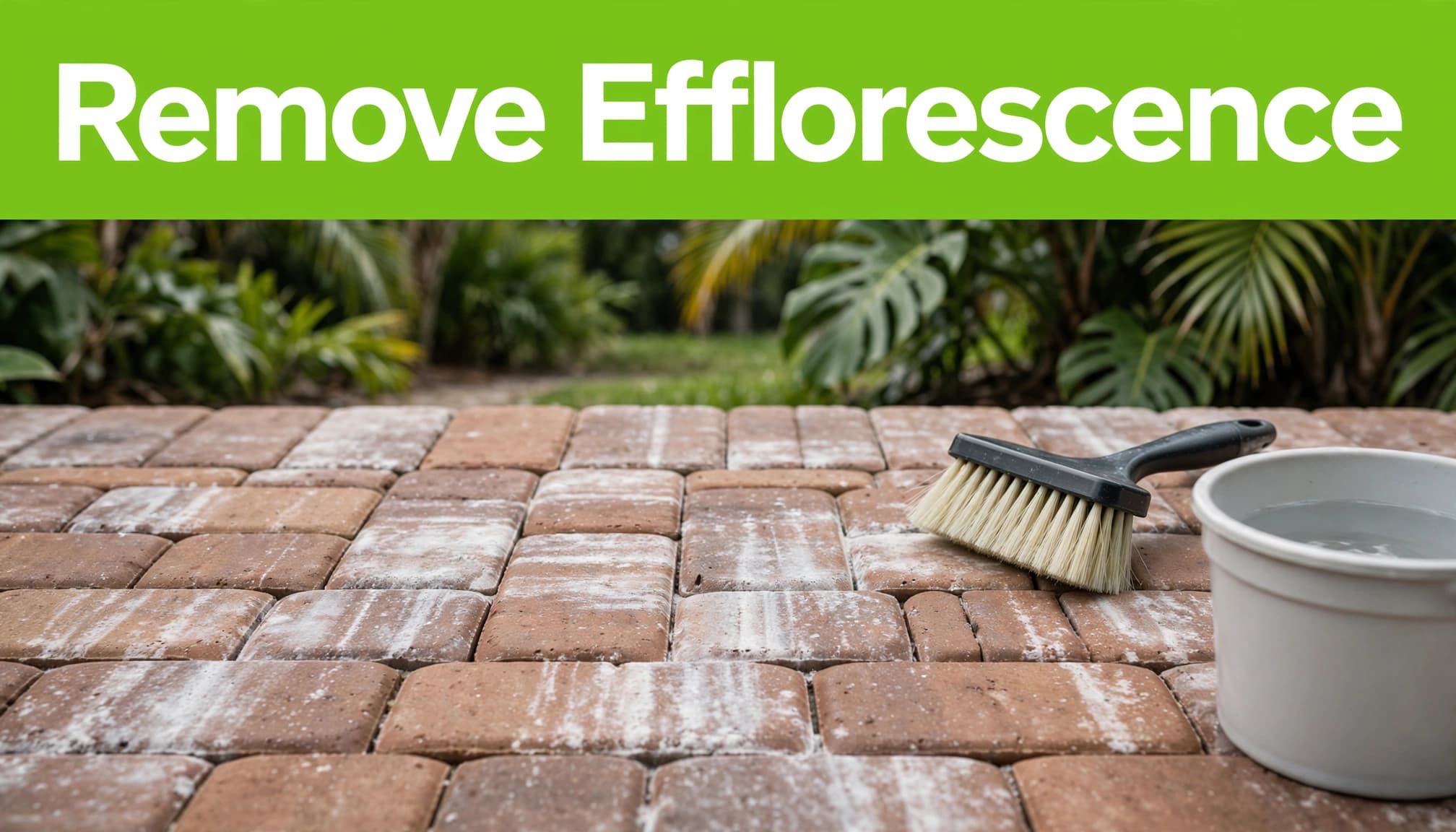
When cleaning pavers, start with the least aggressive method allowed by the manufacturer. The Brick Industry Association’s brickwork cleaning guidance says white deposits on brick can often be dry-brushed or cleaned with a stiff fiber brush and water. Treat that as a starting point, not approval to use the same cleaner on every concrete paver or stone surface.
Start With a Dry Brush
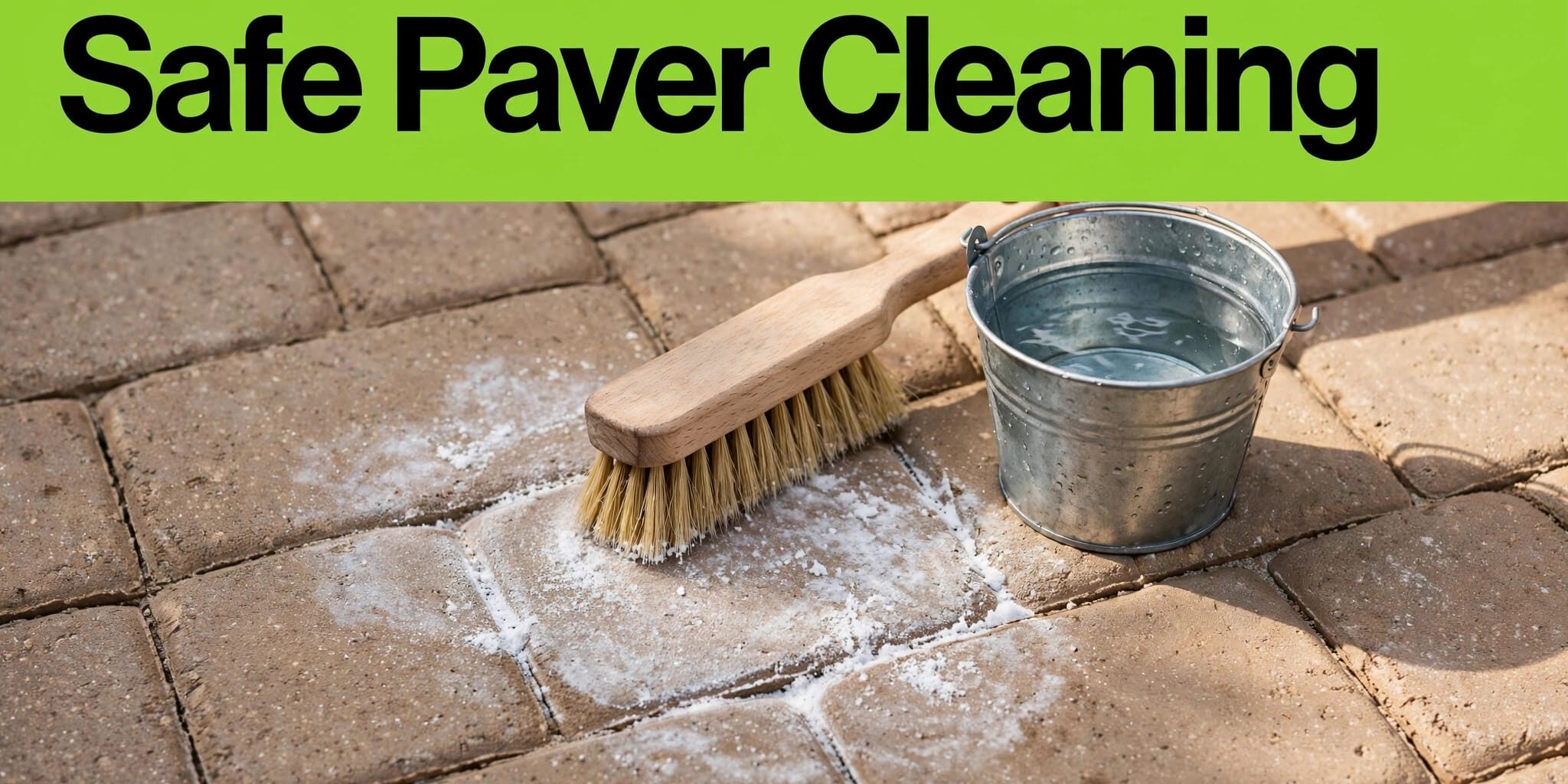
Choose a dry day and sweep away loose dirt first. Brush the affected pavers with firm, even strokes using stiff nylon or fiber bristles. Collect the loosened powder instead of washing it into the joints.
Test an inconspicuous spot before scrubbing the whole surface. Avoid wire brushes, which can scratch pavers or leave metal particles that may stain. If the deposit lifts and the color looks even, you may not need another treatment.
Use Water Carefully, Then Recheck
If brushing leaves residue, lightly wet a small area and work it with the same brush. Rinse thoroughly with a gentle flow of clean water. Don’t flood the joints or let cleaning water collect beside a building or pool.
Let the surface dry, then inspect it in daylight. Soap and water can remove ordinary dirt, but soap isn’t a reliable treatment for persistent mineral deposits. If gentle brushing and water aren’t enough, consider an efflorescence remover approved for your paver, and follow its label. Avoid unsuitable acids and aggressive pressure washing, which can remove joint sand, mark paver faces, or leave the area uneven.
Choose a Cleaner That Matches the Paver
A purpose-made efflorescence remover may be appropriate when brushing and water aren’t enough. Product claims apply to specific materials and conditions, so read the full label and test an inconspicuous area. Protect nearby plants, metal, glass, and pool finishes as directed.
These product descriptions show why the material matters.
| Product | Manufacturer’s stated use | Check before use |
|---|---|---|
| PROSOCO Safety Klean | Cleaning new masonry, including efflorescence | Confirm it suits the installed paver and finish |
| PROSOCO Sure Klean 600 | Removing efflorescence from brick and new concrete or stone construction | Follow the stated dilution and application directions |
| PROSOCO 101 Lime Solvent | Cleaning dark-colored brick and tile | Don’t assume every dark paver is approved |
The name on a product isn’t enough to establish compatibility. A paver’s color, composition, and existing sealer can change the result.
Compare Product Directions, Not Strength Alone
PROSOCO lists Safety Klean for new masonry cleaning and describes Sure Klean 600 for brick and new concrete as safer than muriatic acid on new masonry. Some products work through a chemical reaction with mineral deposits such as calcium hydroxide. Still, a product listed for brick may not suit all concrete pavers.
That doesn’t make every acid-based cleaner suitable for every patio, pool deck, or previously sealed driveway. Follow the cleaner and paver manufacturers’ directions for dilution, protective equipment, dwell time, and rinsing. Never mix cleaning chemicals. If the label doesn’t name your material or the existing coating is uncertain, ask the manufacturer before applying the product.
Take Extra Care With Dark Pavers and Acid
Dark-colored pavers show color changes and uneven cleaning more readily. PROSOCO markets 101 Lime Solvent for dark-colored brick and tile, but that description doesn’t cover every dark paver. Test first and inspect the spot after it dries.
We don’t recommend household muriatic acid as a default treatment. Incorrect use can damage surfaces and nearby materials, and its fumes require serious care. If a suitable commercial product can’t be confirmed, a professional assessment is the safer next step.
Find the Moisture Source If Haze Returns
Cleaning removes visible deposits, but it won’t stop them from returning while moisture intrusion keeps carrying salts to the surface. Watch the area through a rain or irrigation cycle, and note where it stays wet after nearby pavers dry.
Look for Water Arriving From Above
A downspout that empties onto brick driveways, an irrigation head that repeatedly wets one corner, or pool deck runoff can keep a small area damp. Clear blocked drains and adjust irrigation so water isn’t repeatedly directed across the same pavers. Check whether the deposit follows a visible water path.
Southwest Florida’s heavy rain makes post-storm inspections useful. We recommend checking the surface after it dries, since standing water can hide the location of the white deposit.
Flag Persistent Dampness Below the Surface
A spot that remains damp without an obvious surface source may point to water infiltration through the paving system or water collecting where it can’t drain. Surface cleaning alone won’t identify the cause. Recurring efflorescence by itself doesn’t prove hydrostatic pressure, but a professional should assess it if other evidence suggests water is being forced through the masonry.
Keep a record of when the marks return and take photos after rain. If you also see low spots, loose edges, or repeated joint-sand loss, arrange an inspection. Those conditions need attention beyond stain removal.
Wait Until Pavers Are Clear and Dry Before Sealing
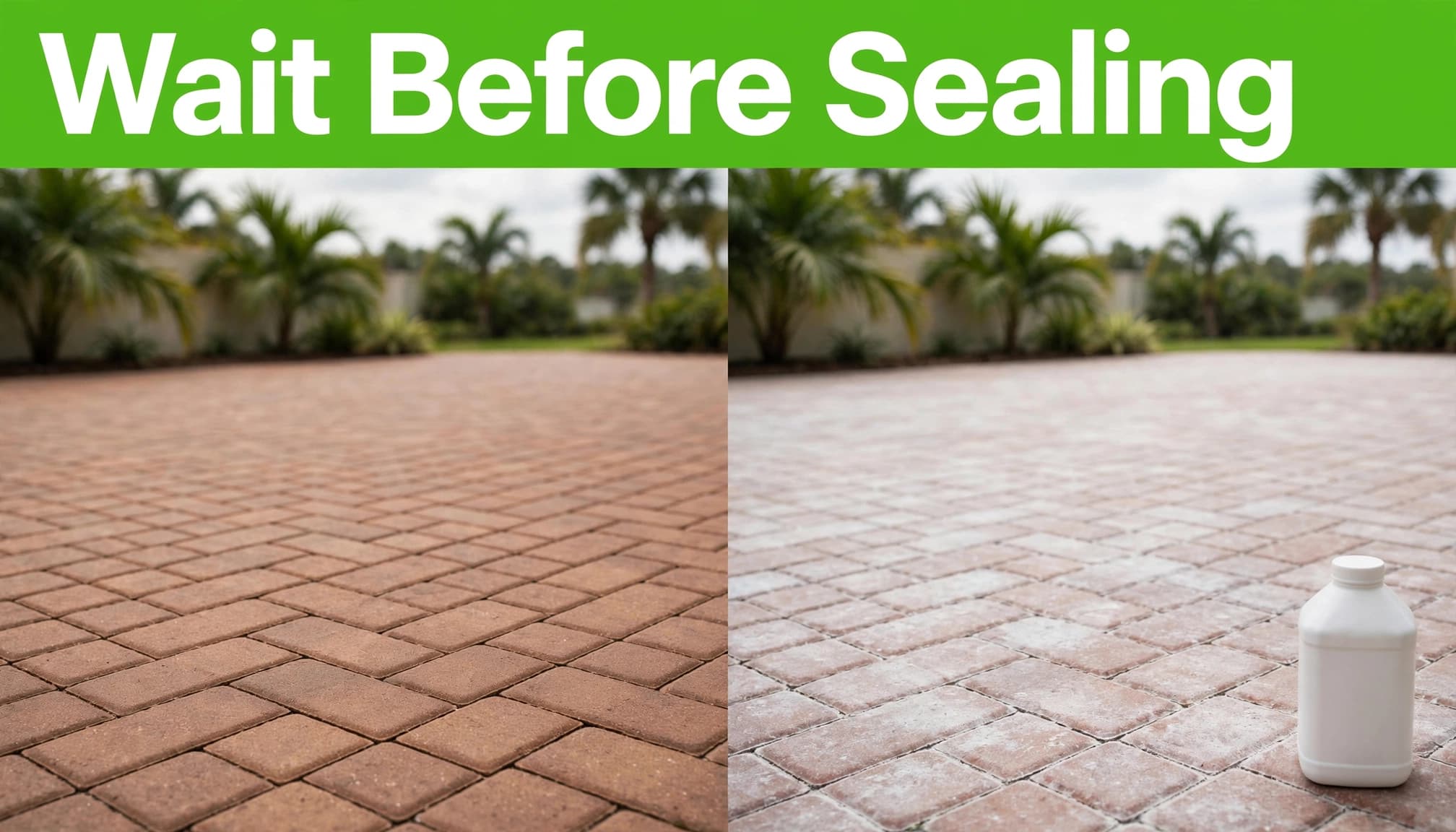
Sealing over white residue can lock an uneven appearance beneath the finish. Moisture under a coating can also contribute to cloudiness. Before sealing, identify the deposit and clean the surface. Let pavers dry fully according to the chosen sealer’s directions, including for breathable sealers.
Check the Existing Finish First
Find out whether the pavers have already been sealed and, if possible, which product was used. Peeling, glossy patches, and white areas beneath a coating call for an assessment of the finish. Another coat won’t correct a failed one.
Sealers vary by material and appearance. Penetrating sealers may suit a more natural look, while film-forming products change the surface finish. Our guide to choosing a sealer for brick pavers covers those choices and the ongoing care involved in sealing pavers.
Check the Surface and Joints Together
After cleaning, inspect the joints for missing sand, especially if the area was pressure washed. Joint work and sealing have their own product directions and drying requirements. Rushing either job can leave residue on paver faces.
Our brick paver maintenance tips cover routine sweeping, joint care, and sealing options. A clean surface is part of the job, but sound joints and a clear route for water matter too.
When to Ask for Professional Help
A small powdery patch on unsealed pavers is reasonable to test with a brush. Get help when a large area keeps turning white, the surface has an unknown coating, or an acid-based cleaner appears necessary. The same applies when you see persistent standing water or damaged joints.
Tell the contractor what material was installed, when the haze appeared, and which cleaners or sealers have already been used. Photos taken before and after rain can help. We can review the condition of a Southwest Florida paver surface and discuss suitable next steps. Contact Us for a FREE Quote if your driveway, patio, or pool deck needs an assessment.
Key Takeaways
- Confirm the white mark is efflorescence before treating it, especially on sealed pavers.
- Start with dry brushing, then try gentle water cleaning if residue remains.
- Match any commercial cleaner to the paver material and test it before wider use.
- Check for recurring moisture, and apply penetrating sealers only after identifying the deposit and ensuring pavers are clean and fully dry.
Frequently Asked Questions
Will efflorescence disappear without cleaning?
It can lessen through normal weathering, but there isn’t a dependable timetable for every installation. The deposit may also return while moisture continues to move salts to the surface. If the appearance is acceptable, monitoring it avoids unnecessary chemical treatment.
Does the white deposit mean the pavers are damaged?
Efflorescence is usually an appearance issue, not proof of structural damage or hydrostatic pressure. Still, check for separate problems such as cracked pavers, shifting, low spots, and missing joint sand. Those conditions need their own assessment.
Can muriatic acid remove stubborn efflorescence?
An acid can react with some mineral deposits, but household muriatic acid isn’t our recommended first choice. It can damage materials when used incorrectly. Begin with brushing and water, then consider a compatible cleaner according to its label.
Why does the haze look worse on newly installed pavers?
New masonry can contain salts that moisture carries outward. The deposit stands out more when the paver color is dark and uniform. If the surface has already been sealed, have the haze identified before assuming it came from the pavers themselves.
Keep the Cleaning Method as Gentle as the Job Allows
White haze doesn’t mean your pavers are ruined. Identify the deposit first, clean a small area gently, and check whether moisture is bringing it back.
For brick pavers with a persistent or coated white finish, an inspection is better than repeated cleaning or another coat of sealer. That approach protects the appearance you wanted without creating a harder repair.