To remove candle wax from brick pavers, harden it with bagged ice, lift it with a plastic scraper, then wash away the remaining film with compatible mild soap. We recommend removing the solid wax before washing, because heat and scrubbing can spread it into porous paving.
A wax spill may leave an oily or colored mark, especially on unsealed surfaces. Start with the gentlest method, and treat any remaining stain separately.
Key Takeaways
- Place a sealed bag of ice over the wax for about 10 minutes, then lift the hardened pieces with a plastic scraper.
- Wash remaining surface film with compatible mild soap, a nylon brush, and gentle rinsing.
- Avoid boiling water, metal blades, and aggressive pressure washing on pavers, especially when the finish is unknown.
Identify the Paver and Finish Before Cleaning
Separate Clay Brick From Concrete and Stone
“Brick pavers” can describe clay brick or brick-shaped concrete. Nearby borders or pool coping may also contain travertine, marble, or another natural stone.
These materials don’t tolerate every cleaner equally. A product suitable for unsealed clay brick may damage a coating or acid-sensitive stone.
We recommend starting with physical wax removal rather than applying a household solvent. Sweep away loose grit first so the scraper doesn’t drag abrasive particles across the surface.
Test Any Cleaner on a Hidden Area
An existing sealer changes which cleaning products are suitable. If the coating is unknown, treat it as solvent-sensitive.
Apply a small amount of the proposed cleaner in an inconspicuous spot. Follow its stated contact time, remove it as directed, and let the paving dry completely.
Then compare the color, sheen, and texture with untreated paving. Stop if the test causes discoloration, softening, roughness, or a change in gloss.
Candle Wax Removal: Chill and Lift the Deposit
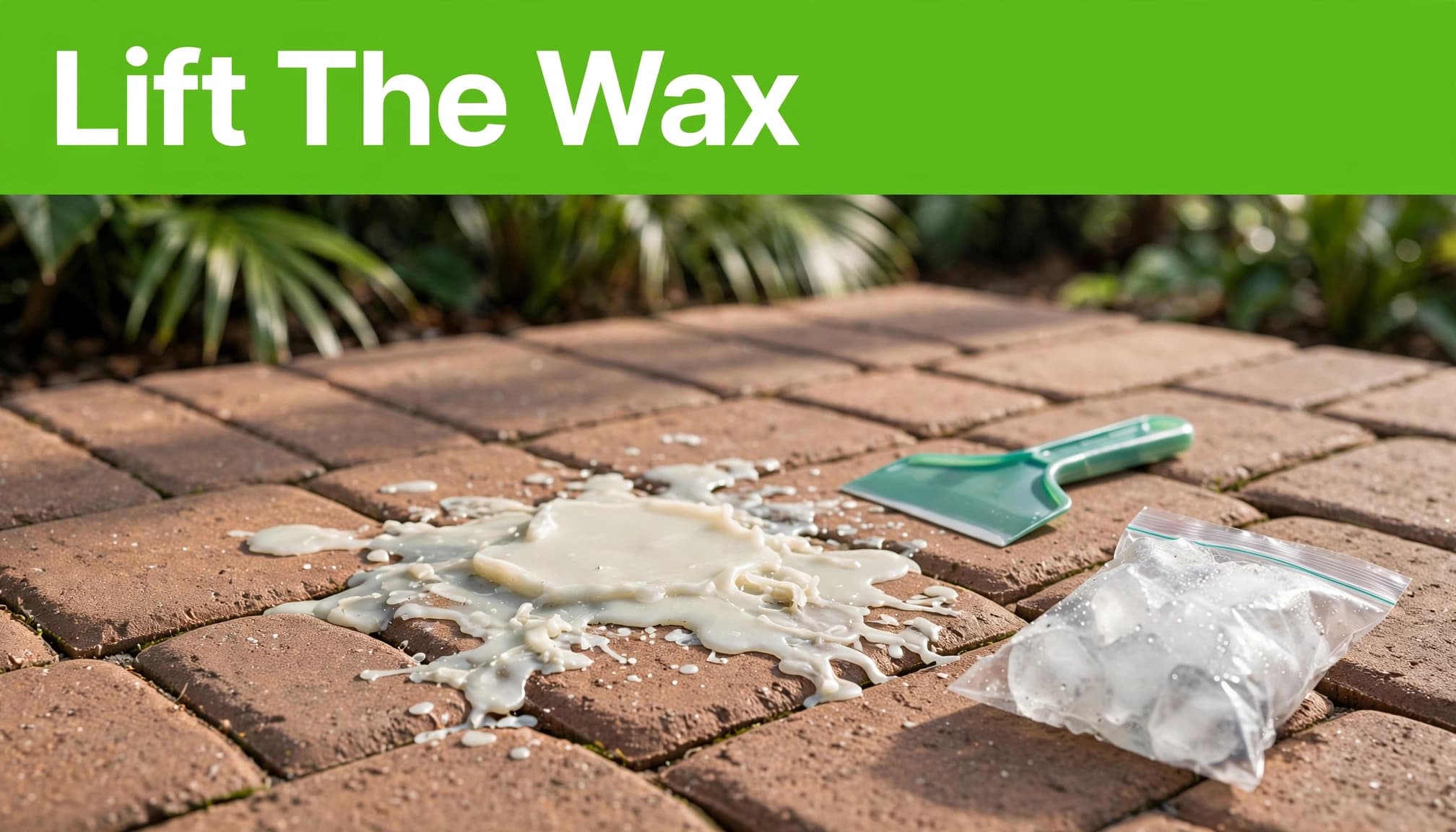
Let fresh wax cool before touching it. Don’t hose away liquid wax or rub it with a towel, because either action can spread it.
Then follow this sequence:
- Place ice cubes inside a sealed plastic bag and rest it over the wax for about 10 minutes. The deposit should become firm and brittle, though thick wax may need longer.
- Slide a plastic scraper, plastic putty knife, or old credit card beneath an exposed edge. Keep the tool nearly flat and use light pressure.
- Lift the brittle hardened wax pieces and place them directly into a waste container. Avoid pushing fragments into the joints.
- Repeat the cooling and scraping until most raised wax is gone. Stop before the scraper begins marking the surface.
A small nylon brush can collect loose flakes from textured paver faces. Don’t grind remaining wax into the pores with forceful brushing.
For wax beside a joint, work toward the exposed surface rather than digging downward. If removal starts pulling out joint material, stop and leave the deposit for a more controlled treatment.
For a thin film on confirmed compatible, unsealed porous brick, hold a clean paper towel over the spot. Briefly pass low, moving warm air across the towel, keeping the airflow away from one fixed point. Replace the towel and repeat only while wax continues transferring. Skip this step on sealed pavers or surfaces with an unknown finish.
Plastic tools reduce scratching risk, but they aren’t damage-proof. Replace a scraper with a rough or broken edge.
Wash Away the Remaining Surface Film
Use Mild Soap and Controlled Scrubbing
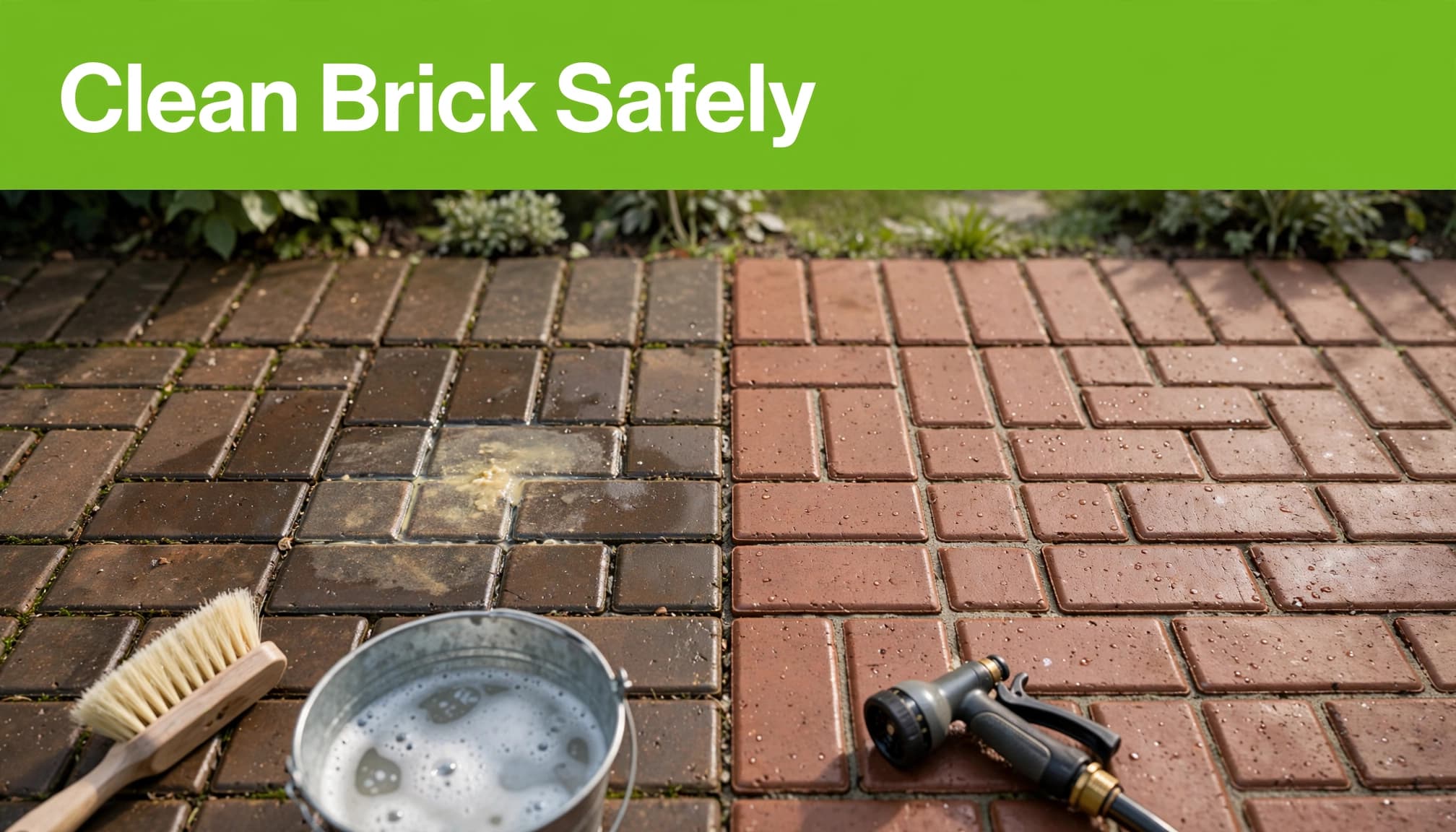
After collecting the solid wax, apply a small amount of diluted, mild, acid-free dish soap if it’s compatible with the paving and sealer. Use warm water rather than boiling water.
Work the solution gently over the remaining film with a nylon or fiber-bristle brush. An old toothbrush can reach small surface recesses without aggressive scraping.
We recommend working in shade during cooler conditions. Southwest Florida sun can heat the paving and dry cleaning solution before you finish.
Collect Residue Before Rinsing
Blot loosened residue with absorbent towels rather than rubbing it across clean paving. Then rinse with a garden hose using a broad, gentle spray.
Keep contaminated water away from pools, planting beds, and storm drains. Stop if the rinse begins moving joint sand.
Let the surface dry fully before judging the result. Damp pavers can hide discoloration, so a wet inspection may suggest the stain has disappeared when an oily shadow remains.
Treat Remaining Oil or Color Separately
Dark, Oily Marks Need a Compatible Treatment
Candle wax, fragrance ingredients, and other oily components can leave a dark mark after the raised deposit is gone. More scraping won’t remove material that has entered the pores.
For persistent residue, use a degreaser labeled for the paver material and existing finish. Apply it only to the affected area at the stated dilution and contact time.
Our guidance on removing oil stains from pavers explains when an absorbed stain may need a compatible masonry poultice. Results vary with the material and stain depth.
Colored Wax Requires Extra Caution
A colored outline may remain even after the wax and oily film have lifted. Don’t assume bleach, acid, or stronger scrubbing will remove candle dye safely.
Rubbing alcohol can help with certain films or dyes on compatible nonporous surfaces, but it isn’t a universal paver treatment. It may affect some sealers.
We recommend professional assessment before using solvents on sealed paving. Don’t flood porous surfaces or joints with remover, and keep flammable products away from candles and ignition sources.
Avoid Heat and Aggressive Pressure on Pavers
Boiling water can soften wax, but on porous paving it may carry melted material farther into the surface or joints. Brief, low, moving warm air with absorbent material is different, use it only on confirmed-compatible, unsealed paving. Heat guns, torches, and clothes irons can damage coatings and nearby materials.
Melting away the raised wax can leave a larger absorbed stain, even when the surface initially looks cleaner.
For a small candle spill, brick pressure cleaning shouldn’t be the first response. Excessive pressure can mark paver faces and wash out joint sand without removing absorbed residue.
Our joint-safe paver cleaning guide explains controlled washing methods. Start with a hose, and don’t direct a concentrated stream into the joints.
Avoid wire brushes and drill-mounted wire attachments, too. They can scratch the surface or leave metal particles that later rust.
If the finish becomes cloudy, sticky, or patchy during treatment, stop. Don’t apply another sealer coat to conceal the change.
Keep Holder and Fabric Methods Off the Patio
Methods used for removable candle accessories don’t automatically suit outdoor masonry.
Freezing and Water Methods for Candle Holders
For suitable, freezer-safe candlesticks, chilling may help wax release. Removable candlesticks with sturdy construction are better candidates than delicate assemblies. Put them in a freezer only if they’re rated for it, and freeze them for an hour or two; some deposits need overnight chilling. Avoid chilling materials that can’t tolerate temperature changes.
Hot water from a kettle poured over a heat-tolerant holder or into a suitable glass jar can melt wax so it floats. However, boiling water can crack a cold or unsuitable jar through thermal shock. Don’t assume every candle jar tolerates it.
Let the water cool and the residue solidify into a disc, then lift it out. Never pour melted wax down a sink drain, where it can harden and cause a blockage.
Wash the emptied jar with warm, soapy water. General glass-cleaning care guidance also recommends mild dish soap, a clear-water rinse, and a soft cloth.
Oven and Iron Methods Need Material-Specific Limits
One commonly shared candlestick method uses a foil-lined baking sheet, an oven at 250-300°F, and 10-15 minutes of heating before wiping while hot. A layer of foil doesn’t make this method safe: finishes, adhesives, and decorative components may not tolerate oven heat, and hot wax can burn.
For washable fabric, first chill the deposit with an ice pack and gently break away excess wax. Where the fabric’s care instructions permit ironing, place a paper towel or plain brown paper over the spot. Use a low, warm, non-steam setting so the paper absorbs melted wax.
Neither method belongs on installed pavers. Fabric treatments may also leave dye that requires separate laundering.
Frequently Asked Questions
Does Goo Gone Remove Candle Wax?
Some Goo Gone products can help loosen wax residue, but the brand name alone doesn’t establish suitability for pavers. Formulations and approved surfaces differ.
We recommend using a remover only when its label covers both the paving material and existing coating. Test it first, collect the loosened residue, and wash away any remaining oily film as directed.
Which Household Cleaners Should Be Avoided?
Bar Keepers Friend, melamine foam such as Magic Erasers, Murphy’s Oil Soap, and Nature’s Miracle enzyme cleaner appear in general cleaning advice. They aren’t interchangeable wax removers or automatic choices for masonry.
Abrasives can alter finishes, while wood soaps and pet-stain enzymes address different cleaning needs. Match the product to the material and stain, and follow all safety labels. Don’t mix cleaners.
Can Pressure Washing Remove All the Wax?
Pressure washing may dislodge surface pieces, but it doesn’t guarantee removal of absorbed wax, oil, or dye. Increasing pressure can damage the paving before it removes the stain.
On brick driveways, isolate the affected spot instead of pressure washing the entire surface to chase one mark. If gentle treatment leaves staining, identify the remaining residue before choosing another method.
How Can Future Candle Spills Be Prevented?
Use a stable candle holder with a drip-catching base, and place it on a heat-resistant tray. Keep candles away from table edges and locations where wind can tip them.
For events on patios or commercial walkways, flameless candles avoid wax spills. Clean existing residue before considering sealer; sealing over wax won’t remove it.
Protect the Pavers While Removing the Wax
The dependable starting point is chilling, lifting, and gentle washing. Once the surface dries, treat any remaining oily or colored mark with a product suited to the paving and finish.
If cleanup exposes coating damage, loose pavers, or joints needing attention, we can assess your restoration or repair needs. Contact Us for a FREE Quote for help with your Southwest Florida paving.