An oil spill on your driveway needs attention before it soaks farther into the surface. To remove oil stains from brick pavers, first use an absorbent to lift fresh oil, then clean gently and rinse.
Fresh oil stains are usually easier to treat than oil that has remained for weeks or months. Results depend on stain age and paver material. Older stains may need repeated treatment, and some discoloration can remain.
Identify your pavers’ material before choosing a method, since pavers can react differently to cleaners. Start with the least aggressive option for brick pavers.
Choose a Method for Your Surface
The age of the spill helps determine where to start.
| Stain condition | Starting method | Expected treatment time |
|---|---|---|
| Fresh, wet oil | Blotting and dry material | 30 to 60 minutes |
| Light surface residue | Compatible dish soap or degreaser | Minutes, depending on cleaner |
| Older, absorbed oil | Masonry oil-removing poultice | Often 24 to 48 hours per cycle |
| Persistent petroleum residue | Approved enzymatic or microbial cleaner | Several hours to several days |
Move to a stronger treatment only after the cleaned area dries and you can judge the result.
Identify Clay, Concrete, or Natural Stone
Clay brick and concrete pavers can both absorb oil, but they may respond differently to cleaners. Choose an oil stain remover that matches the material and finish. Concrete pavers may also have a coating that affects product compatibility.
Travertine, marble, and other natural stone need separate consideration. The Natural Stone Institute’s stone cleaning guidance explains that vinegar and other acids can etch calcium-based stone. Use warm water only if the product label allows it.
Account for an Existing Sealer
A cleaner suitable for unsealed paving may soften or discolor an existing sealer. Test a hidden area and let it dry before treating the visible stain.
Stop if the test changes the color, sheen, or surface texture. Our guidance on choosing paver cleaning products covers broader cleaning and protection needs.
Prepare the Area and Contain Runoff
Have an absorbent material, baking soda, paper towels or rags, a broom, a stiff nylon brush, your cleaner, and gentle water ready. Sweep loose debris from the pavers before applying liquid cleaner. Wear gloves, eye protection, and closed-toe shoes. Follow any extra label precautions for solvent-based products.
Keep people and pets away during treatment. Work on a cool surface, and don’t allow cleaner to dry unless its instructions require it.
Before washing the area, plan where contaminated water will go. Don’t send significant amounts of oil into storm drains, landscaping, or nearby water.
Collect used cleanup materials and oily wash water for disposal under local hazardous-waste requirements. The EPA’s stormwater pollution prevention guidance recommends absorbing spilled automotive fluids and properly disposing of the cleanup material.
Never mix cleaning chemicals.
Absorb a Fresh Oil Spill First
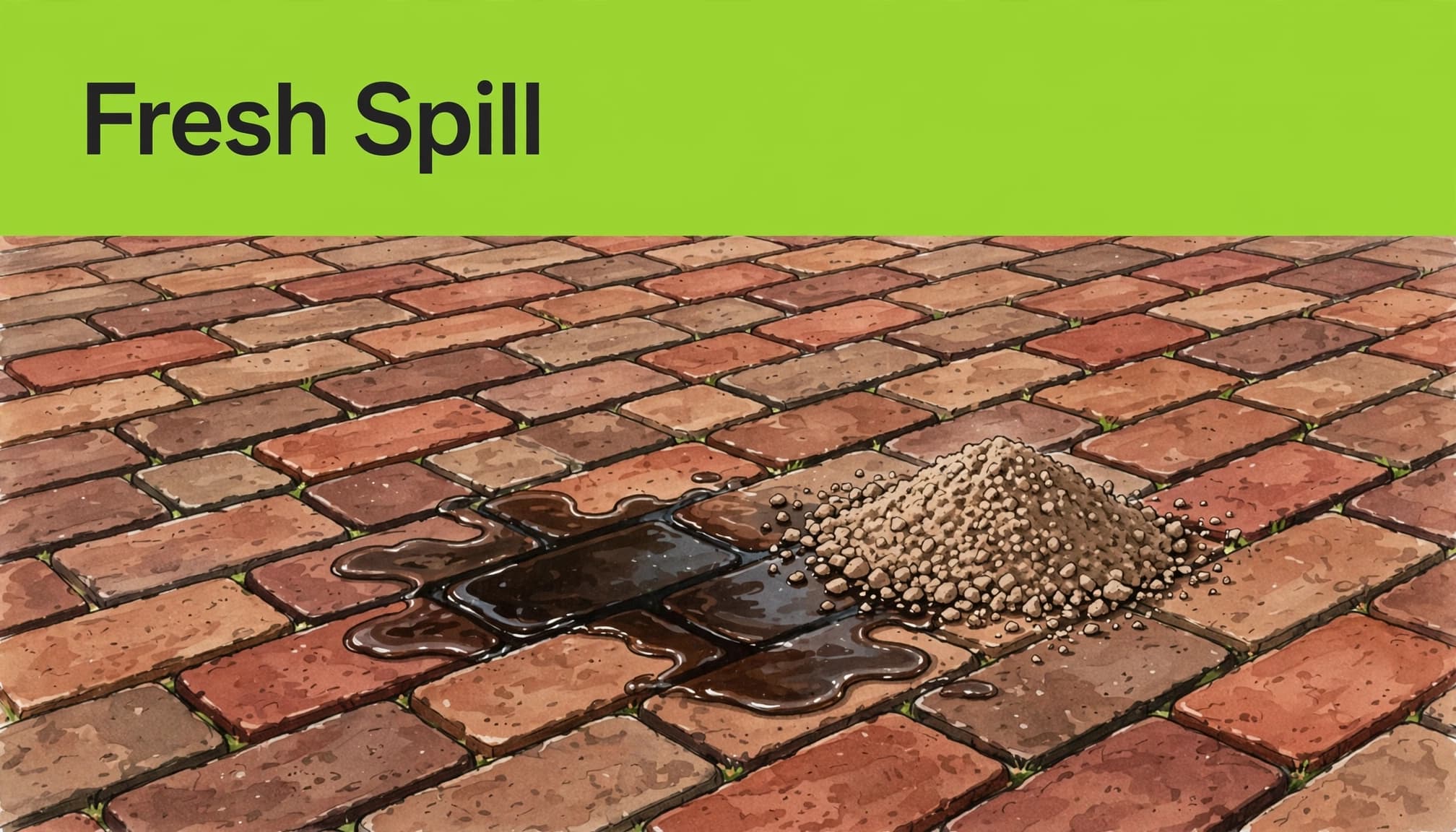
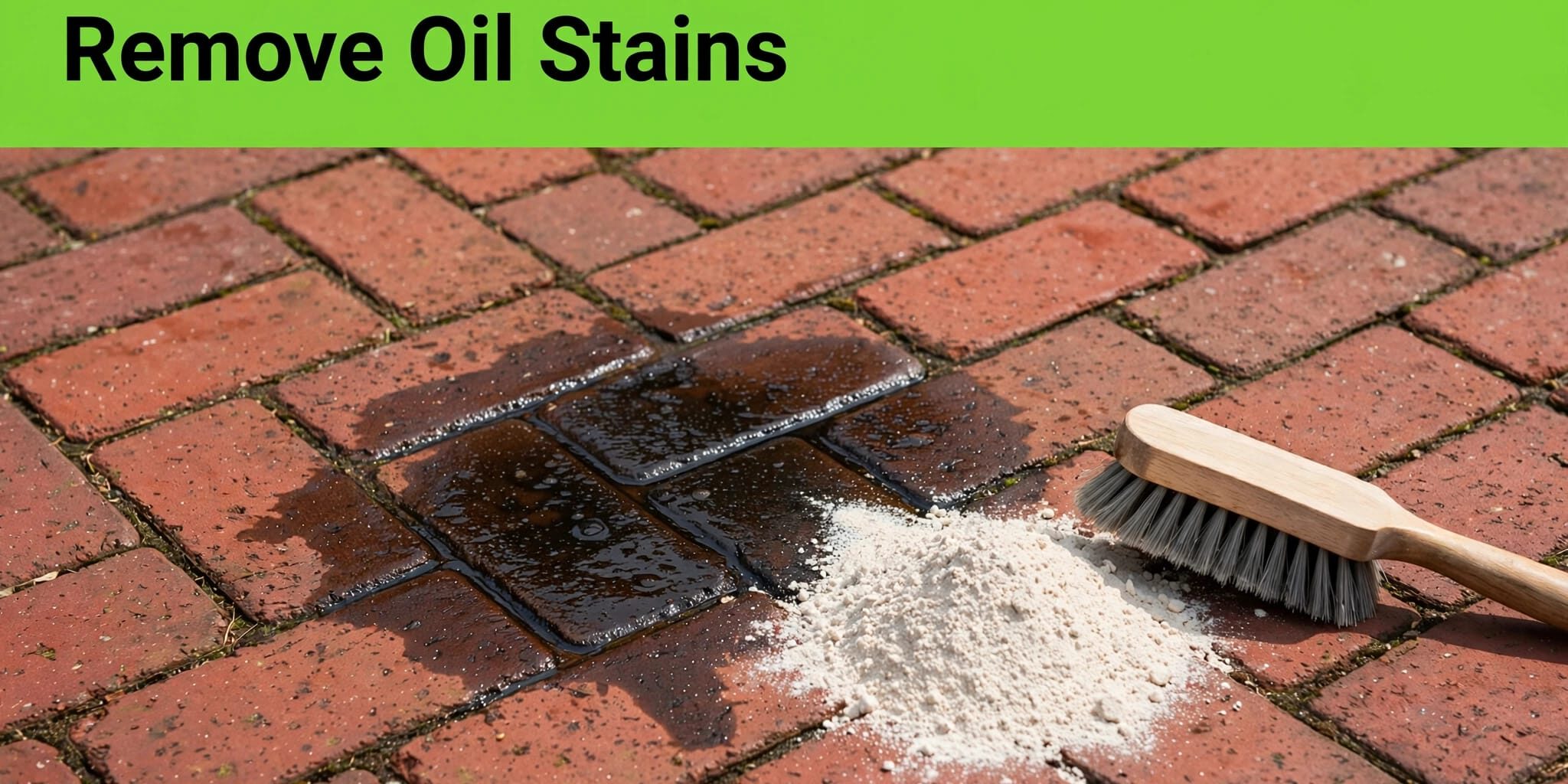
Use paper towels or rags to blot oil from pavers, then choose an absorbent such as plain clay cat litter, baking soda, diatomaceous earth, or sawdust. Keep the absorbent dry, and avoid breathing dust when spreading powders.
- Blot standing oil without rubbing it across nearby areas. Don’t use a hose to wash away the spill.
- Cover the affected pavers with dry material. Leave it for 30 to 60 minutes, longer if it continues taking up oil.
- Sweep up the contaminated material and collect it for proper disposal. Repeat only if the surface remains greasy, then rinse with a small amount of water and contain the runoff.
Absorbents remove accessible oil, but they don’t reliably lift oil already inside the paver. A remaining dark mark needs a separate cleaning treatment.
Avoid grinding cat litter into the surface. It can push oil into the joints and leave residue to remove.
Clean Remaining Oil With Soap or Degreaser
Use a stiff nylon brush rather than a wire brush. Work on a small area of pavers to control the cleaner and wastewater.
Dish Soap for Light Surface Residue
Dish soap can loosen fresh oily residue, but ordinary soapy water won’t reliably remove deeply absorbed stains.
A commonly suggested Dawn mixture uses one part Dawn to four parts warm water, followed by a 10- to 20-minute soak. This concentrated mixture can leave residue, so use it only if it’s compatible with the paver and finish.
- Apply the mixture to the stained surface after removing loose oil.
- Keep it wet during the soak, then scrub gently with the nylon brush.
- Wash the area with a broad, gentle spray and collect oily runoff.
Let the pavers dry before deciding whether treatment worked.
Commercial Degreaser for Persistent Residue
Choose an oil stain remover or another degreaser approved for the actual material and finish. Household products aren’t automatically suitable for clay, concrete, stone, or sealed paving.
A commercial degreaser such as PROSOCO’s product specifies one part product to four parts fresh water for heavy staining, with dilution up to 1:200 for mild staining. Its product-specific dilution, dwell time, temperature, material compatibility, and rinse directions take precedence.
- Apply the prescribed dilution only when the surface is at least 50°F. Previously frozen pavers must thaw first.
- Allow the specified 1- to 3-minute dwell time, then scrub.
- Wash off the cleaner before it dries and contain the wastewater.
The longer dish-soap soak isn’t appropriate for this product. Follow the individual cleaner’s directions.
Use a Poultice for Absorbed Oil
A poultice combines an absorbent material with a cleaning agent to draw contamination out as it dries. Choose a packaged masonry oil-removing poultice that’s compatible with your pavers.
DIY recipes often recommend a peanut-butter consistency, a 1 to 2 inch layer, plastic wrap, and 24 to 48 hours of treatment. These aren’t universal instructions. Follow the product’s directions for coating thickness, covering, and exposure to air.
- Remove loose residue and prepare the surface as directed by the product.
- Apply the poultice beyond the visible stain, following its coating and covering instructions.
- Wait for the required treatment period, remove the dried material, and rinse only as directed.
Older stains may need one to three poultice cycles over several days. Check the result after the pavers dry completely.
A months-old oil stain may fade without disappearing. Stop treatment if improvement plateaus or discoloration remains.
Don’t use gasoline, burn off the oil, or improvise with flammable solvents.
Consider an Enzymatic Oil Cleaner
Enzymatic and microbial oil cleaners break down petroleum-based residue. Consider an enzymatic cleaner if a stain remains after using a degreaser, and confirm the product is approved for your pavers and coating.
Treatment times range from a few hours or overnight to 48 to 72 hours. Follow the product’s directions, since schedules vary and some cleaners don’t require a rinse.
- Remove loose oil and residue from any previous cleaner.
- Apply the cleaner under the stated temperature and moisture conditions.
- Leave it for the full treatment period, then rinse only if required.
Don’t apply bleach or another cleaner during treatment, as this can interfere with microbial action. Avoid starting before heavy rain if the product needs an undisturbed treatment period.
Keep Brick Pressure Cleaning Controlled
A pressure washer isn’t the first tool we recommend for an oil stain. It can remove joint sand, scar pavers, and leave uneven marks without removing absorbed oil.
PROSOCO’s Cleaner/Degreaser guidance describes using a pressure washer at 400 to 1,000 psi and 6 to 8 gallons per minute. Generic pressure washer advice also suggests 1,200 to 2,000 psi with a fan nozzle held 18 to 24 inches away.
Neither range is a universal safe setting. Flow, nozzle, distance, material, age, and finish all affect the result.
Stop pressure washing immediately if sand washes away, the surface becomes rough, or the finish develops stripes. More pressure isn’t a dependable substitute for the right stain treatment.
When pressure washing is permitted, use the lowest effective pressure and a broad fan spray. Test a small area first, keep the wand moving, and avoid spraying directly into joints. Don’t use a narrow jet or turbo nozzle. On a driveway, a hose can rinse away loose cleaner, but don’t scrub if the surface changes.
Our guide to cleaning without removing joint sand covers these precautions in more detail.
Restore the Joints and Protect the Surface
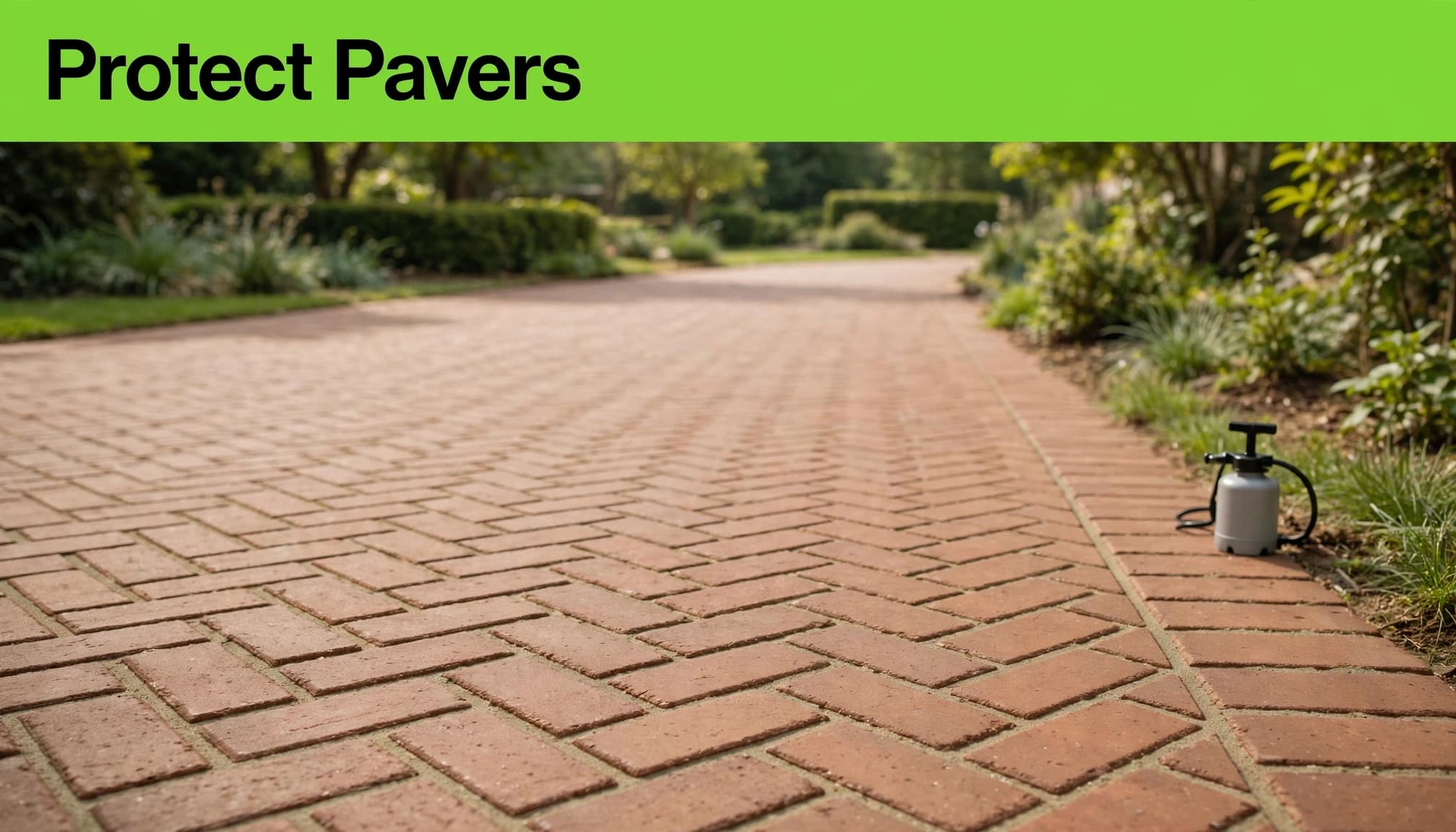
Replace Sand Only Where Needed
Inspect the dry surface for depleted joints, loose pavers, and washed-out areas. Cleaning won’t fix movement or recurring drainage problems.
Replace missing material with compatible paver jointing sand or polymeric sand. Use mason sand only if the paver system allows it. Keep ordinary sand out of permeable joints.
Complete compaction and curing as the selected material requires. Filled joints support stability and limit spaces where debris and weeds collect. See our guidance on replacing paver joint sand for maintenance preparation.
Allow Drying Before Sealing
Don’t apply a sealer over oil residue or trapped moisture. If the product requires dry paving, allow several rain-free days after washing. Humidity and shade can extend drying time.
A compatible product makes future spills easier to clean, but it won’t make a brick driveway stain-proof. Many surfaces need resealing every two to three years, depending on the product, traffic, weather, and condition.
Place drip pans or suitable mats under vehicles with leaks. Repairing the leak is the most dependable prevention.
Frequently Asked Questions
Can WD-40 Treat Oil Stains on Pavers?
We don’t recommend WD-40 as an oil-stain treatment because it can leave oily residue. Use an absorbent, then a cleaner approved for the paving material. Dawn dishwashing liquid may help with surface residue, but it won’t treat oil absorbed into the paving.
Should Vinegar or Bleach Be Used?
Neither is our recommended oil-stain treatment. Avoid both on natural stone unless an approved stone-care procedure expressly permits them. Daltile’s natural stone care instructions warn against acid- and bleach-containing cleaners.
Will Old Oil Stains Disappear Naturally?
Weathering may lighten them, but complete disappearance isn’t dependable. Oil absorbed into porous concrete or clay can remain visible. Repeated poultice treatment may improve the appearance, but the color may not match perfectly.
When Is Professional Treatment Appropriate?
Arrange an assessment for large spills, uncertain materials, damaged sealer, loose pavers, or stains that stop improving. Professional help is also appropriate when you can’t contain contaminated runoff safely.
We provide paver cleaning, sealing, and restoration in Southwest Florida. Contact Us for a FREE Quote to discuss the treatment your property needs.
Remove the Oil Without Damaging the Pavers
To remove oil stains, absorb fresh oil first, then use a compatible treatment, such as a poultice, for residue.
Let the surface dry before judging the result, and protect the joints by avoiding aggressive cleaning.