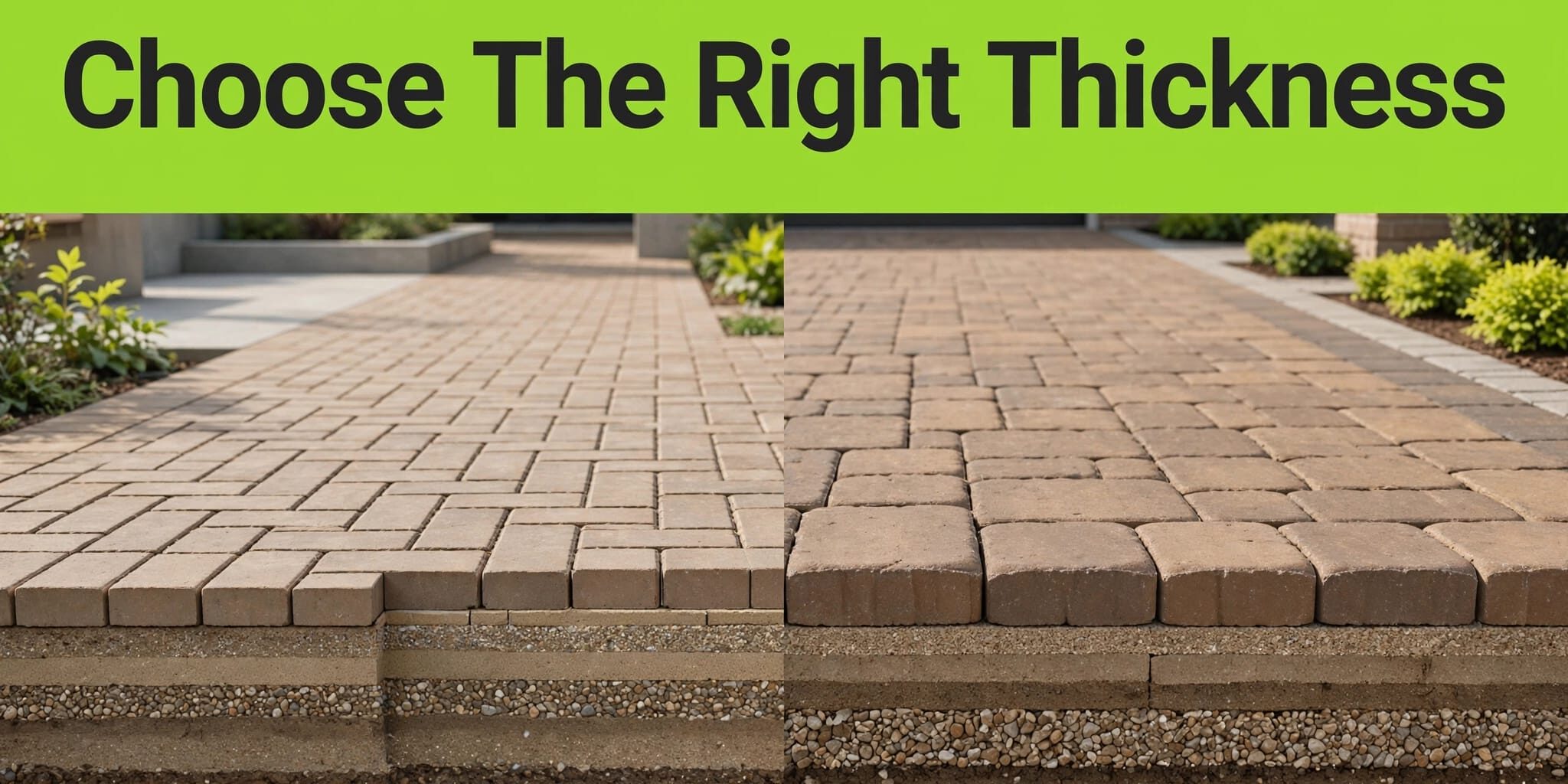
The correct unit thickness depends on its use, expected traffic, site conditions, and the complete paving system, not appearance alone. Load requirements should guide the selection before color, pattern, or price.
Paver thickness describes the unit itself, separate from the support system beneath it. Foot traffic, parked vehicles, turning tires, and daily use all affect performance. A walkway, patio, and driveway may use similar-looking materials, but they should not automatically use the same paver size or installation system, such as sand set pavers.
Key Takeaways
- Choose brick paver thickness based on the intended load, traffic, site conditions, drainage, and complete installation system—not appearance alone.
- Walkways and patios commonly use pedestrian-rated units around 2 1/4 to 2 3/8 inches thick, while driveways should use vehicle-rated pavers suited to repeated car loads and turning tires.
- ASTM C902 generally covers pedestrian and light-traffic paving brick, while ASTM C1272 applies to heavier vehicular traffic. Always confirm product ratings, compressive strength, and manufacturer recommendations.
- Thin clay pavers around 1 3/8 inches thick can work for overlays on a sound, properly sloped concrete slab, but they are not automatically suitable for driveways.
- Properly compacted base material, drainage, joint sand, installation method, and secure edge restraints are essential because a thicker paver cannot correct weak soil, standing water, or an unstable support system.
Start With the Load, Not the Look
The intended use is the first decision. Paver thickness must match the load and work with the full installation system, including base preparation, stable support, drainage, joint sand, and edge restraints.
Walkways and patios have lighter demands
Garden paths, entry walks, lanais, and most patios carry pedestrian traffic and outdoor furniture. Clay pavers are common in these areas, and choosing the right paver size helps create a balanced finished surface.
A standard paving brick around 2 3/8 inches thick is a common choice because it provides substantial coverage without unnecessary height.
A patio may also have grills, tables, and planters, so it still needs reliable support. However, it does not receive the concentrated force created by a vehicle braking or turning in one place.
Brick driveways need vehicle-rated units
Brick driveways should use pavers rated for vehicular traffic, not material selected only for its appearance. Passenger cars create repeated point loads, especially near the garage, at turning areas, and along the street connection.
We recommend reviewing the paver rating, thickness, pattern, soil conditions, and drainage together. The installation method should also suit the selected load rating, including systems using sand set pavers.
A 45-degree herringbone pattern is often a dependable choice for driveways because the interlocking layout helps distribute vehicle forces across the surface.
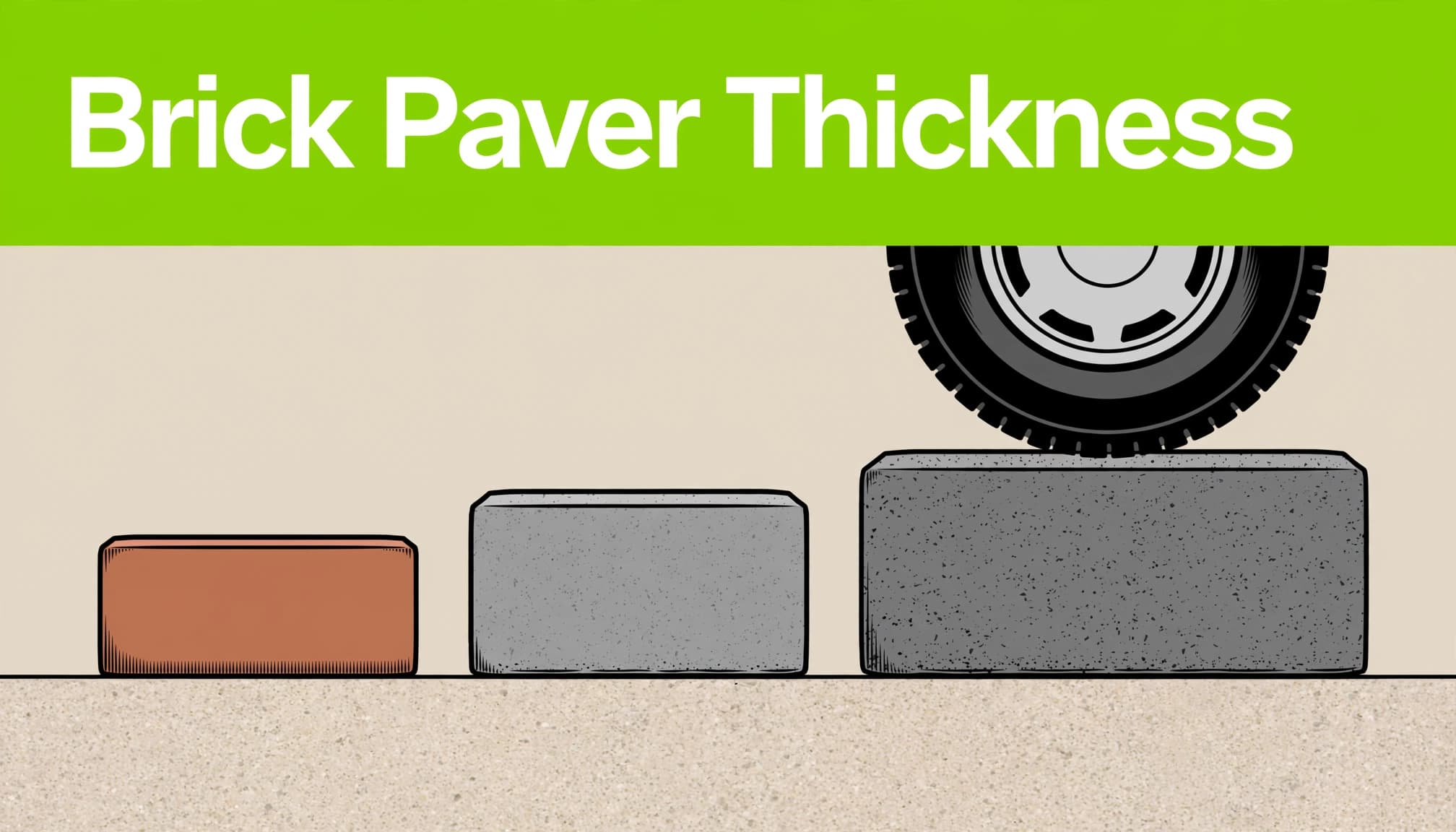
Brick Paver Thickness and ASTM Standards
ASTM standards help show whether clay pavers are intended for pedestrian use, light traffic, or heavier vehicle loads. They’re useful for comparing products, but product data, local requirements, and manufacturer recommendations still matter.
ASTM C902 covers pedestrian and light traffic
For astm c902, ASTM’s masonry standards list ASTM C902-22 for pedestrian and light-traffic paving brick. This category can apply to walkways, patios, and some residential areas with limited vehicular traffic.
You may see 2 3/8 inches presented as a minimum for this type of pedestrian paving brick. The Brick Industry Association also notes that ASTM C902 itself does not set one universal minimum thickness. Common clay units include 2 1/4-inch and 1 1/2-inch products. Check paver size separately from thickness, then confirm the product’s intended use before ordering.
ASTM C1272 applies to heavy vehicle traffic
The astm c1272 designation applies to heavy vehicular paving brick. ASTM C1272-22a covers products used for heavier vehicle loads, while the Brick Industry Association identifies Type R pavers at 2 1/4 inches and Type F pavers at 2 5/8 inches, excluding chamfers.
Those classifications are important for commercial drives, loading areas, and surfaces exposed to repeated heavy traffic. Also verify compressive strength and other product specifications, since no single value applies to every project. A residential driveway doesn’t always need a commercial paving system, but it should be planned for the heaviest expected vehicle, not only the family sedan.
A thicker paver cannot correct weak soil, standing water, or a surface without reliable edge restraint.
Compare Thickness by Project Type
This quick guide compares common applications and paver-unit thicknesses. These are examples, not universal rules. Final specifications should account for the product, traffic, site conditions, and local requirements.
| Project area | Common paver approach | Common unit thickness | Main consideration |
|---|---|---|---|
| Garden walkway | Pedestrian-rated clay pavers or concrete pavers | 1 3/8 in / 35 mm to 1 1/2 in / 38 mm | Foot traffic, drainage, and stable edges |
| Patio or lanai | Standard sand set pavers | 2 1/4 in / 57 mm to 2 3/8 in / 60 mm | Furniture loads, layout, and finished height |
| Residential driveway | Vehicle-rated pavers | 2 3/8 in / 60 mm to 2 5/8 in / 67 mm | Repeated cars, turning tires, vehicular traffic, and soil support |
| Heavy-use commercial area | Heavy vehicular paving brick, often Type R or Type F | 2 5/8 in / 67 mm or more | Delivery vehicles, traffic frequency, and engineering needs |
| Concrete overlay | Thin clay pavers, often mortar set pavers | 1 3/8 in / 35 mm to 1 1/2 in / 38 mm | Sound slab, drainage, and elevation clearance |
These thicknesses refer to the paver unit only. They don’t include excavation, bedding sand, base material, or total support depth. Installation systems also need proper edge restraints, especially in areas with turning or repeated loads.
A thicker unit is usually the better choice where traffic and site conditions are demanding. It isn’t a substitute for suitable support, drainage, or an installation plan.
When estimating material, measure the square footage and account for paver size, cuts, borders, pattern, and waste. The actual quantity can vary even when the surface area stays the same.
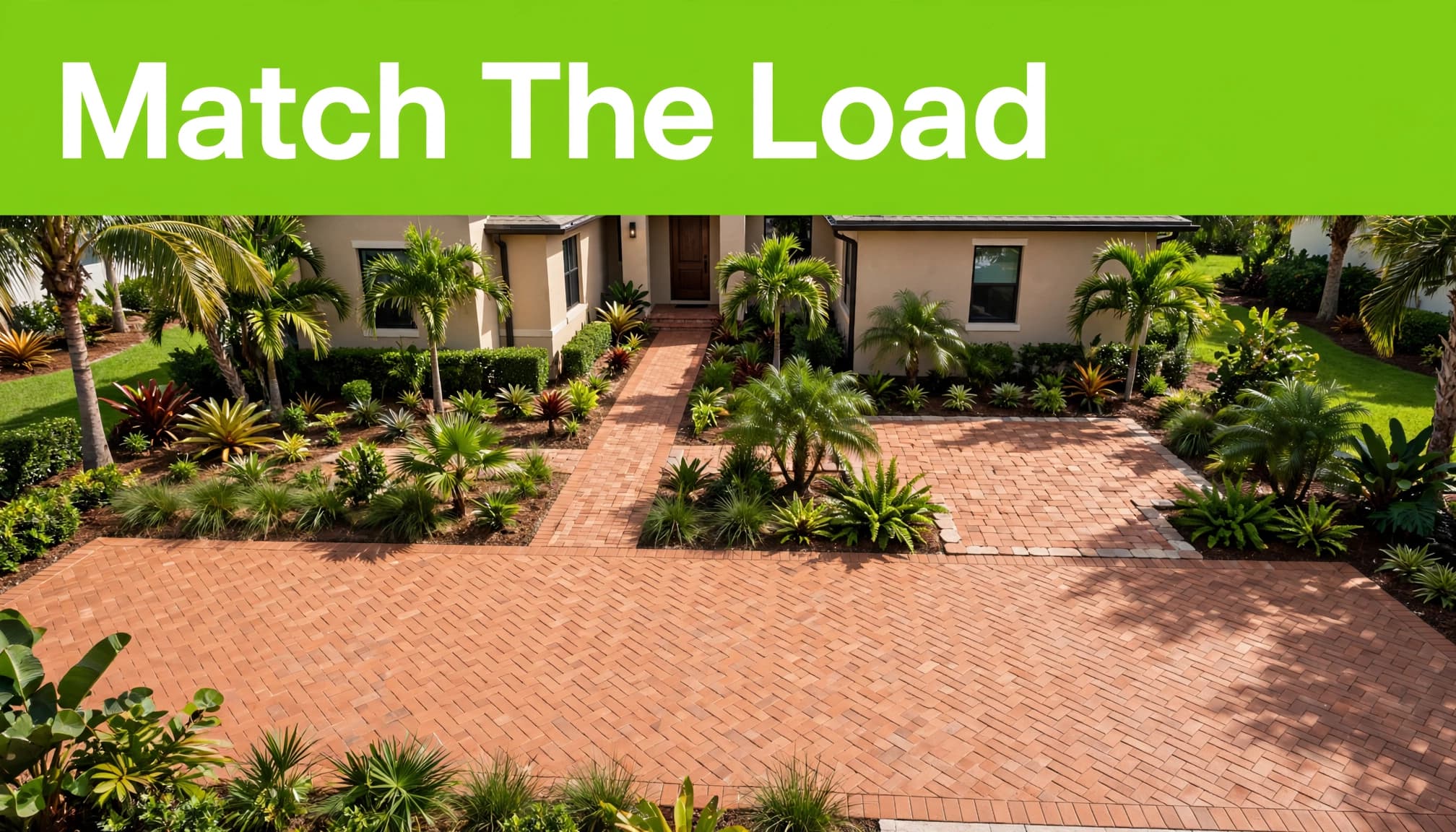
For regional conditions, our guide to Southwest Florida paver materials provides additional context for heat, rain, and daily use.
Thin Clay Pavers Work Best for Overlays
Thin units have a practical place in hardscape design. They aren’t simply a lower-cost substitute for full-thickness paving brick.
Use thin units where height is limited
A thin unit, often around 1 3/8 inches thick, can work over a stable concrete slab. A concrete overlay may suit a porch, entry, narrow transition, or patio where a full paver system would create an awkward step at a door threshold.
The existing slab must be sound, properly sloped, and able to drain water away. Thin units can solve an elevation issue, but they can’t repair a cracked, settling, or poorly draining slab.
Thin units aren’t automatically appropriate for driveways. Check the product rating, slab condition, drainage, transitions, and available clearance before choosing them.
Mortar set applications need the right surface
Mortar set pavers are commonly used in fixed applications. Mortar holds each unit in place, which can suit confined areas and detailed borders.
Sand set pavers are usually easier to adjust when a localized repair is needed. Mortar set pavers may cost more to repair when movement occurs because individual units are bonded in place.
Choose the Installation Method Carefully
Paver thickness and installation method should match. Three methods are common for exterior brick and stone paving systems.
Sand set pavers allow practical repairs
Sand set pavers are installed over an aggregate base, a stable, compacted support layer, with bedding sand below the units and joint sand between them. This method works well with concrete pavers and clay units for patios, walkways, and residential driveways.
When installed correctly, interlocking pavers can move slightly as a system without cracking like a poured slab. Edge restraints help confine the system and resist lateral movement. After placement and joint filling, compaction may be needed based on the product and installation requirements. Polymeric sand is one joint-material option, but manufacturer instructions should control the choice.
Bitumen-set systems fit specialized work
Bitumen-set paving uses an asphalt or bituminous setting bed. It is often considered for heavier-duty paving applications and may be part of a larger engineered system.
This method is not usually the first choice for a typical home patio. It requires the right materials, details, and experience to perform as intended.
Mortar set pavers are less forgiving
Mortar set pavers are bonded to a concrete base. They can create a clean finished look in tight spaces, but the slab below needs to remain stable.
If the slab shifts or traps water, the mortar system may crack or loosen. We select the installation method based on the site and use, not simply on what is fastest to install.
Florida Conditions Affect the Final Choice
Southwest Florida doesn’t have the freeze-thaw cycles found in northern states, but heat, heavy rain, saturation, salt air, and soft soil still affect paver performance.
Water needs a planned path
Standing water can wash out joint material, soften support layers, and cause settlement. The finished surface should direct water away from the home, garage, and low areas.
Permeable pavers can help manage runoff when installed as part of a compatible drainage system. They still need stable, properly compacted support below the surface.
A patio or walkway may need about 6 inches of compacted aggregate support in favorable conditions. For sand set pavers, the bedding sand is a thin leveling layer, not the main structural layer.
Driveway support should match the property
Many residential driveways in favorable Southwest Florida soil may begin with about 6 to 8 inches of compacted aggregate base. Weak soil, drainage problems, heavy vehicles, and frequent traffic can require 8 to 12 inches or more.
These figures describe the compacted support layer beneath the paver units, not the thickness of the pavers themselves. Local requirements, site conditions, and manufacturer recommendations should guide the final design.
Our brick paver driveway installation guide includes more planning considerations for vehicle areas, driveway layouts, and long-term maintenance.
Edge Restraints Keep Pavers in Place
Pavers depend on the surrounding system. Even quality materials can shift when edges and joints are neglected.
Secure edges prevent spreading
Edge restraints hold the paver field together. They matter most along driveways, curves, borders, and vehicle turning areas.
Without secure edging, outer pavers can move outward over time. This creates wider joints, uneven edges, and what installers often call edge blowout. Strong edge restraints help prevent this spreading.
Joint sand supports the interlock
Joint sand fills the spaces between pavers and transfers pressure across the surface. When you sand set pavers, filled joints and firm confinement work together to support the surface. Polymeric sand can suit residential projects when selected and installed according to the manufacturer’s instructions.
Fill joints completely, sweep away excess material, and complete final compaction according to the paver and joint-material instructions. Use proper equipment and safe operating practices during compaction.
Routine sweeping helps keep the joints clear. If you later need brick pressure cleaning, use the lowest effective pressure and avoid blasting sand out of the joints. Replace lost or damaged polymeric sand according to the product instructions.
A detailed brick paver installation checklist can help you review paver ratings, edging, joint material, drainage, and layout before materials are ordered.
Questions About Paver Thickness
What thickness is best for a brick patio?
A standard paving brick around 2 3/8 inches thick is a common choice for patios and pedestrian areas. The best option depends on the material, surface height, furniture loads, and support below the pavers.
Does a driveway need thicker pavers than a walkway?
Usually, yes. A driveway carries repeated vehicle loads, while a walkway primarily carries foot traffic. Choose vehicle-rated pavers and consider a herringbone pattern to help distribute loads where cars turn, stop, or park. The pattern doesn’t replace a suitable product or properly prepared base.
Can thin brick pavers go on a driveway?
Thin pavers may work over a stable concrete slab in limited situations, but they’re not automatically suitable for vehicle traffic. Check the product rating, slab condition, drainage, driveway transitions, and available clearance before choosing an overlay.
How much extra paver material should be ordered?
Start with the measured square footage, then account for borders, cuts, the paver size, layout pattern, and waste. A simple layout may need about 5 percent extra. Most residential projects need about 10 percent, while detailed patterns, curves, and 45-degree layouts may require 10 to 15 percent.
How should paver joints be maintained?
Keep joints filled and address erosion, weeds, or settlement early. If cleaning removes joint material, replace it with polymeric sand or another approved material according to the product instructions.
Choose for the Conditions Below and Above
The right brick paver thickness isn’t universal, so identify the area first: walkway, patio, or driveway. Then consider pedestrian, passenger-vehicle, or heavier loads.
We have served Southwest Florida since 1999, and each property has different soil, drainage, climate, edges, and elevation requirements. Match the well-planned paver system to the hardscape design and installation method, then confirm paver thickness, product ratings, local requirements, and clay paver specifications.