Before your appointment, confirm the provider’s requirements and follow the cleaning professional’s site-specific instructions, which take precedence. A little preparation helps you clear the hardscape surface, arrange access, protect nearby items, and account for pets or children.
Note stains or worn joints to point out when the crew arrives. Review the plan for cleaning and aftercare before work begins.
Clear the Area Before the Crew Arrives
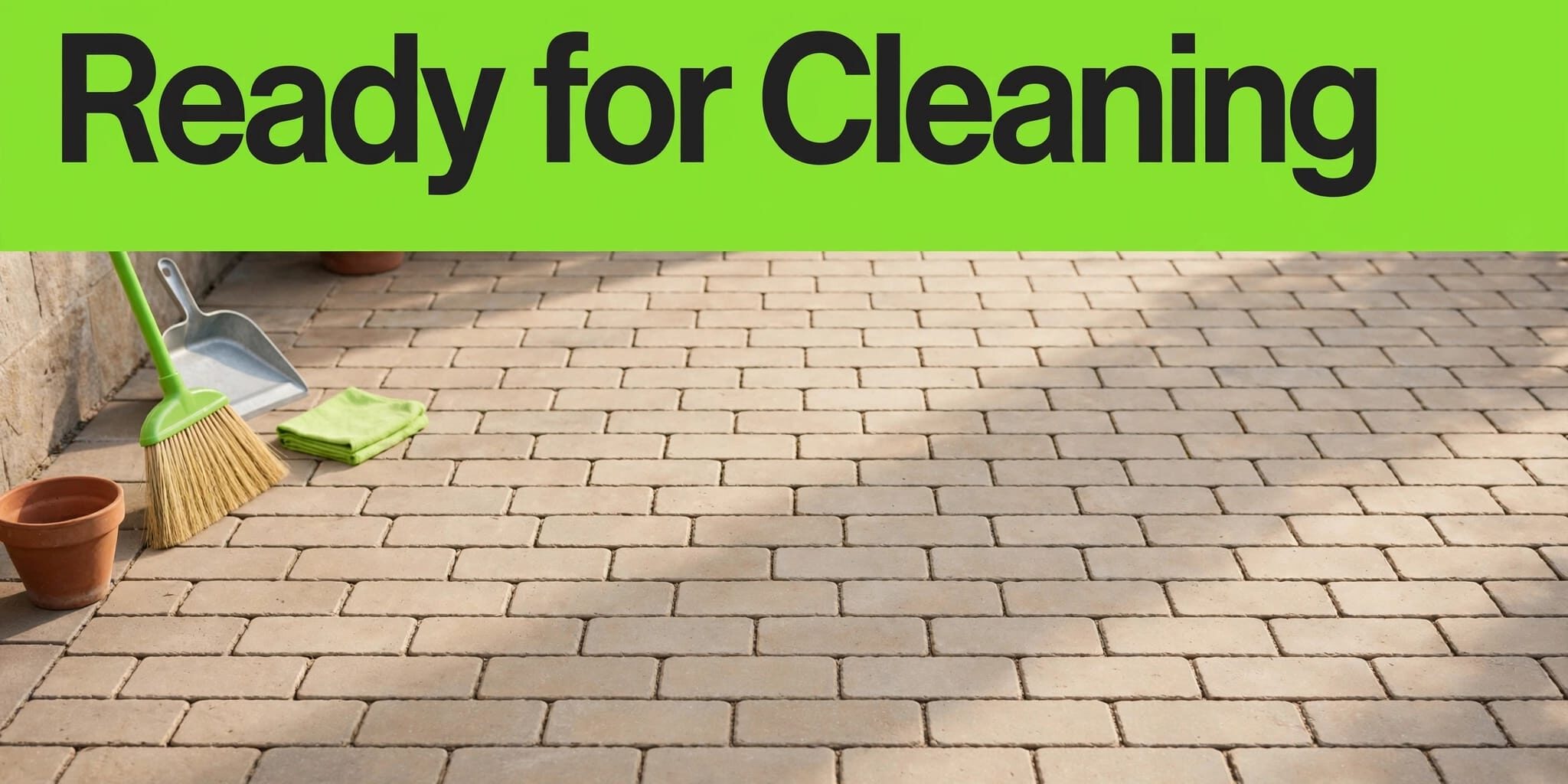
Give the crew access to every section you expect them to clean. A clear surface also makes it easier to spot worn joints, stains, and damaged pavers before work begins.

Move Items Off the Pavers
Remove patio furniture, planters, mats, grills, and portable decorations from the patio pavers. On brick driveways, arrange another place for vehicles to park during the visit. If a planter is too heavy to move safely, tell the contractor beforehand so the crew can plan around it.
Sweep up loose leaves and pick up small items that could get in the way. You don’t need to scrub the pavers first. Leave stubborn stains visible so the contractor can inspect them and choose a suitable treatment.
Make Access and Timing Clear
Check that gates open and the crew has a clear route to the work area. Keep children and pets away, and protect nearby movable items, plants, and delicate features as the provider directs. Let the contractor know about narrow passages, locked entrances, or business hours that limit access. If equipment or hoses must cross a shared walkway, discuss that before the appointment.
For pool areas, move loose items away from the deck and point out drains, coping, and nearby equipment. Our guidance on pool deck and patio paver care covers other areas worth watching around water.
Identify the Paver Material and Existing Finish
Cleaning should match the material and surface texture, especially for natural stone. If you know what was installed, share that information when you book. If you don’t, ask the contractor to confirm the material and select suitable cleaning methods before treatment.

Distinguish Concrete, Stone, and Porcelain
Concrete and brick pavers, natural stone such as travertine or marble, and porcelain pavers can respond differently to cleaners or pressure. The Natural Stone Institute’s cleaning guidance describes routine care for natural stone as using a neutral cleaner, stone soap, or mild detergent such as dish soap with warm water.
If you have an invoice, product name, or leftover paver from the installation, keep it available. This is useful on mixed-material properties, where a driveway and pool deck may look similar but need different treatment. Ask the contractor to test an inconspicuous area before treating the full surface.
Mention Any Sealer Already on the Surface
Tell the crew when the pavers were last sealed, if you know, and share any information about existing sealers. A glossy coating, darkened areas, peeling, or a cloudy finish can affect the cleaning plan. Show the contractor any leftover sealer container or past service record.
Don’t assume a white or cloudy area needs stronger cleaner. On recently installed concrete pavers, a powdery white deposit may be efflorescence. A hazy coating can have a different cause. The contractor should identify the condition before treating it or recommending another coat of sealer.
Point Out Stains, Growth, and Worn Joints
Walk the area before the crew arrives. A few photos of problem spots can help if rain or changing light makes them harder to see on appointment day.
Describe What Caused Each Mark
Tell the contractor where oil and grease, rust stains, leaf stains, fertilizer marks, or irrigation deposits appear. Note whether a stain is new or has returned after previous cleaning. For shaded patios, identify where moss and algae come back first.
Avoid applying any new treatment before the visit. Tell the contractor which products you’ve already used, including a mild detergent, dish soap, or another cleaner. On natural stone, acids can leave etch marks, as the Natural Stone Institute explains in its stone stain and etch guidance.
Show the Crew Open or Uneven Joints
Point out missing joint sand, weeds rooted in joints, loose borders, cracked pavers, and places where water stands after rain. These conditions deserve attention even when the surface looks clean. Our brick paver weed and joint care guidance explains why sand lost during weed removal should be replaced.
For a commercial entrance or parking area, mark the worn sections that receive the most traffic. Tell the contractor about trip concerns or a drain that regularly collects debris. Cleaning may reveal a repair need, but it won’t correct a loose paver or a recurring drainage problem by itself.
Confirm the Paver Cleaning Plan Before Work Starts
Ask the contractor to explain the proposed approach after inspecting the surface. Confirm what’s included and follow the provider’s site-specific recommendations before equipment and products arrive.
Ask How the Surface and Joints Will Be Protected
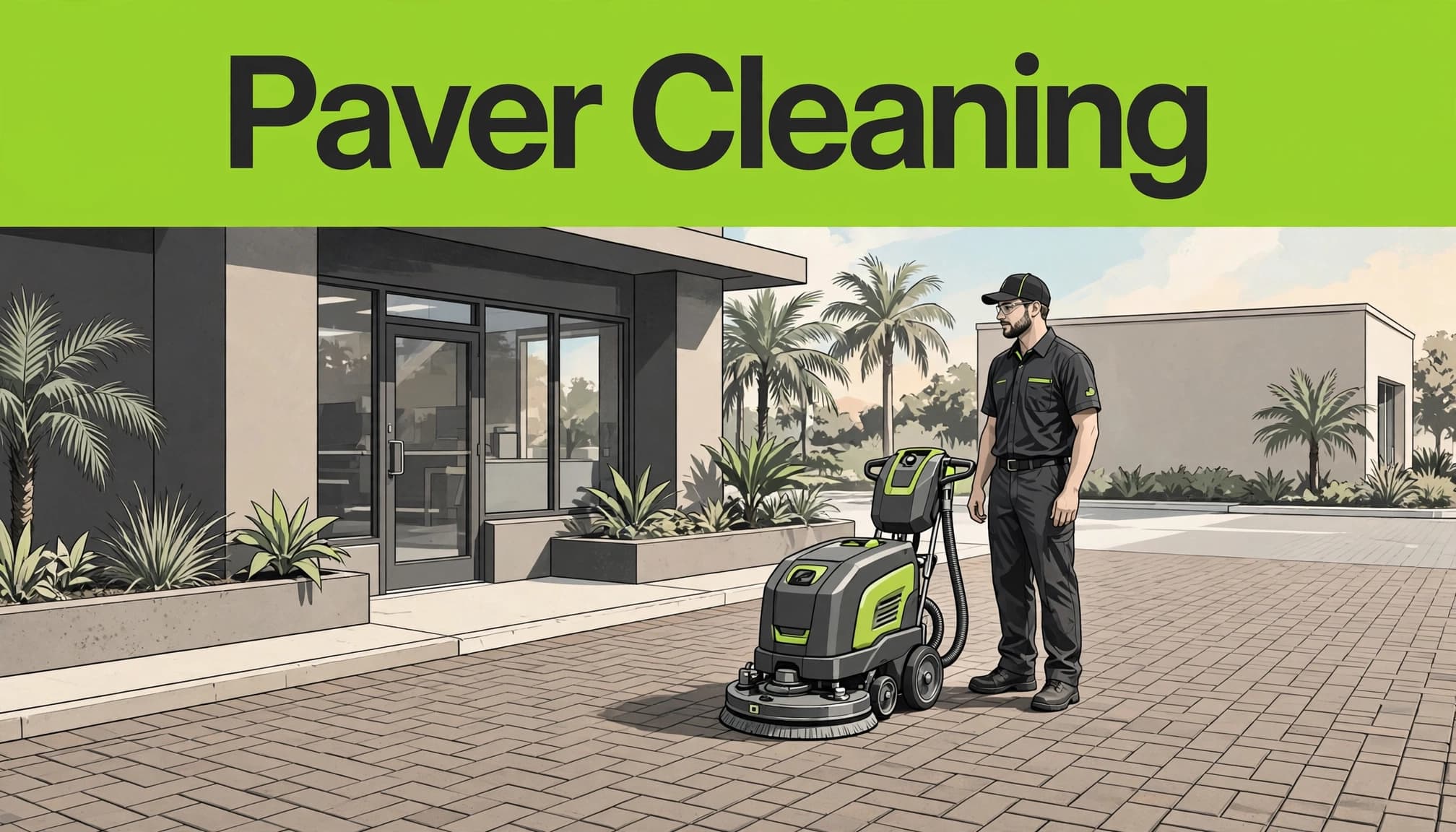
Cleaning methods, including the pressure washer setting and cleaning solution, should reflect the paver material and condition. An overly aggressive pressure washer can leave marks or wash joint sand from the joints, while natural stone may need a different approach. Ask how the crew will protect the joints and whether a garden hose or gentler treatment suits any areas. If they use an approved product, ask whether they’ll rinse thoroughly afterward.
No single pressure setting or cleaning solution fits every paver. Belgard advises testing products in a small, inconspicuous area and reading their directions in its paver maintenance guidance. Ask whether the crew will test an area if the material or existing finish is uncertain.
Separate Cleaning From Additional Work
Confirm whether the quote includes stain treatment, moving heavy items, replacing joint sand, removing failed sealer, or applying a new sealer. These are separate tasks, and the surface may need time to dry between stages.
If the contractor recommends polymeric sand, ask which joints need it and how long the area must remain undisturbed after installation. If sealing is proposed, confirm the product is compatible with the pavers and any existing coating. A clean surface doesn’t automatically need a new sealer.
Plan for Water, Chemicals, and Property Access
The crew also needs to work around the rest of your property. A quick discussion about water, nearby surfaces, and runoff can help prevent interruptions.
Check Water and Nearby Features
Ask whether the service requires access to an outdoor water supply and where equipment will be placed. Point out irrigation heads, landscape lighting, electrical outlets, delicate plants, and nearby doors. Mention drains that lead toward a pool or planting bed.
Turn off irrigation during the work period if the contractor asks. Sprinklers can wet an area during inspection or interfere with drying. If rain is forecast and the job includes joint sanding or sealing, confirm whether the schedule still works for the products being used.
Leave Chemical Mixing to the Crew
Don’t mix household cleaners in advance or set out an unmarked container for the crew. Never mix bleach with ammonia or acidic cleaners. Tell the contractor about products already applied, including mild detergent or dish soap.
Ask what cleaning solution the crew plans to use, whether it will be applied with a pump sprayer, and how nearby plants, drains, and water features will be protected. Confirm that the crew will rinse thoroughly, and ask where rinse water will go. For product-specific precautions, follow the crew’s instructions and ask them to consult the label and safety data sheet. OSHA’s chemical hazard information explains the role of hazard labels and safety data sheets.
Agree on the Finish and Aftercare
Before work starts, agree on what the completed visit should include. This helps when washing reveals joint loss or a worn coating that wasn’t obvious at booking.
Check Joints and Any Proposed Sealer
Ask the crew to inspect the joints after washing. If cleaning removes joint sand, have the contractor explain whether replacement is included in the agreed scope. Empty or uneven joints shouldn’t be overlooked just because the paver faces are clean.
If sealing is included, discuss the expected finish. Glossy, matte, and natural-look products can change the appearance in different ways. For natural stone, confirm that the product is compatible with the material. Our brick paver sealing and care information outlines the options and why it’s important to follow manufacturer instructions. Ask when foot traffic, furniture, and vehicles can return. The answer depends on the products and conditions.
Set Expectations for Future Care
In Southwest Florida, shade, humidity, rain, irrigation, pool use, and traffic affect how quickly buildup returns. For many well-drained properties, annual cleaning is a practical starting point. Heavily shaded or high-traffic areas may need attention sooner. Our Florida paver cleaning schedule explains how those conditions affect timing.
Between visits, sweep leaves, rinse fresh spills when appropriate, and watch for returning growth or washed-out joints. If a stain or cloudy finish comes back soon after cleaning, ask for an inspection rather than ordering another coat of sealer.
Key Takeaways
- Confirm the cleaning method, stain treatment, protection for joint sand, and runoff plan.
- Clear furniture, vehicles, and access routes, and protect nearby items. Leave stubborn stains visible.
- Share what you know about the pavers and sealer, along with any cleaners used before the visit.
- Point out stains, growth, and worn joints during the arrival walk-through. Ask whether repairs, joint replacement, or sealing are included, and when you can use the surface again.
Frequently Asked Questions
Should You Wash the Pavers Before the Appointment?
A light sweep to remove leaves and loose debris is helpful. Don’t apply a mild detergent or dish soap beforehand; if you’ve already used either, tell the contractor so they can rinse thoroughly. Leave oil and grease marks and rust stains visible, along with algae, white deposits, and worn joints, so the contractor can assess their original condition.
Can a Pressure Washer Damage Patio Pavers?
Yes. A pressure washer set too high or used poorly can mark pavers and remove sand between them. The right method depends on the paver material, its condition, and existing finish, especially with natural stone. Ask how the crew will test the method, protect joints and edges, and rinse thoroughly.
Should Joint Sand Be Replaced After Cleaning?
Inspect the joints after washing. If joint sand is missing or uneven, ask whether the contractor will refill them with a suitable material. Polymeric sand must be installed and cured according to the manufacturer’s directions, so confirm when the area can be used.
Does Cleaning Include Resealing?
Don’t assume it does. Cleaning, joint work, stripping an old coating, and sealing may be quoted separately. If you want a sealer, discuss the existing finish, the appearance you prefer, and the time needed for drying and curing before work begins.
A Clear Plan Makes the Visit Easier
The crew can work more effectively when the pavers are accessible and problem areas are identified. Material, stains, joints, and existing sealer all help determine the right cleaning method.
Clear the surface and walk it with the contractor. Review the work and aftercare plan, then follow the provider’s instructions for your property.