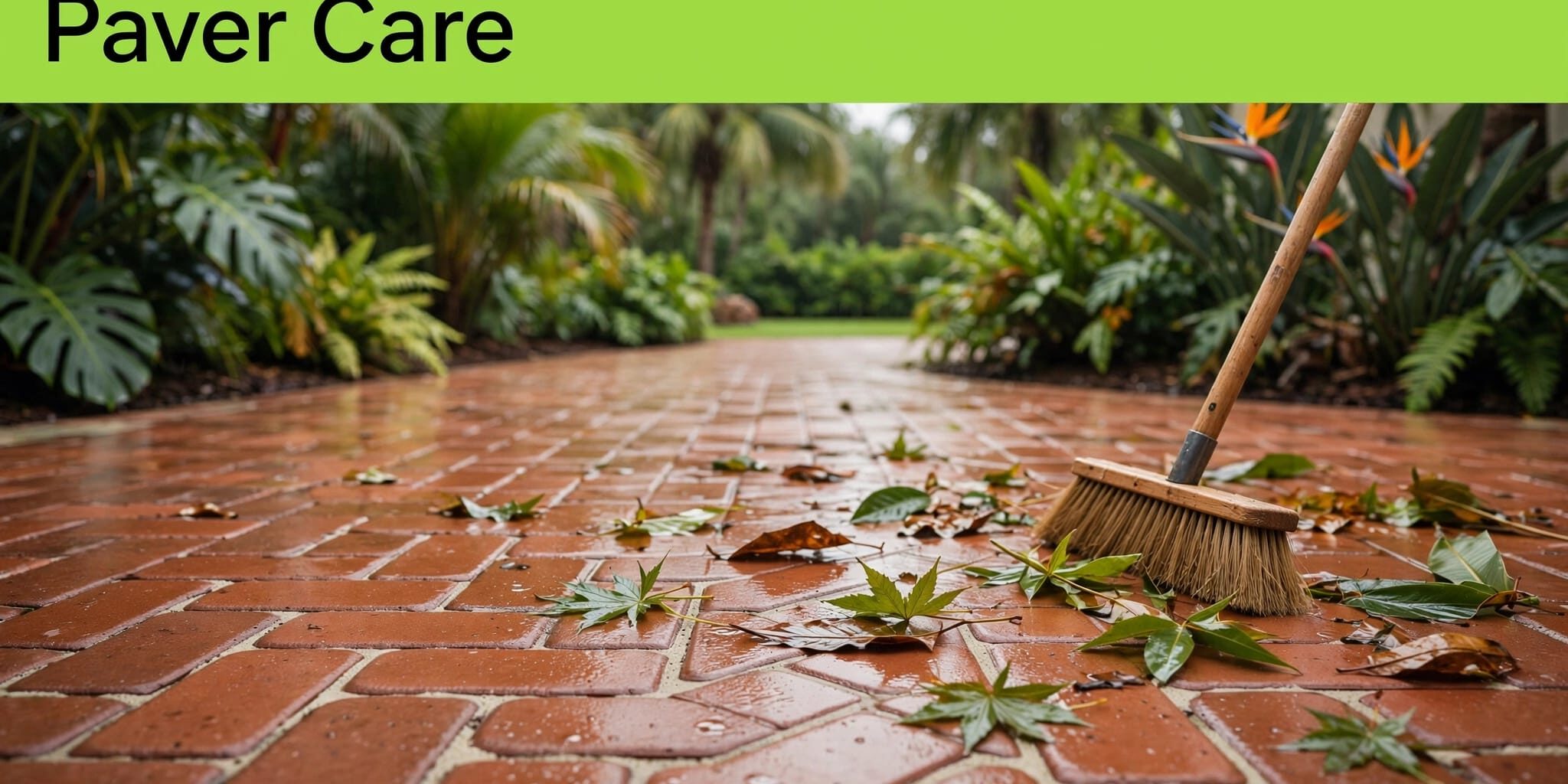
Heavy rain can wash sand out of paver joints before the surface looks damaged. In Southwest Florida, brick paver maintenance starts with weekly sweeping, monthly inspections, and prompt attention after storms.
This brick paver maintenance schedule prioritizes clean surfaces and stable joints, with care based on the existing finish and traffic. Give shaded patios, pool decks, and busy driveways extra attention.
A Simple Year-Round Maintenance Schedule
Southwest Florida’s humidity, irrigation, and summer rainfall shape seasonal maintenance more than the traditional four-season calendar. Use this seasonal maintenance schedule as a starting point, with spring checks completed before the summer rainy season.
| When | Maintenance task | What to watch for |
|---|---|---|
| Weekly | Sweep leaves, grass clippings, and loose dirt. | Debris collecting in shaded corners and joints. |
| Immediately after spills | Blot oil, grease, and food spills. | Residue that can soak into the surface. |
| Monthly | Inspect joints, edges, drains, and walking areas. | Missing sand, plant growth, algae, and loose pavers. |
| After heavy rain | Remove storm debris and inspect drainage. | Sand loss, new depressions, and standing water. |
| Spring | Clean buildup and address joint damage before summer rain. | Sprinkler overspray and blocked drainage paths. |
| Summer | Inspect shaded and frequently wet areas more often. | Slippery growth around pools, entrances, and lanais. |
| Fall and winter | Assess surface wear and finish condition. | Areas needing repair or weather-appropriate restoration. |
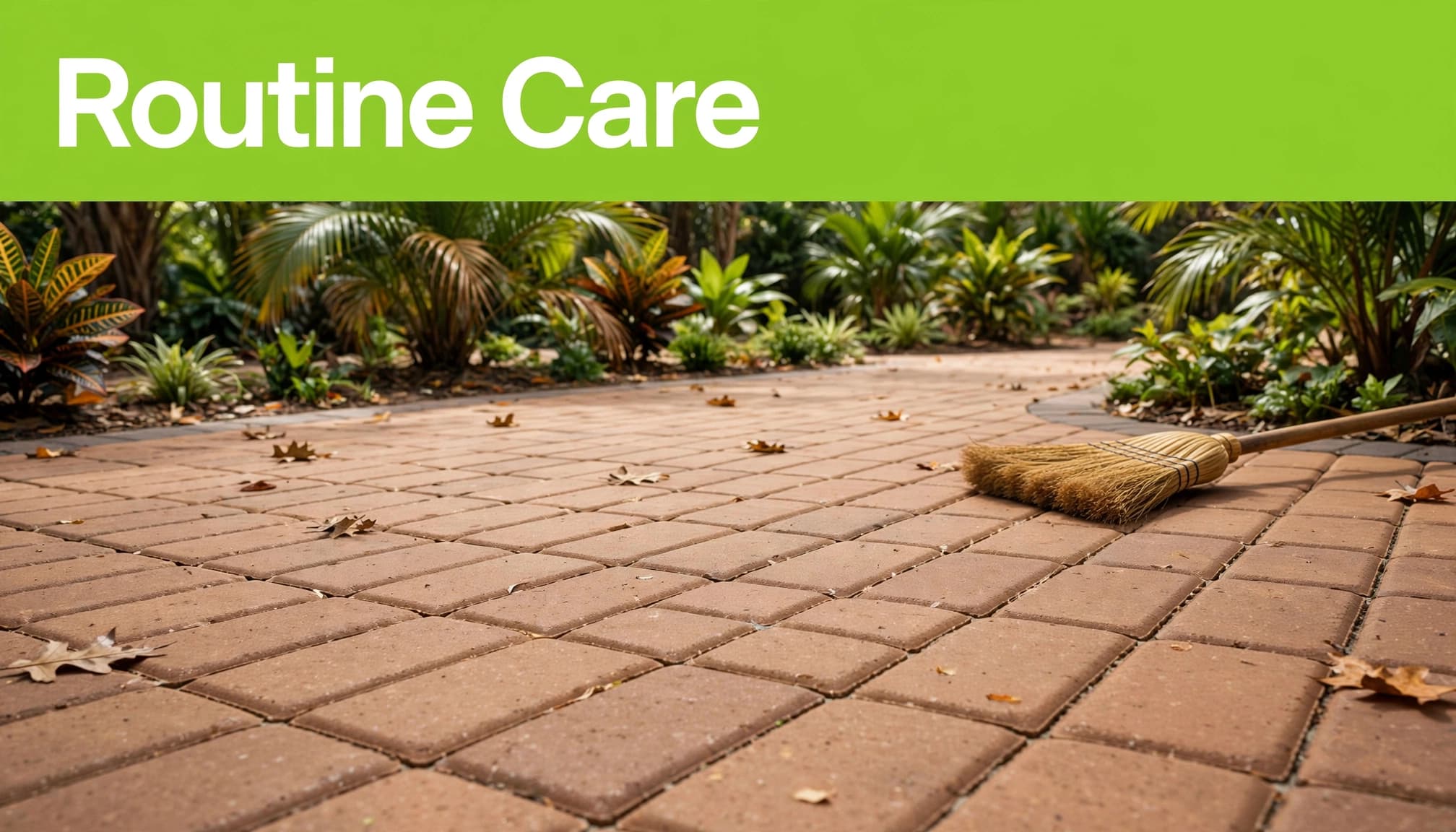
Schedule a thorough cleaning assessment annually. Actual cleaning frequency depends on shade, traffic, pool use, and how quickly buildup returns.
Snow removal isn’t routine in Southwest Florida. During a rare snow removal event with icy conditions, use plastic or rubber shovels instead of metal blades, which can chip edges and disturb sand. For a rare snow removal event, calcium magnesium acetate and traction sand are generally gentler options than harsh rock salts. Keep traction sand out of permeable joints because it can reduce drainage.
Clean Pavers Without Washing Out the Joints
Start With Mild Soap and Gentle Rinsing
Sweep or blow debris off the surface without directing a strong air stream into the joints. Blot fresh spills rather than spreading them with a hose.
For ordinary dirt, we recommend mild, acid-free soap, water, and a nylon or fiber-bristle brush. Use a cleaner compatible with the paver material and existing sealer. Clay brick, concrete pavers, and natural stone don’t all tolerate the same treatment.
Work in small areas and rinse before the solution dries. Avoid wire brushes, which can scratch surfaces. Our guidance on cleaning while protecting joint sand covers routine washing in more detail.
Wear eye protection, closed-toe shoes, and any gloves required by the cleaner. Keep people and pets away until the surface is rinsed and safe underfoot.
Keep Pressure Cleaning Controlled
Gentle rinsing is enough for routine cleaning, and a pressure washer isn’t needed every time. When you use one, choose a fan-tip nozzle, moderate pressure, and a working distance of at least 12 inches above the surface. Keep the wand moving and avoid aiming directly at joint sand.
There isn’t one safe PSI setting for every paver and finish. Use the lowest effective pressure, beginning in an inconspicuous area. Stop if sand moves, the surface becomes rough, or the finish develops uneven marks.
The Concrete Masonry & Hardscapes Association’s cleaning and joint stabilization guidance addresses cleaning as part of broader pavement care. Inspect the joints after washing, because appearance alone doesn’t show whether the surface remains properly supported.
Keep Joint Sand Full and Weeds Under Control
Remove Debris Before Refilling
Low or washed-out joint sand is a main reason weeds and moss establish between pavers. Open joints collect soil, seeds, and moisture. Regular debris removal limits that buildup.
Pull small weeds before roots become established. Clear loose soil, mud, roots, and organic debris from affected joints before adding new sand. Covering debris can support more growth.
After weeding, check for sand pulled out with the roots. Refill deficient joints with compatible paver sand once the area is ready.
There isn’t a fixed annual sand-replacement requirement. Inspect monthly and after heavy rain or washing, then address visible loss. Recurring washout in the same location needs a drainage assessment.
Choose the Correct Joint Material
Regular paver jointing sand can suit surfaces already using that material where the joints remain stable. It’s straightforward to replenish, but exposed areas may need more frequent attention.
Polymeric sand contains binders that activate with water. After proper wetting and curing, it can reduce washout, weed growth, and insect activity, and may deter weeds. It doesn’t make joints permanently weed-proof. Alliance Gator’s Gator Maxx Sand instructions require dry paver tops and sides before application of polymeric sand.
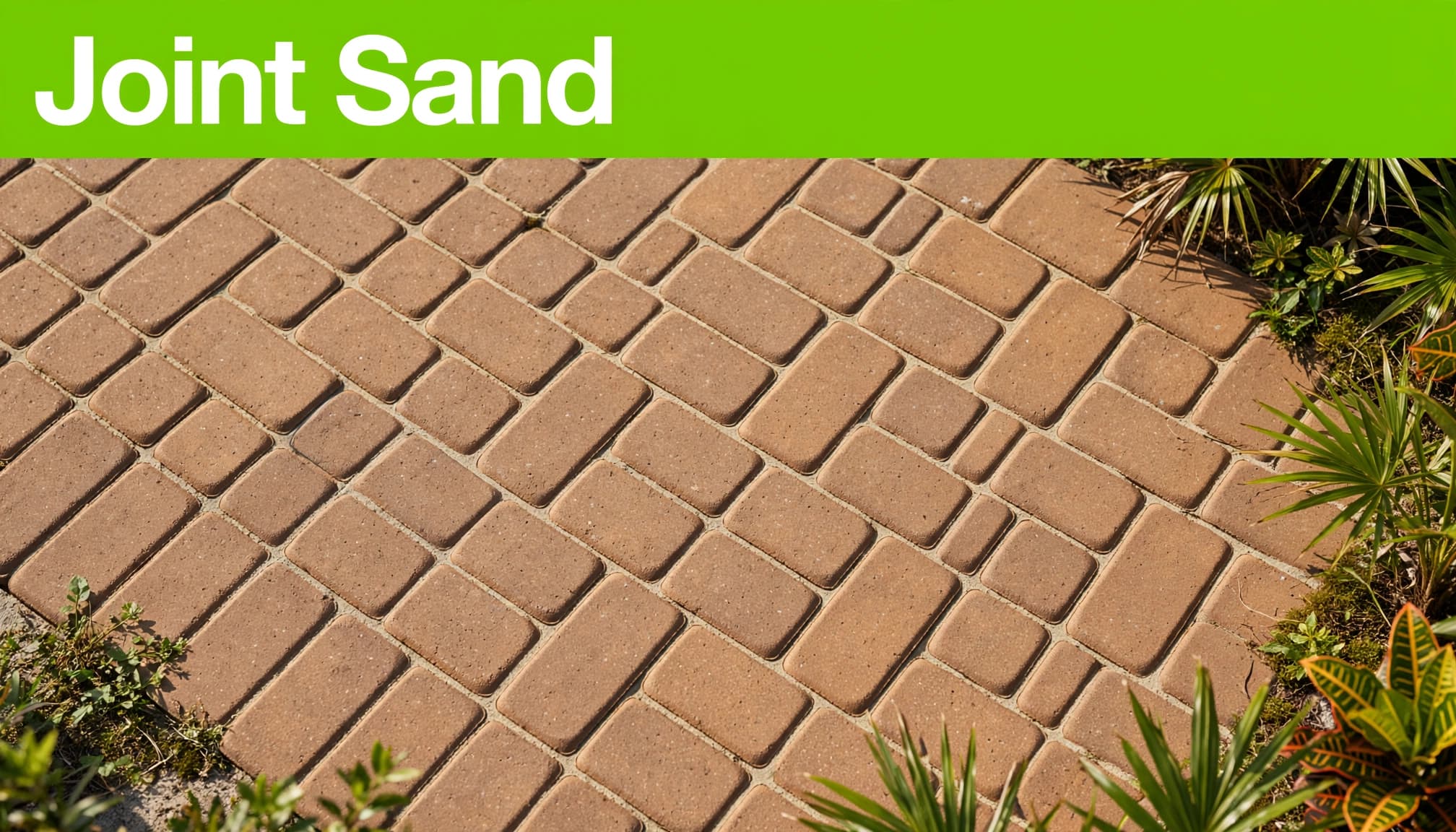
Permeable pavers require different joint material. Don’t fill them with ordinary or polymeric sand unless the system expressly allows it. Their open joints generally use specified aggregate to maintain drainage.
Handle Stains and White Residue Carefully
Harsh acid cleaners, concentrated chlorine products, and strong vinegar can damage sealers, weaken some joint materials, and discolor brick. We don’t recommend homemade vinegar, salt, and detergent treatments for weeds. Salt residue can also harm nearby plants.
A diluted white-vinegar treatment left for about an hour before rinsing isn’t a recommended general cleaning method. Prolonged acidic contact can harm incompatible surfaces or finishes, and dark vinegar may leave stains.
Oil, rust, and organic stains need cleaners made for the specific stain and paving material. More pressure isn’t a reliable substitute for the right cleaner.
Efflorescence is a white mineral salt residue that moisture carries to the surface. It’s usually cosmetic, but recurring deposits can accompany ongoing moisture movement.
A powdery white film may be efflorescence. Cloudiness within a sealed surface may instead indicate trapped moisture or sealer failure. Don’t apply another sealer coat over either condition. Have persistent or uncertain white haze assessed before treatment.
Reseal According to Traffic and Finish
Sealing is optional. It can improve stain resistance, preserve a chosen appearance, and support joint stabilization when the selected product provides that function. Some permeable pavers remain unsealed to protect drainage.
Use Resealing Intervals as Planning Ranges
For heavily used brick driveways, 1 to 2 years is a reasonable resealing planning range when the existing sealer requires frequent renewal. Other sealer systems on lighter-use surfaces may last 3 to 5 years.
These ranges aren’t interchangeable guarantees. Tire traffic, sun exposure, frequent washing, irrigation, and product type affect wear. A glossy film-forming sealer and a penetrating water repellent don’t show deterioration in the same way.
We recommend assessing the finish annually rather than adding another coat because a calendar date has arrived. Unnecessary buildup can produce an uneven appearance or create compatibility problems.
Match the Condition Test to the Sealer
For a water-repellent penetrating sealer, place a few water drops on clean, dry pavers. Compare a worn area with a sheltered area. Faster absorption in the worn area can indicate reduced repellency, but it isn’t a complete diagnosis.
For film-forming sealers, look for worn traffic lanes, peeling, patchy gloss, or cloudy areas. Water beading alone doesn’t establish whether another coat is appropriate.
Correct loose pavers, deficient joints, stains, and drainage problems first. CMHA’s pavement operation and maintenance guide places sealing after stain removal, efflorescence treatment, and overall cleaning. Suitable drying and curing weather are also necessary before the surface returns to use.
Know When Maintenance Needs a Contractor
Cleaning can’t correct a failed base or an ongoing drainage problem. Low spots, rocking pavers, and broad depressions need more than surface washing.
Use these conditions to decide when routine care is no longer enough.
| Condition | Appropriate response |
|---|---|
| Small weeds with otherwise stable joints | Remove the growth and replace lost joint material. |
| Sand repeatedly washes out of one area | Check runoff and drainage before adding more material. |
| A paver rocks under normal foot traffic | Arrange a repair and inspect its support. |
| A depression returns after previous leveling | Investigate the underlying base and drainage. |
| Several rows move or edges spread | Have the paving system and edge support assessed. |
| Algae quickly returns where water collects | Address the moisture source along with cleaning. |
A professional should assess permeable pavers if their drainage system appears blocked or impaired.
Any uneven area that catches feet or interferes with an entrance needs prompt repair. Keep it out of regular use until it’s safe, particularly at business entrances and shared walkways.
Our information on repairing recurring paver settlement explains why repeated sinking requires more than a cosmetic correction.
Keep spare matching pavers from the original project to replace cracked or chipped units. Matching size, color, and texture gets harder as materials weather or product ranges change.
We provide cleaning, sealing, restoration, re-leveling, and drainage correction across Southwest Florida. If your surface has recurring washout, movement, or a worn sealer, Contact Us for a FREE Quote.
Key Takeaways for Routine Paver Care
- Keep up with weekly sweeping and blot spills promptly so debris and marks don’t accumulate.
- Inspect joints monthly and after storms, replacing lost material with the correct product.
- Start cleaning gently, and use a pressure washer with controlled pressure, keeping the spray broad, moving, and away from joints.
- Treat resealing intervals as planning ranges, with annual assessments of the existing finish.
- Arrange repairs for rocking pavers, recurring depressions, spreading edges, and drainage-related washout.
Keep the Surface Clean and Stable
A dependable brick paver maintenance schedule combines simple routine care with timely repairs. Clean surfaces matter, and stable joints and proper drainage deserve equal attention.
Inspections before Southwest Florida’s rainy season and after hurricane-season storms help you spot changes early. When movement or washout keeps returning, correcting the cause protects your driveway, patio, or walkway.