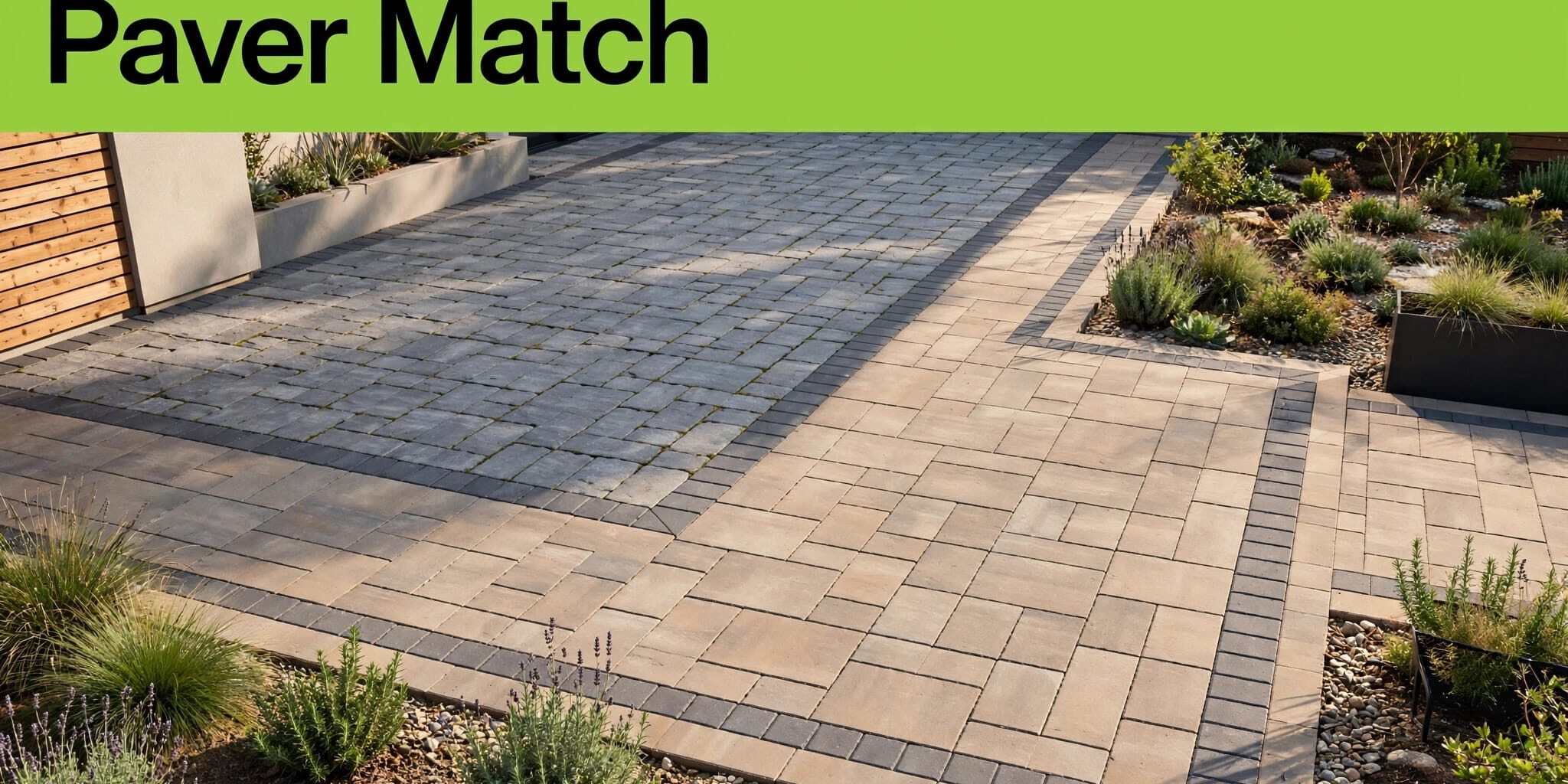
A patio extension can look out of place when new pavers differ from the surface already in place. We check the existing material and condition before choosing replacements, especially where the extension meets an outdoor fireplace or supports outdoor living.
A dependable match considers color, texture, dimensions, and how both areas look after cleaning. We assess these details first, then choose a close match or a planned contrast for design continuity across your property.
Key Takeaways
- Compare actual samples against clean, dry patio pavers outdoors before approving your order.
- Match dimensions, texture, and finish, accounting for color variation rather than relying on a product name alone.
- Use a coordinated border and complementary laying patterns when an exact match isn’t available, after checking drainage and movement.
Identify the Existing Patio Pavers
We begin by identifying the patio pavers already on your property. A similar color won’t produce a consistent result if the replacement has different proportions or a noticeably different surface.
Confirm the Material and Finish
Determine whether your patio uses concrete pavers, clay brick, natural stone, or porcelain tile. Concrete products can resemble clay or stone, so appearance alone isn’t always enough.
Look closely at the surface. Tumbled edges, exposed aggregate, smooth faces, and textured finishes each affect how light reflects across the patio. Brick pavers with rounded edges will look different beside sharp-edged replacements, even when their colors are close.
For these materials, note the veining, pores, and finish. Travertine tile, marble, and limestone each have distinct characteristics and shouldn’t be treated as interchangeable.
Find Records and Measure the Units
Check the original proposal, invoice, leftover packaging, spare units, and supplier records for the manufacturer, collection, color, and size. Ask the original supplier whether the product remains available.
Use those details to identify the existing stone and paver products, then measure more than one unit, including thickness and joint spacing. Products from different manufacturers can have similar names but different dimensions.
The Concrete Masonry & Hardscapes Association’s paving slab sample specification calls for samples that show expected color and texture variation. We recommend considering that full range rather than selecting a replacement from one unusually light or dark piece.
Why New Pavers Look Different
A visible difference doesn’t prove the wrong product was delivered. A paver mismatch needs investigation, so we check surface condition, exposure, and order records before recommending a correction.
Check Weathering, Moisture, and Surface Treatments
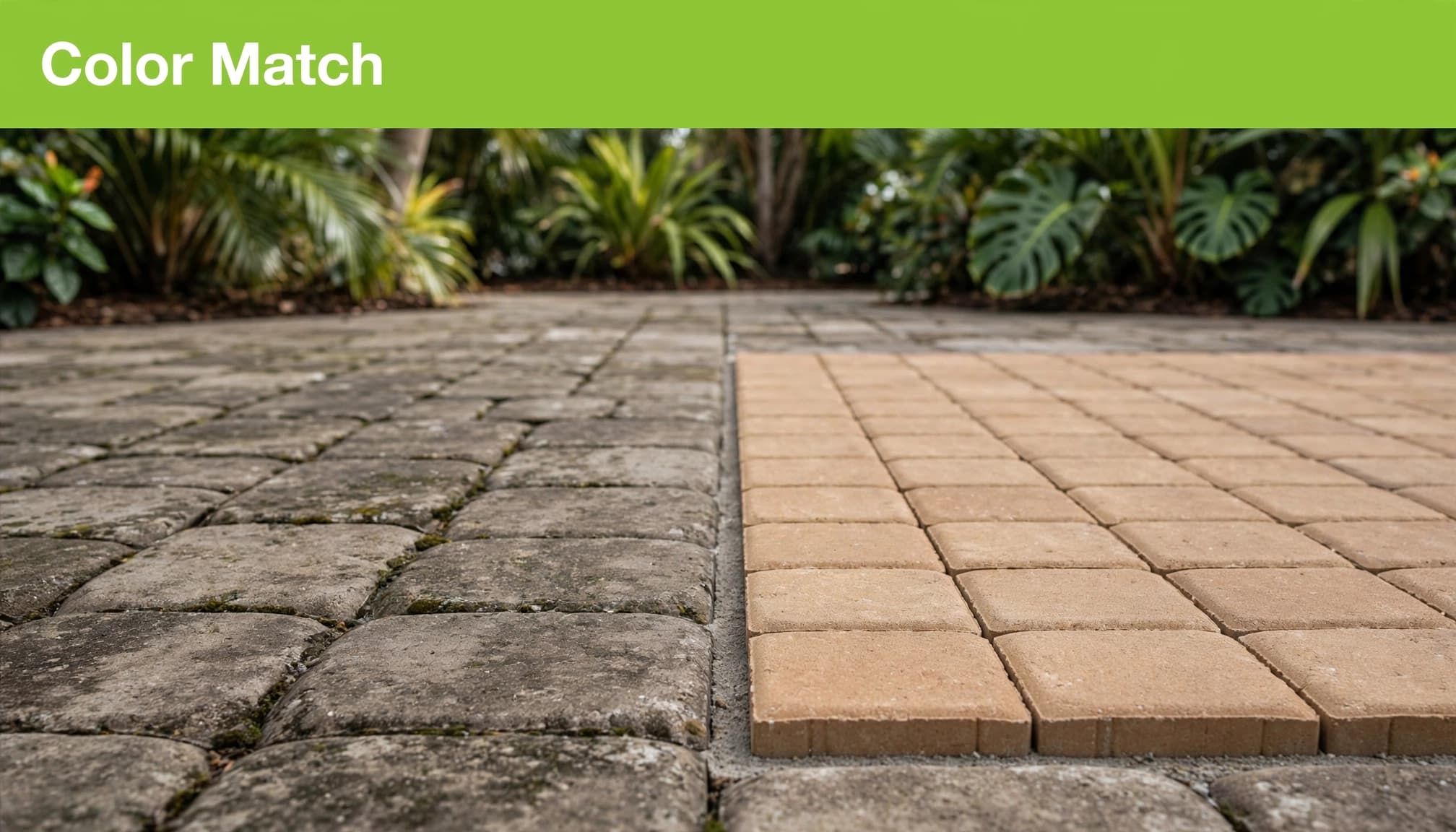
Existing pavers can fade and weather over time. Dirt, organic stains, and old sealer can also make them look different from clean, untreated replacements.
Wet pavers often look darker than dry ones. Compare clean, dry areas under similar lighting, rather than a shaded section against one that has just received rain.
For stone, outdoor color changes can involve sunlight, moisture, minerals, cleaning, and sealers. Material and finish affect how stone and paver surfaces look, much like they do with porcelain tile. Don’t assume every stone will change color or that time will make new pieces match.
Verify the Product Before Blaming Batch Variation
Batch variation is one possible explanation, but it shouldn’t replace a review of what was ordered and delivered. Compare product codes, color names, finishes, and pallet labels with your approved selection.
A blended product can also contain several tones. One sample may not show the proportions present across a larger area.
Keep photographs and delivery labels if the difference is substantial. They give the supplier and contractor a clear basis for reviewing the mismatch without guessing at its cause.
Compare Paver Samples Before Ordering
We recommend approving physical samples at your property. Catalog photographs and screen images can narrow choices, but they aren’t reliable for a final comparison of patio pavers.
View Several Pieces in Outdoor Light
Place several pieces beside the existing patio at the proposed connection. Compare color, texture, material, size, and thickness, including porcelain tile or porcelain pavers if you’re considering them.
Check samples in natural light, both direct sun and shade. View the grouping close up, then step back to the distance where you normally see the patio.
Belgard’s paver color guidance recommends viewing actual product samples. The company also describes blends containing three or more complementary or contrasting colors, so assess color variation across the full grouping.
Consider how the field paver works with the border when comparing laying patterns, mixed textures, or a modern coastal palette. When reviewing stone and paver samples, focus on how the materials look together.
Approve the Transition Before Ordering
Test-fit or lay out a small grouping in the proposed pattern before buying. Look for interrupted joint lines, different edge shapes, or a texture change across the connection.
Compare clean, dry surfaces first. Don’t judge wet or dirty pavers against clean ones, or approve based on a product name, screen image, or single sample. If the existing patio needs professional cleaning, complete a suitable test before committing to a color.
Our paver design consultation helps review materials, patterns, and borders together. Record the approved product and keep representative samples so everyone has the same reference when the material arrives.
Choose a Coordinated Transition When Matching Isn’t Practical
A discontinued product or a patio changed by years of aging and weathering can make a close match difficult. In that situation, we recommend a deliberate transition instead of placing a nearly matching material directly against the old surface.
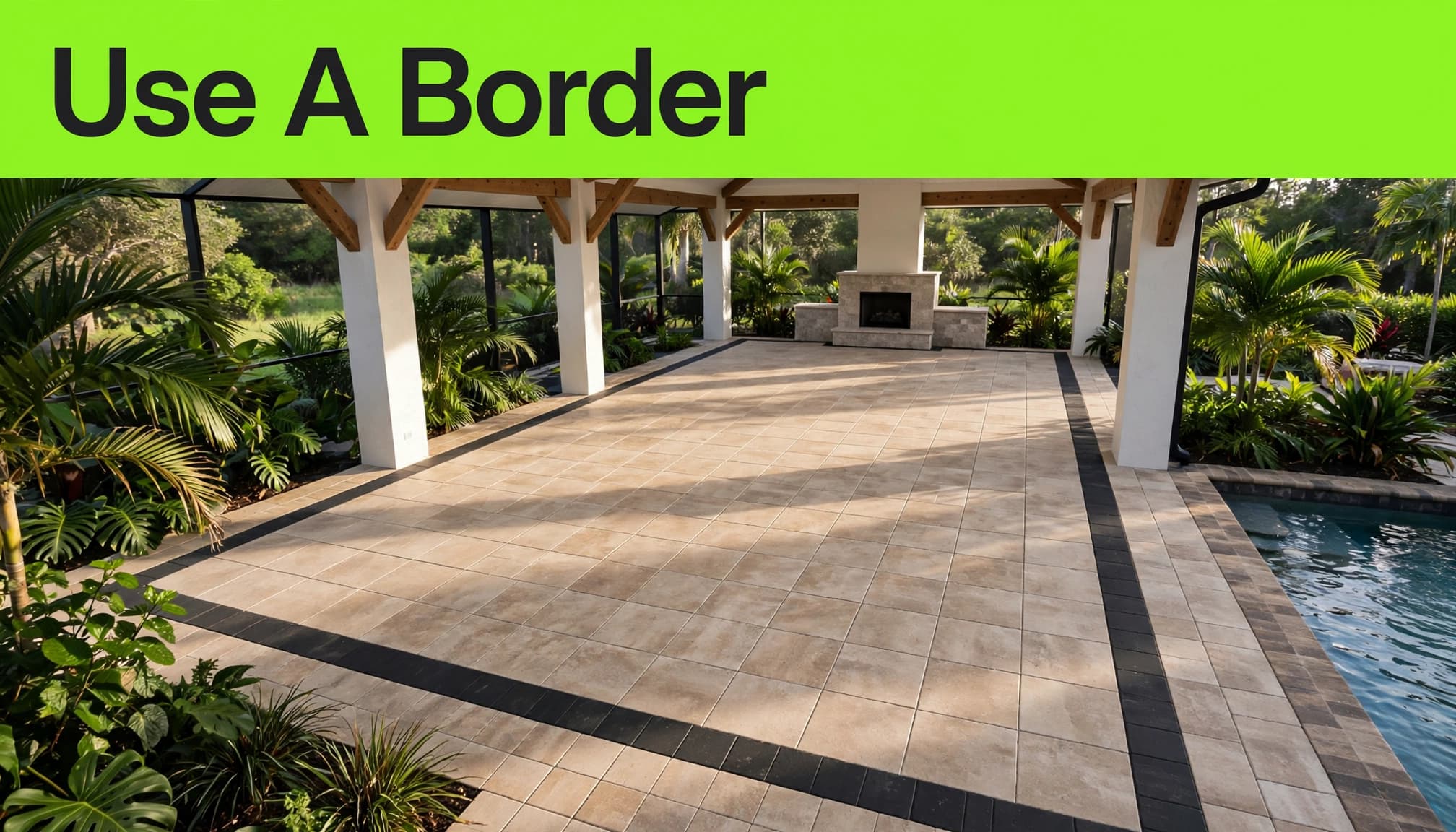
A contrasting border can separate the existing patio and extension while giving both areas a shared design feature. Choose a tone already present in the house, pool coping, or outdoor fireplace. For a modern coastal look, use nearby features, including the outdoor fireplace, to guide transitions between contrasting materials and laying patterns.
Keep the main field paver simple when the surrounding space has several finishes. A patterned paving area, stone fireplace, and multicolored border can compete if each introduces a different palette.
An accent strip can define the connection without framing the entire patio. A wider border may suit a large area planned for outdoor entertaining, while a smaller lanai usually benefits from fewer changes in color and pattern.
Natural stone is another option for a separate seating area, but confirm its suitability for the intended use. Proper stone selection supports durability, and the finish needs to suit outdoor conditions.
Our pool deck and patio options show how coordinated stone and paver choices and borders can support connected spaces. Coordinate indoor flooring by undertone and proportion rather than assuming the same indoor tile is suitable outside.
Fix a Paver Mismatch After Installation
If the new area is already complete, document the difference and check product codes, approved samples, and delivery labels before cleaning, sealing, or replacing anything. Altering the surface too soon can make it harder to establish what caused the problem.
Use this order to assess the correction:
- Photograph both areas when they’re clean and dry, using the same lighting. Save the proposal, approved samples, product labels, and any written color selection.
- Ask the contractor to review the stone and paver materials against the approved product. Confirm the manufacturer, collection, finish, dimensions, color, and product codes before treating the surface.
- Have unusual white or gray residue identified. Polymeric haze, mineral deposits, and surface contamination need different responses. Test only a treatment approved for the pavers.
- Review replacement or redesign options if a material mismatch remains. A coordinated border, revised section, or targeted replacement of a field paver may be appropriate after the product review.
For brick pressure cleaning, use the lowest effective pressure and protect the joints. Aggressive washing can remove joint material or leave uneven surface marks.
Sealer can change how pavers look, but it doesn’t reliably correct the wrong color, texture, or size.
Don’t apply a color-enhancing sealer to the full patio without a test. Check compatibility with the material, existing coating, and joint product first.
Replacement work also needs a condition assessment. Rocking pavers, spreading borders, or repeated standing water require attention before appearance work proceeds. Cleaning and additional joint sand won’t correct an unstable surface.
Request a Quote Based on the Full Scope
Matching work needs more detail than a price for the new patio area alone. We recommend a written scope that separates material selection, cleaning, replacement, and any necessary repairs. Include design features, such as an outdoor fireplace, that could affect the patio layout.
Ask whether the proposed material is available locally and whether the supplier can provide samples of current stock, including stone and paver options. If the original line is discontinued, request coordinated alternatives before approving the order, especially if you’re planning a modern coastal look.
The quote should identify the field paver, dimensions, finish, laying patterns, and border frames before approval. It should also state whether contrasting materials are included, what happens to removed pavers, and whether suitable existing pieces will be retained.
Curves, multiple colors, specialty borders, and difficult access can affect labor and material waste. Natural stone and porcelain tile also require material-appropriate handling. A landscape designer can help compare proposals using the same design and scope rather than considering area alone.
For businesses, discuss access to entrances, pedestrian routes, and whether work needs to be divided into phases. Homeowners should identify gates, furniture, and pool access that could affect the project.
Keep usable spare pavers after completion, along with the product information. They provide a better starting point for future repairs than trying to identify the material years later.
Check Florida Conditions Before Final Approval
In Fort Myers and surrounding Southwest Florida communities, appearance needs to work with heat, rain, and daily use. We review stone and paver choices alongside the material match.
Around a pool deck, choose a finish with appropriate slip resistance for wet foot traffic. A color match or modern coastal style doesn’t make smooth porcelain tile suitable beside water. Porcelain pavers can be a low maintenance option, while lighter tones may help a surface feel cool underfoot in sunlight. Still, no stone or paver should be assumed to stay cool in every condition.
Our guidance on pavers for Southwest Florida weather covers outdoor sample comparisons and material considerations for local properties.
Inspect transitions around steps, drains, downspouts, pool coping, and an outdoor fireplace. After heavy rain, look for standing water, washed-out joints, or movement at the perimeter.
Where patios connect with brick driveways, confirm that any proposed field paver replacement is rated for its actual use. A product selected for pedestrian areas isn’t automatically suitable for vehicle traffic.
These checks help avoid approving a visually attractive material that doesn’t meet your property’s practical needs.
Create a Consistent Patio With a Clear Plan
A consistent patio starts with verified materials and outdoor comparisons. We recommend approving representative samples before ordering, then using a coordinated transition when an exact match isn’t available.
If a mismatch is already present, identify the cause before changing the surface. Resolve movement or drainage concerns alongside the appearance issue.
To review your existing patio and the available matching options, Contact Us for a FREE Quote.