Orange stains on your driveway or patio need the right treatment before you reach for a pressure washer. The right approach starts with identifying the source and choosing a cleaner compatible with your pavers.
We recommend a test-first approach because the wrong chemical or cleaning method can damage paver color, texture, or an existing sealer.
Florida heat and rain can affect exterior masonry. Lasting results also depend on controlling irrigation overspray, fertilizer spills, and rusting metal. Start by confirming what caused the discoloration.
Identify the Stain and Paver Material
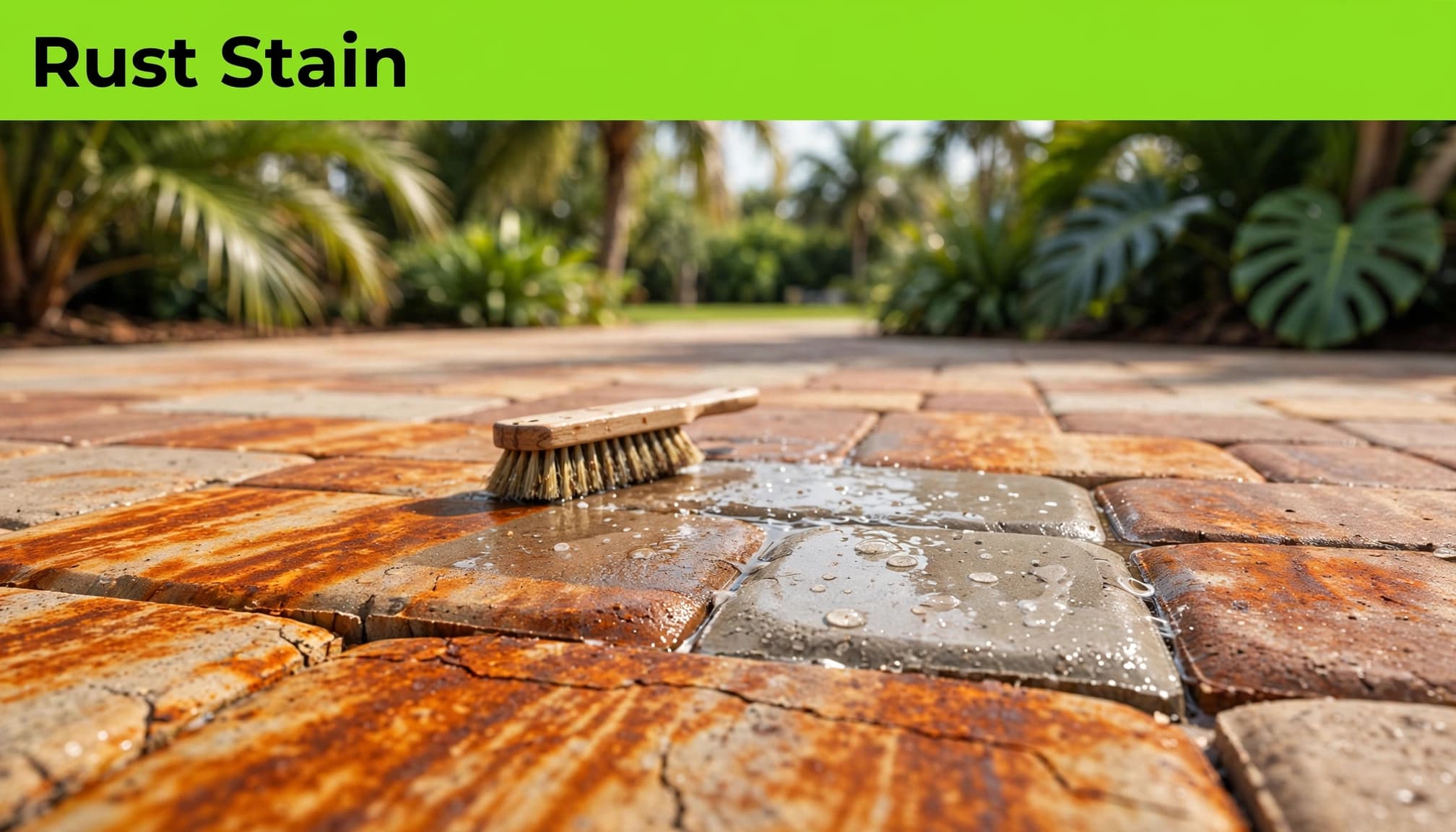
Rust Looks Different From Other Stains
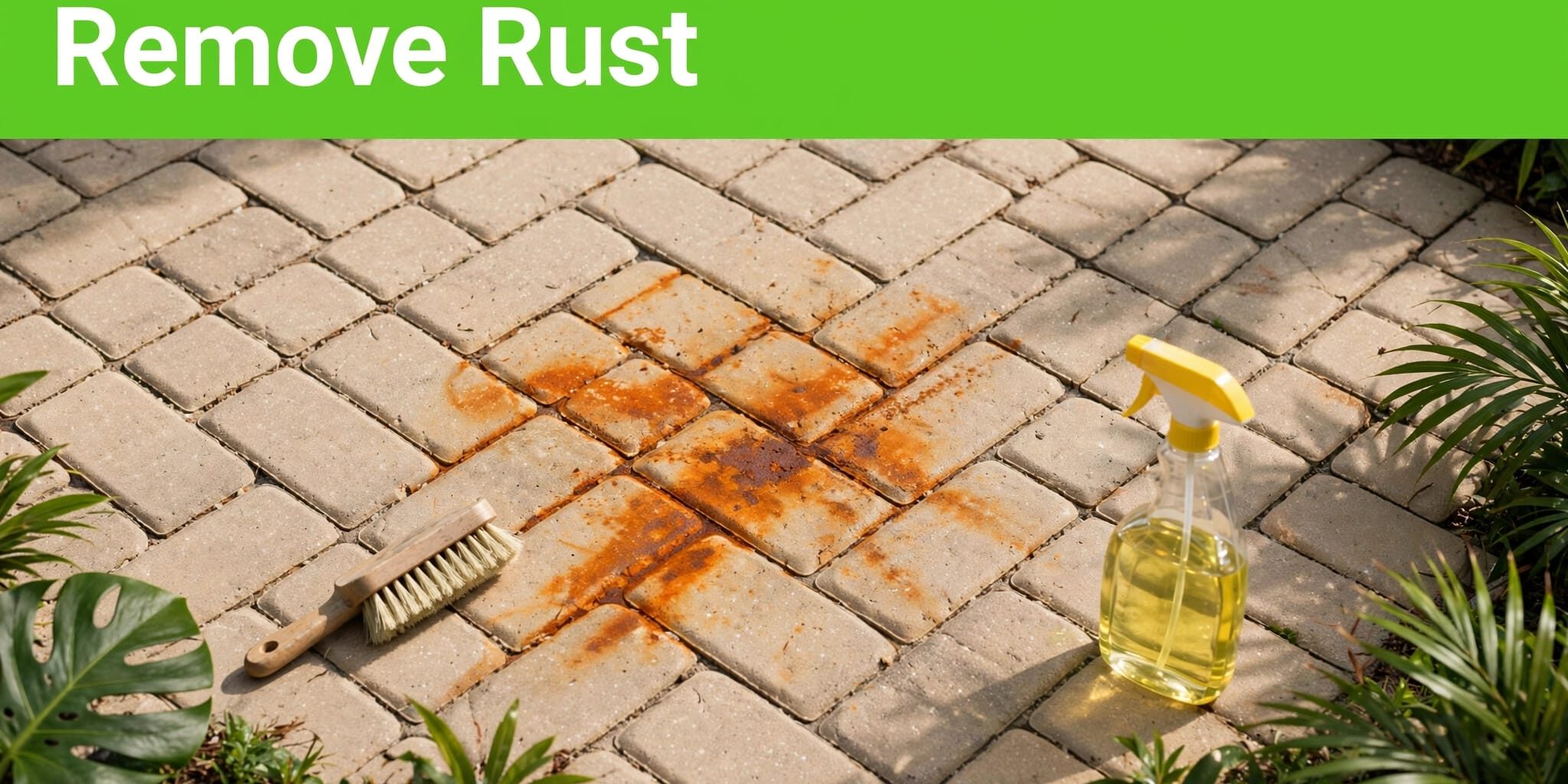
Rust usually appears as orange, reddish-brown, or brown discoloration. Small spots may follow scattered fertilizer granules, while broader patches can match sprinkler coverage or metal furniture feet.
White, powdery deposits may be efflorescence. Green or black growth often points to moisture and organic buildup. Cloudy areas may indicate a coating problem, not mineral residue.
We check the stain pattern before choosing a treatment. Color alone doesn’t confirm the cause, especially when concrete stains and other buildup overlap.
Confirm Whether the Pavers Are Clay or Concrete
“Brick pavers” can mean clay units or brick-shaped concrete. The term “outdoor brick” may refer to either material, and they don’t always respond the same way to acidic cleaners.
Check the original product information or ask your paver supplier. Also identify any sealer and nearby natural stone.
For example, STAIN-PROOF Acidic Cleaner is described for non-acid-sensitive surfaces, including certain bricks and pavers. That qualification matters. A product listing doesn’t approve it for every driveway, coating, or nearby pool deck material.
Find the Source of Recurring Rust
Check Irrigation, Fertilizer, and Metal Items
Irrigation water containing iron can leave orange deposits on paving. Check whether stains follow a sprinkler’s spray pattern, especially along lawn edges or near sprinkler heads.
Iron-containing fertilizer can also stain pavers when stray granules become wet. Sweep granules off hard surfaces before watering, following the fertilizer label.
Look underneath furniture, planters, tools, and metal fixtures. Rusting feet, screws, or hardware can transfer discoloration during wet weather. Cleaning the pavers without correcting the source leaves the same area exposed.
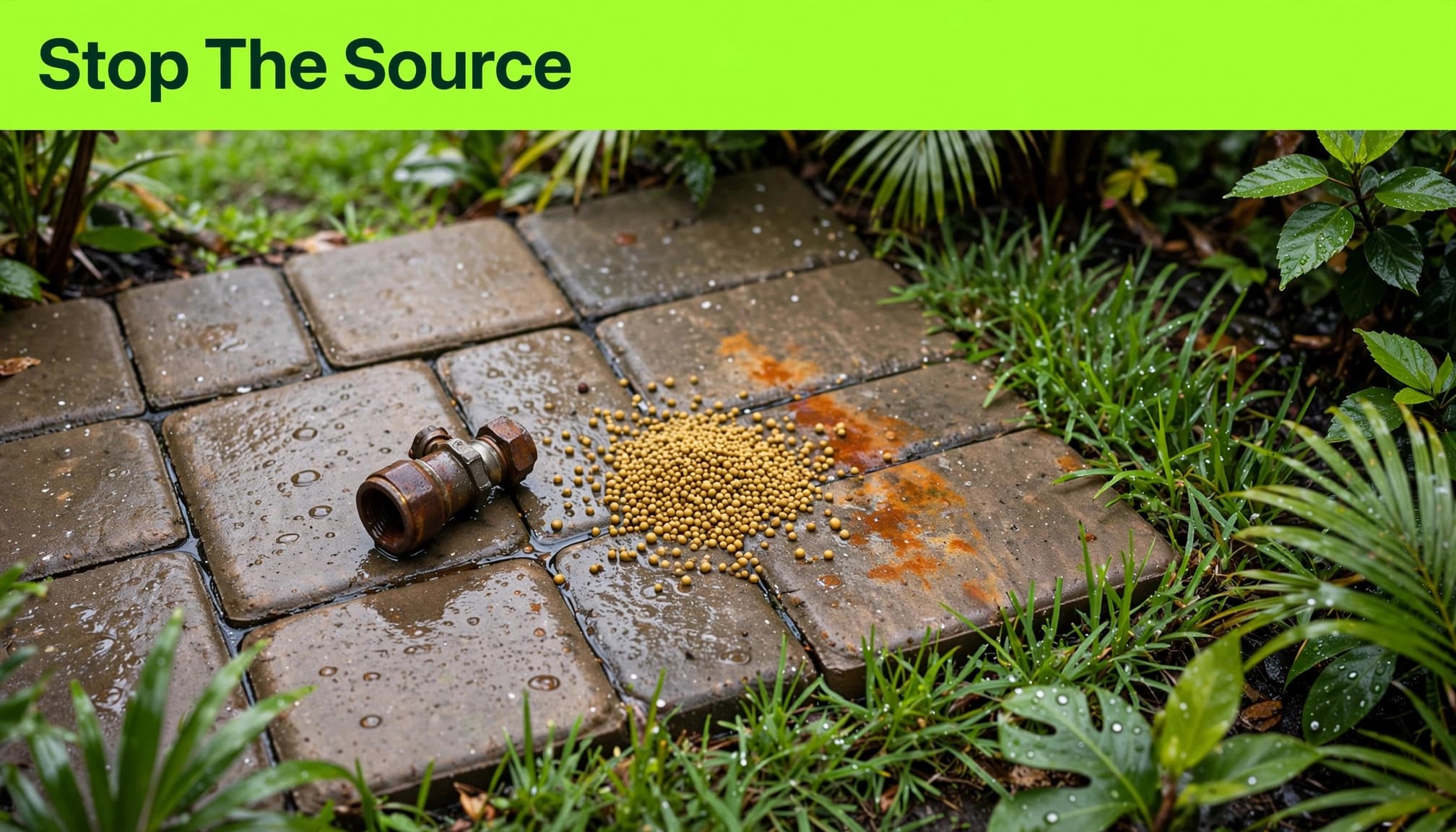
Investigate Stains That Return After Rain
Rain can reveal a continuing source of rusty runoff. Check nearby metal objects and water paths before repeating chemical treatment.
Rusty streaks below exposed structural metal or metal ties may be clues, but they don’t prove the source. A stain running down a nearby wall needs separate evaluation. Cleaning the paving won’t repair a corroded building component.
If one paver repeatedly develops the same mark after surrounding sources are addressed, arrange an inspection. We don’t assume an embedded metal source is responsible simply because the stain returns.
Take photographs before cleaning and after the next rain. They help show whether the discoloration follows the same pattern.
Choose a Rust Remover Approved for Pavers
Review Masonry-Specific Product Options
Choose a rust remover whose label covers your paver material and the type of staining present. General household cleaners aren’t interchangeable with masonry stain removers.
The Artisan Light Duty Rust Remover data sheet describes an acidic product for surface rust on concrete, pavers, and other listed materials.
Tenon Paver Wash is another product described for removing rust stains and efflorescence from pavers.
These are options to review, not universal recommendations. Confirm current directions and compatibility before purchasing or applying either product.
Let Compatibility Guide the Selection
We consider the paver material, finish, existing coating, and nearby surfaces when choosing chemical treatments for masonry cleaning.
Don’t select a cleaner solely because it promises fast results. Availability at Home Depot doesn’t establish suitability. Check the label for application, dilution where required, rinsing, protective equipment, and surface restrictions.
Muriatic acid and homemade mixtures aren’t substitutes for a labeled acid cleaner. Chemical strength alone doesn’t establish suitability and can cause unnecessary damage.
If the paver or sealer information is unavailable, professional evaluation is a better starting point than trying several cleaners in succession.
Prepare the Area Before Chemical Cleaning
Move vehicles, furniture, planters, and other obstacles. Sweep away leaves, loose dirt, and fertilizer granules so they don’t interfere with the test.
For general surface dirt, mild, acid-free soapy water is one of the gentler cleaning agents to use. A stiff nylon brush can help. Rinse thoroughly afterward. Soap may remove surrounding grime, but it isn’t a reliable treatment for established rust.
Wear the protective equipment required by the cleaner’s label and safety data sheet. This commonly includes chemical-resistant gloves and splash protection for your eyes.
For products containing oxalic acid, review Corechem’s oxalic acid guidance alongside the product’s handling instructions.
Protect nearby plants, metal, glass, stone, and the pool deck as directed. Keep children, pets, customers, and other foot traffic away during treatment.
Plan how to contain or manage rinse water. Don’t direct chemical runoff into a storm drain or pool.
Never mix rust remover with bleach or another cleaner.
Step-by-Step Rust Removal From Brick Pavers
For stain removal, test the selected rust remover on a small area before cleaning the full stain. Work in weather conditions allowed by the product, with enough time to rinse before rain.
- Test an inconspicuous spot. Apply the cleaner according to its directions, including to a small stained area if possible. Rinse and let the paver stones dry before checking for changes in color, texture, or coating.
- Prepare the stained area as directed. Some products require pre-wetting, while others have different surface requirements. Follow the label rather than using one preparation method for every product.
- Apply only the approved amount. Use the specified dilution and application equipment. Keep the cleaner away from surrounding materials that aren’t approved for contact.
- Observe the stated contact time. Don’t leave the product on longer than directed. Prevent it from drying if the instructions require it. Use a nylon brush only if brushing is permitted, and avoid metal brushes that can scratch or deposit particles.
- Rinse and inspect after drying. Follow the manufacturer’s rinsing or neutralization instructions. Once the surface dries, check it in daylight. Repeat only if the label allows another application and the test showed no damage.
Stop if the surface becomes rough, noticeably lighter, or uneven. Reassess any remaining stain rather than increasing the strength or contact time.
Use Pressure Cleaning Without Damaging the Surface
Brick pressure cleaning requires care. Excessive pressure, a narrow spray, or prolonged spraying in one place can scar pavers and remove joint sand.
Rust often needs a suitable chemical treatment. Increasing water pressure isn’t a dependable substitute.
We recommend the lowest effective pressure and a method approved for the pavers and existing finish. Keep the wand moving, avoid directing the spray into joints, and don’t use a universal pressure setting for every surface.
A garden hose may be sufficient for rinsing when the product directions allow it.
After washing, inspect joints and edges. Missing sand or loose pavers deserve attention before the area returns to regular use. Our guidance on brick paver maintenance requirements covers why cleaning should include a broader condition check.
Prevent New Rust Stains on Florida Pavers
Reduce Contact With the Stain Source
Adjust sprinklers that spray directly across paving or onto a pool deck. If iron-bearing irrigation water continues to cause staining, ask an irrigation professional about appropriate treatment options.
Maintain rusting furniture and fixtures, or replace damaged components. Use suitable protective feet beneath outdoor furniture and inspect them periodically.
As part of driveway maintenance, remove metal debris and address vehicle fluid leaks promptly. Different stains require different treatments, so don’t apply rust remover to every brown mark.
Sweep leaves and landscape debris before storms when practical. Keep weed killer runoff off the pavers, and clear drainage paths so dirty water doesn’t linger.
Florida winter maintenance rarely involves snow or ice, but an unusual freeze may require extra care. If needed, use a plastic-edged snow shovel. Use de-icing chemicals only when the label permits contact with the surface, and protect joints, drainage paths, and nearby plants.
Use Sealer as Protection, Not a Repair
A compatible sealer can reduce absorption and make some future cleaning easier. It won’t remove rust already present or correct an ongoing irrigation problem.
Finishes vary. Some products provide a glossy appearance, while others leave a matte or less visible finish. Our guidance on the benefits of sealing brick pavers explains the maintenance considerations.
Apply sealer only after the stain has been addressed and the surface meets the manufacturer’s preparation and drying requirements.
We generally recommend professional cleaning about annually for well-drained Florida properties. Shade, humidity, irrigation overspray, and heavy use may justify shorter intervals, as our Florida paver cleaning schedule explains.
Key Takeaways
- Identify the stain source, paver material, and existing coating before selecting a rust remover.
- Test an approved cleaner labeled for masonry, follow its directions, and inspect the dry surface before treating a larger area.
- Correct recurring irrigation, fertilizer, or metal contact problems. Pressure washing and sealer won’t solve an active stain source.
Frequently Asked Questions
How Long Should Rust Remover Stay on Pavers?
Use the contact time stated on the exact product you’re applying. There isn’t one safe waiting period for every rust remover or paver material.
Florida heat and direct sunlight can change how quickly a cleaner dries. Follow the product’s temperature and working-condition limits. Don’t extend the treatment because a stain still looks dark while wet.
Can Rust Remover Be Used on Sealed Pavers?
Only when compatibility with both the paver and coating has been confirmed. A cleaner approved for bare masonry may still affect an existing sealer.
Tell your contractor which sealer was used and whether other cleaning products have already been applied. If the coating is peeling, cloudy, or uneven, have that condition evaluated before adding another treatment or coat.
Restore the Surface Without Unnecessary Damage
Successful rust removal starts with correct identification and a controlled test. We recommend treating the stain with an approved product while correcting the conditions that caused it.
If stains persist or the paver material and coating are uncertain, Contact Us for a FREE Quote. Our Fort Myers team can review your paver maintenance needs and discuss the appropriate next step.
Careful cleaning protects the appearance of your outdoor surface without creating avoidable repair work.