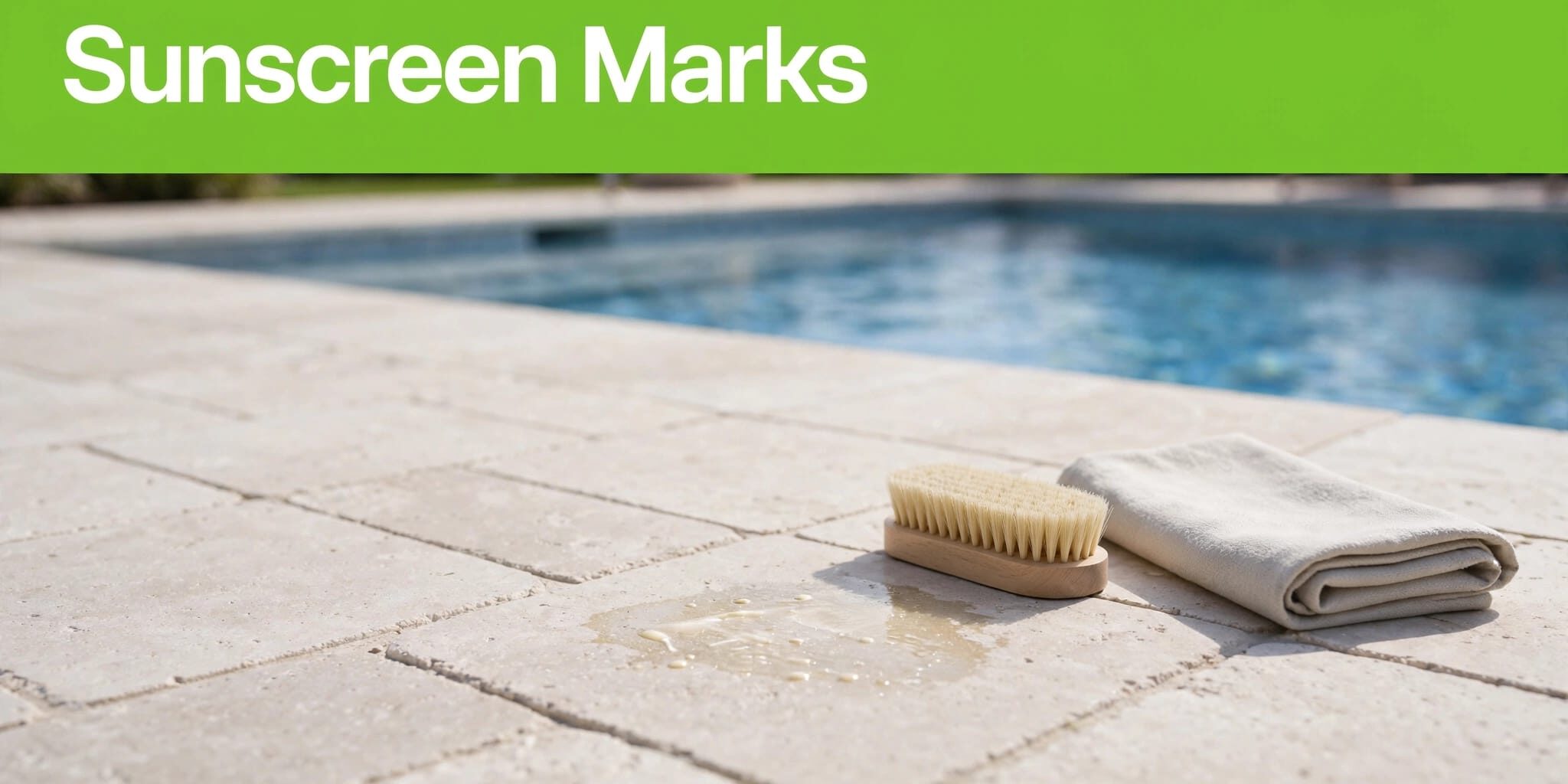
To remove sunscreen residue from pool deck pavers, blot away excess product, scrub with a compatible mild soap, then rinse gently. If an oily mark remains after the pavers dry, use a paver-approved degreaser instead of increasing water pressure.
We recommend starting sunscreen residue removal with a small test area, especially on sealed paving. Gentle cleaning protects the surface and joint material and shows whether the mark needs a different treatment.
Identify the residue and the material underneath it before cleaning.
Why Sunscreen Leaves Marks on Pool Decks
Oily Ingredients Resist Plain Water
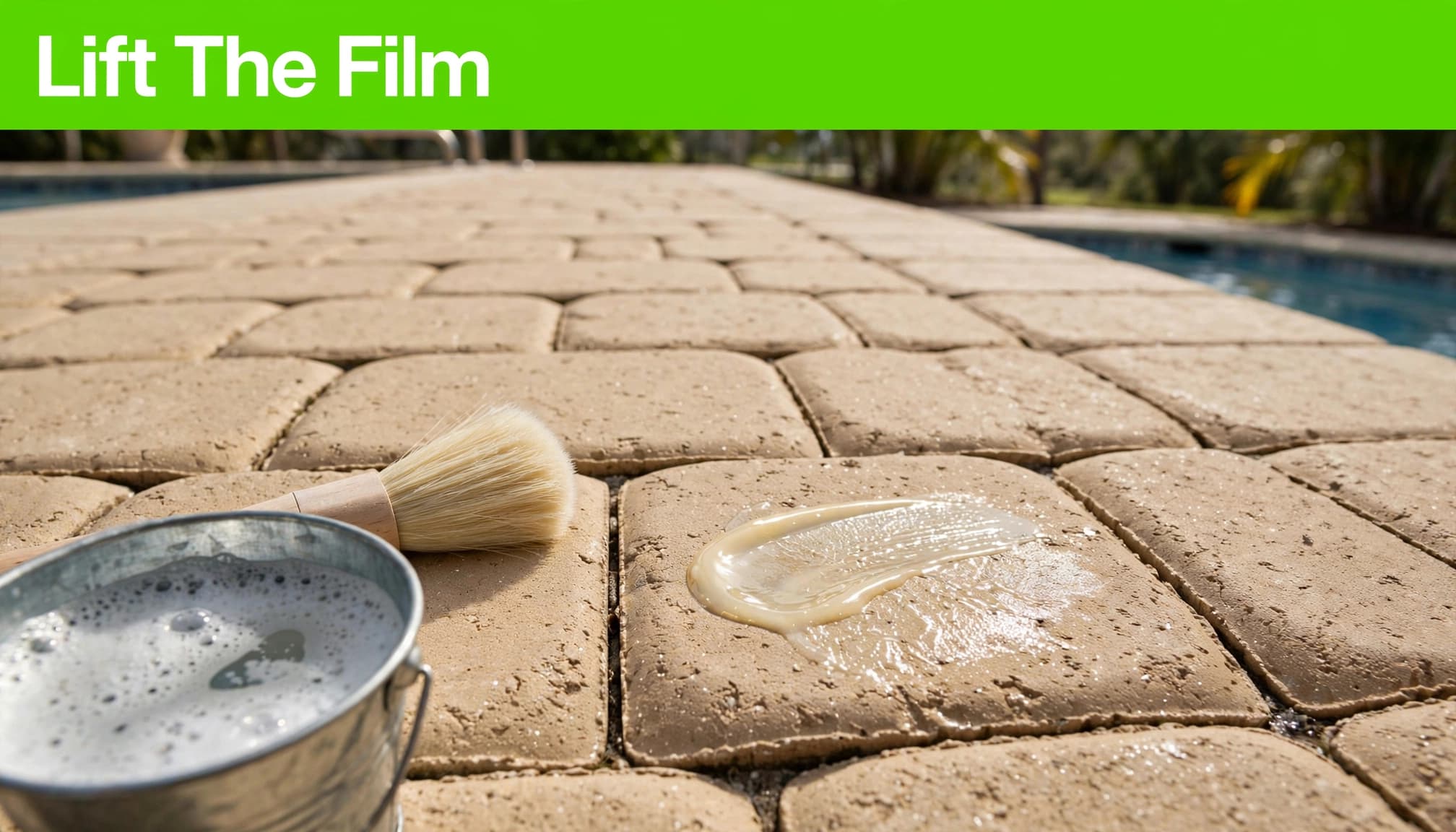
Many sunscreen formulas contain oils and water-resistant film-forming ingredients. These help sunscreen stay on skin, but they can also leave a slippery film on paving.
Some formulas contain oil-soluble UV filters such as avobenzone, and residue varies by formula.
Water alone may spread the film rather than remove it. A suitable detergent helps loosen oily residue so it can be collected and rinsed away. Scrubbing harder doesn’t replace choosing a cleaner that matches the stain.
Porous, unsealed pavers can absorb some oily ingredients. Fresh surface residue is usually easier to address than a dark mark that has soaked into the paving.
White Marks Need a Closer Look
Mineral sunscreens containing zinc oxide or titanium dioxide can leave a pale surface film. However, white residue around a pool isn’t always sunscreen.
Efflorescence, deposits from hard water, and cloudy sealer can look similar. Our guidance on removing white deposits from pavers explains how mineral residue differs from ordinary grime.
Avoid treating every white patch with a degreaser or acid cleaner.
Check the Pavers Before Applying Cleaner
Identify the Material and Finish
Brick pavers may be clay brick or brick-shaped concrete. Travertine, marble, and other natural stone require separate care, including nearby pool coping.
We recommend mild, acid-free soap only when it’s compatible with the paving and existing sealer. A product suitable for bare concrete may soften or discolor a coating.
Test an inconspicuous spot using the intended dilution and cleaning method. Let it dry completely, then compare its color, sheen, and texture with the surrounding surface. Wet paving can temporarily hide discoloration.
Stop if the test leaves a dull patch, roughness, or a softened finish.
Inspect Joints and Plan Runoff
Look for low joints, loose material, rocking pavers, and spreading edges before washing. Cleaning won’t correct movement or repeated washout.
Move chairs, towels, and planters clear of the affected area. Sweep loose debris without digging into the joints, and identify where rinse water will travel.
Keep contaminated water away from the pool, doorways, planting beds, and storm drains. For more extensive treatment, collection may require temporary containment and a wet vacuum rated for liquids.
Wear eye protection, closed-toe footwear, and any gloves required by the cleaner. Keep children, pets, and guests out of the work area.
Start Sunscreen Residue Removal With Gentle Cleaning
Work in small sections during cooler conditions. A hot deck can dry the solution before you finish scrubbing and rinsing.
- Blot fresh sunscreen. Lift excess lotion with absorbent towels. Don’t rub it across adjoining pavers or hose it into the joints. For a larger oily spill, a compatible dry absorbent can collect accessible oil before washing.
- Prepare a mild cleaning solution. Use a small amount of acid-free soap diluted in water, if the paver and sealer instructions permit it. Follow the stated dilution for packaged cleaners. Don’t substitute laundry detergent, since its additives can leave residue and it isn’t automatically safe for pavers or sealer.
- Apply and scrub gently. Lightly dampen the paver faces first only when the cleaner’s directions require it. Work the solution over the stain with a nylon or fiber-bristle brush. Use lighter strokes near joints, and avoid wire brushes.
- Keep the treatment controlled. Follow the cleaner’s contact time and don’t let it dry. There isn’t one suitable soaking time for every detergent, sealer, or paving material. Treat a manageable area rather than coating the entire deck.
- Rinse and inspect after drying. Remove the solution with a gentle garden-hose spray while containing oily wash water. Stop if joint material begins moving. Let the pavers dry fully before deciding whether another treatment is needed.
Belgard’s spring hardscape maintenance guidance also recommends low pressure when pressure washing. A garden hose is a practical starting point for a small sunscreen spill.
Treat Stubborn Marks Without Damaging the Finish
Use a Compatible Degreaser for Remaining Oil
If a dark, greasy mark remains, identify the stain before choosing a stain removal product. Select an oil-stain remover or degreaser approved for the paver material and finish. Household cleaners aren’t automatically suitable for sealed paving or natural stone.
Apply it only to the affected area after testing. Follow its dilution, contact time, agitation, and rinsing directions. Some products require the surface to stay wet; others use a treatment that dries and is removed later.
Oxygen bleach, dry-cleaning solvent, and Bar Keepers Friend aren’t routine treatments for oily marks. Formulas vary, so use them only if the manufacturer confirms they’re compatible with the paving and sealer.
Don’t combine different cleaning products or extend the contact time because the mark looks stubborn. Repeat treatment only when the product permits it and the dry result shows improvement.
Separate Rust, Mineral Deposits, and Sealer Problems
Orange marks near irrigation may be rust stains caused by iron. A chalky deposit may be mineral buildup, while a cloudy coating may need sealer assessment. Use a remover only if it’s approved for the identified paver material and finish.
Avoid general-purpose vinegar, muriatic acid, chlorine bleach, and household rust-remover pastes as routine treatments for oily marks. Acids can attack cement-based materials and etch calcium-based stone.
Never mix bleach with ammonia, acids, or other cleaners. Don’t apply a new product over residue left by the previous treatment.
A remaining mark doesn’t always mean the cleaner needs more time. It may mean the stain or surface finish was misidentified.
When the finish changes or the stain remains unchanged, stop and arrange a professional assessment.
Rinse Without Washing Out the Joints
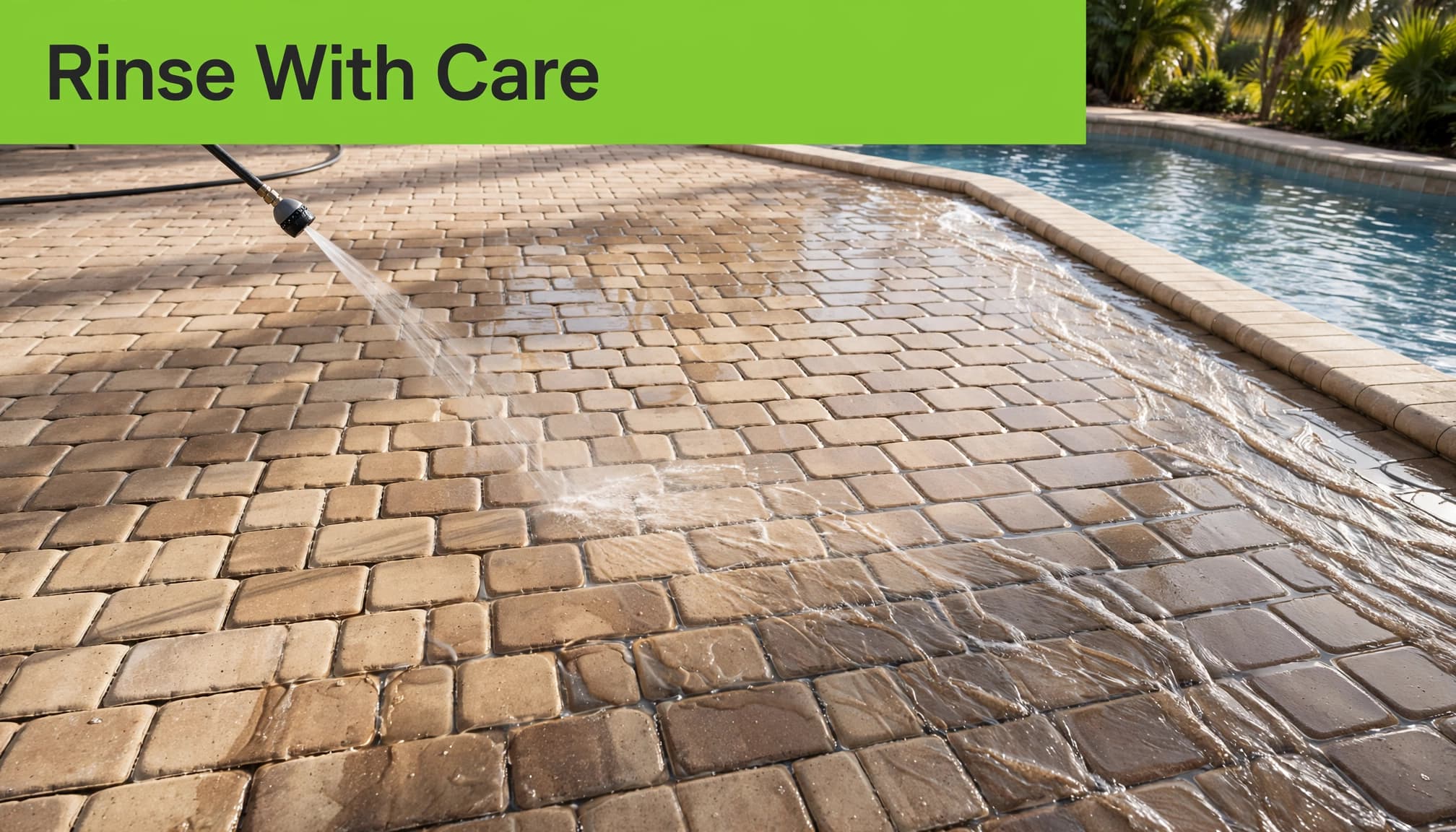
Use enough water to remove cleaning residue without creating a strong current across the paving. Direct a broad spray over the faces rather than holding it on individual gaps.
Watch for sand collecting along the edge of the cleaned area. Reduce the flow or stop if joint material begins washing away.
Brick pressure cleaning requires a method suited to the material, condition, and finish. There isn’t one safe pressure setting for every pool deck. Nozzle choice, distance, and operator technique also affect the result.
Belgard’s fall hardscape maintenance advice warns that excessive pressure can remove the finish and expose aggregate. Increasing pressure isn’t a dependable way to remove absorbed sunscreen.
After drying, inspect the surface for slippery residue, uneven cleaning marks, loose pavers, and depleted joints. Keep the area closed until it’s rinsed and safe underfoot. Missing joint material needs attention, but movement should be assessed before simply adding more sand.
Reduce Sunscreen Transfer Between Cleanings
Apply sunscreen away from the paved deck, particularly aerosol sprays that can settle over a wider area. Follow the sunscreen label for application timing, water resistance, and reapplication. Don’t reduce sun protection to protect the paving.
Keep bottles upright in a tray or basket and wipe up drips promptly. Towels on loungers can reduce direct transfer of lotion onto surrounding surfaces.
A compatible sealer can help limit staining, but it doesn’t make a deck stain-proof. Belgard’s paver sealing guidance discusses sealing as a maintenance option for patios, walkways, driveways, and pool decks. Poolside coatings also need appropriate slip resistance.
Routine inspections should include joints, drains, and areas beneath furniture. The same attention benefits brick driveways, where vehicle leaks create different oily stains.
Our Southwest Florida paver maintenance schedule covers ongoing surface care and signs that repairs deserve attention. Prompt cleanup helps keep a small spill from becoming a larger maintenance problem.
Key Takeaways
- Blot fresh sunscreen before washing, then start with compatible mild soap and a nylon or fiber-bristle brush.
- Judge the result only after the pavers dry. Use a paver-approved degreaser for remaining oil, not additional pressure.
- Protect joint material and contain contaminated rinse water. Stop if the finish changes or joints begin washing out.
Frequently Asked Questions
Can Dish Soap Remove Sunscreen From Pavers?
A small amount of compatible, diluted dish soap can loosen fresh oily residue. It may not remove sunscreen that has penetrated porous paving. Avoid concentrated mixtures that leave suds or slippery residue, and rinse thoroughly.
Will a Pressure Washer Remove Sunscreen Stains?
It may remove surface buildup, but pressure alone may leave absorbed oil behind. Excessive pressure can also scar pavers and remove joint material. We recommend stain-specific treatment and gentle rinsing before considering pressure washing.
Is Baking Soda Safe for Sunscreen Stains?
Baking soda can absorb some accessible oil, but it isn’t a complete treatment for embedded staining. Don’t grind it into the surface or mix it with vinegar. Collect powder before rinsing, and use it only where the paving and finish permit it.
Why Is the Deck Still Slippery After Cleaning?
Remaining sunscreen, soap, algae, or a coating problem may be responsible. Keep the area closed until the cause is addressed. Adding more detergent without removing the existing residue can make the condition worse.
Keep the Pool Deck Clean and Protected
Effective sunscreen cleanup starts with the right cleaner, controlled scrubbing, and gentle rinsing. Protecting the finish and joints matters as much as removing the visible mark.
If staining persists or the surface needs restoration, Contact Us for a FREE Quote. Our Fort Myers team can review your paver maintenance needs and discuss the appropriate next step.