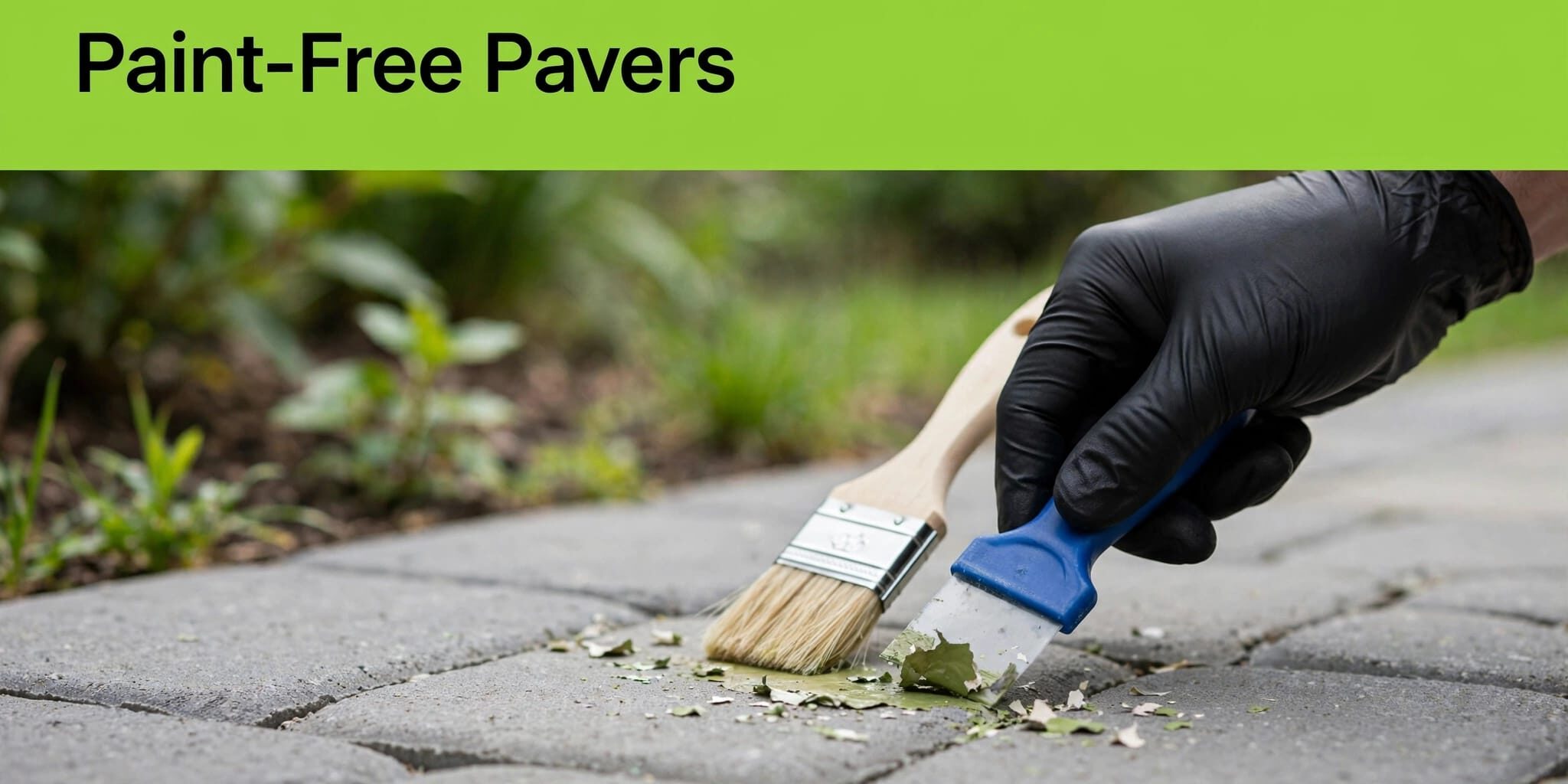
To remove paint from pavers, blot fresh splatter, lift loose dried coating, and treat any residue with a remover suited to the surface. Start gently because strong solvents, abrasive brushes, and excessive pressure can damage the paving or its sealer.
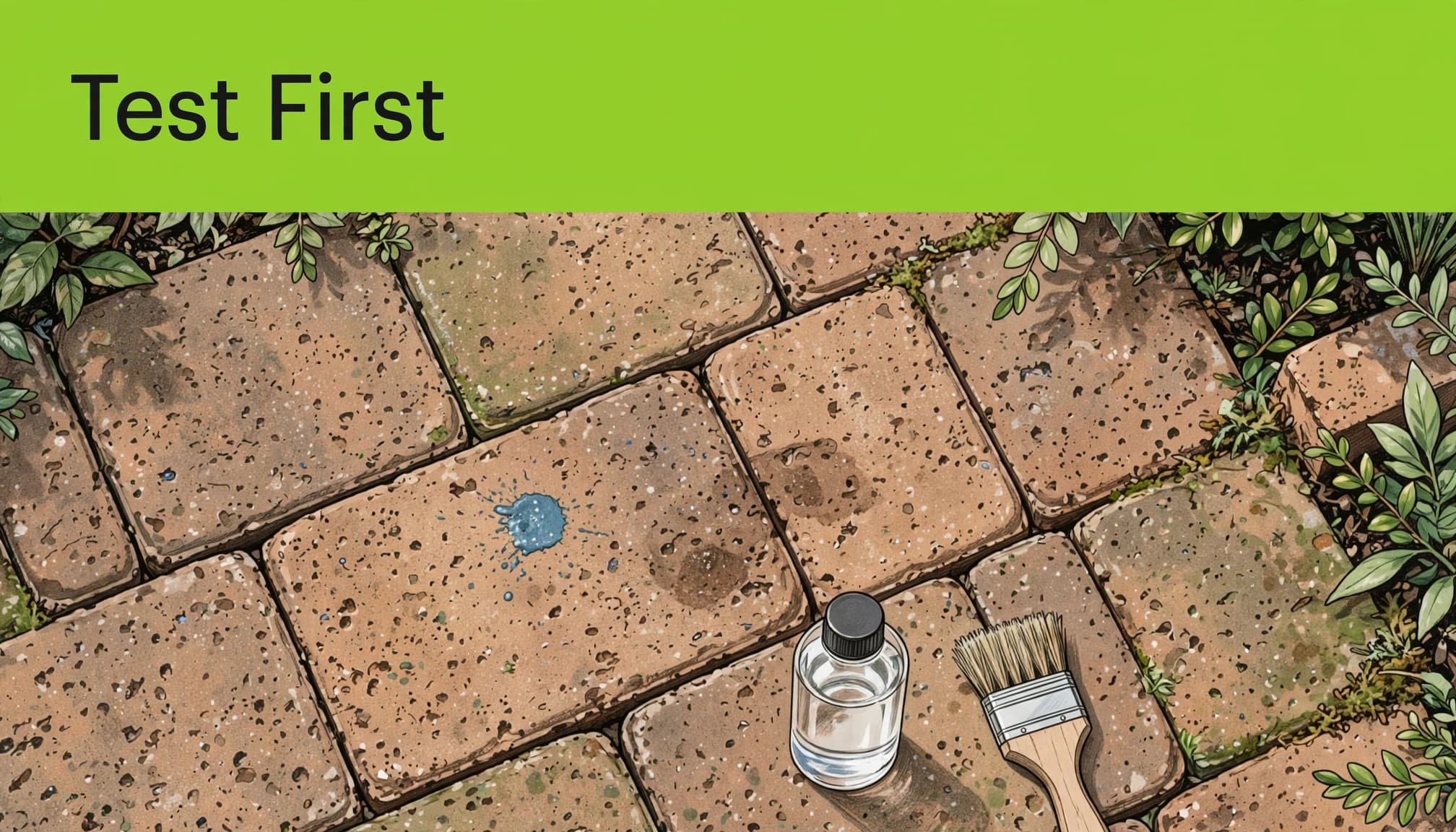
We recommend a test-first approach, especially on colored concrete, natural stone, and sealed patios. Identify the coating and paving material before choosing a cleaner.
Key Takeaways
- Blot wet paint instead of spreading it with a hose or rag.
- Match the remover to the paint, paver material, and existing sealer.
- Test an inconspicuous area and let it dry before judging the result.
- Protect joint sand, collect contaminated residue, and stop if the surface changes.
Identify the Pavers and Paint First
Recognize the Paving Material
Concrete pavers often show aggregate and manufactured edges. Brick pavers commonly have a fired, earthy appearance. Travertine and other stone may show pores, veins, or irregular patterns.
Appearance alone isn’t dependable. An original invoice or leftover paver provides a better reference. If the material remains uncertain, avoid aggressive chemicals until a professional identifies it.
Gloss, darkened color, peeling, or cloudy patches can indicate a coating. A solvent that removes paint can also soften that sealer.
Separate Fresh Paint From Dried Paint
Fresh latex or acrylic paint splatter often responds to warm soapy water. Dried paint forms a film, so water alone usually won’t remove it.
The container’s cleanup directions help identify water-based paint or oil-based paint. Spray paint describes the application method, not its chemical formula. Its binder determines which remover is suitable.
Choose a Remover That Matches the Paint
These starting points apply only after testing compatibility with the pavers and finish.
| Paint condition | Suitable starting treatment | Main precaution |
|---|---|---|
| Fresh latex or acrylic | Warm soapy water or compatible Krud Kutter cleaner | Blot before scrubbing. |
| Dried latex or acrylic | Approved paint remover, acetone, or lacquer thinner | Solvents may damage sealer. |
| Fresh oil-based paint | Mineral spirits or turpentine | Avoid spreading dissolved paint. |
| Cured oil-based or heavy exterior paint | Compatible masonry paint stripper | Removal may require repeated treatment. |
Use the least aggressive treatment that softens the coating without changing the surrounding surface.
Understand Solvent Differences
Lacquer thinner can affect dried latex and acrylic binders, while mineral spirits may not soften some cured coatings. On bare concrete, brick, and block, lacquer thinner can soften dried exterior coatings when mineral spirits won’t. Test lacquer thinner on a hidden spot first, since it may damage decorative stone or sealer.
Acetone can loosen acrylic paint, some spray paints, and dry-erase marker residue on bare concrete. These uses don’t establish its safety on decorative pavers.
OSHA’s painting chemical safety guidance explains why paint thinners require controlled handling.
Use Product-Specific Dwell Times
Commercial hardscape strippers vary. Some specify about five minutes, while others allow 15 to 30 minutes for stubborn latex. Reapply to keep the treatment wet only when directed.
Rob Parker’s Best Stone Stripper describes generous application, dwell times up to 24 hours, and removal of up to five layers. These are product-specific claims, not guaranteed patio results. Don’t transfer one remover’s directions to another.
Prepare the Tools and Work Area Safely
Keep Equipment Simple
Have a plastic scraper, stiff nylon brush, absorbent cloths, compatible cleaner, and suitable waste containers ready. Wear eye protection, closed-toe shoes, and the chemical-resistant gloves specified for the product.
Protect nearby plants, pool finishes, metal, and painted trim from splashes. Plan how to collect residue before starting. Don’t let contaminated water run into grass, storm drains, or a pool.
Work during cooler conditions. Southwest Florida sun can dry a treatment before its recommended contact time ends.
Control Fumes and Fire Risks
Acetone and lacquer thinner are highly flammable. Keep them away from cigarettes, pilot lights, grills, sparks, and running engines.
Don’t use a solvent in an enclosed or poorly ventilated area. Where airflow is limited, use the product-specified respiratory protection, which may require a properly fitted respirator with organic-vapor cartridges. A dust mask doesn’t protect against solvent vapor.
A respirator doesn’t replace proper airflow. OSHA’s ventilation requirements address controlling hazardous vapors where they’re produced.
Never mix cleaners or use a stronger concentration than the label allows.
How to Remove Paint From Pavers Step by Step
- Remove loose material. Sweep away grit without disturbing the joints. Blot fresh paint with absorbent material, working inward. For dried splatter, gently lift raised edges with a plastic scraper. Don’t force the blade beneath the paver surface.
- Test the complete treatment. Apply a small amount of remover in an inconspicuous spot and leave it for the recommended time. Scrub and remove it as directed, then let the test area dry completely. Compare its color, sheen, and texture with the surrounding pavers. Stop if you see discoloration, pitting, softening, or roughness.
- Treat a small section. Apply a compatible remover only where needed to remove paint from pavers. Don’t pour solvent across the patio or flood the joints. Follow any instructions about pre-wetting, covering, temperature, and keeping the treatment wet.
- Lift the softened residue. Use a plastic scraper and stiff nylon brush with controlled strokes. Scrub gently, then blot or collect the dissolved residue before it enters the porous surface. Wire brushes and drill-mounted wire attachments can loosen residue from masonry, but they aren’t recommended for routine paver cleaning. They can scratch paver faces or leave metal particles that later rust.
- Remove residue before rinsing. Collect softened residue and used cleaner as the label directs. Rinse or neutralize only as instructed. Let the paving dry before deciding whether another treatment is necessary.
Judge the result after drying. Wet paving can hide color changes and make remaining splatter harder to distinguish.
Rinse Without Damaging the Surface or Joints
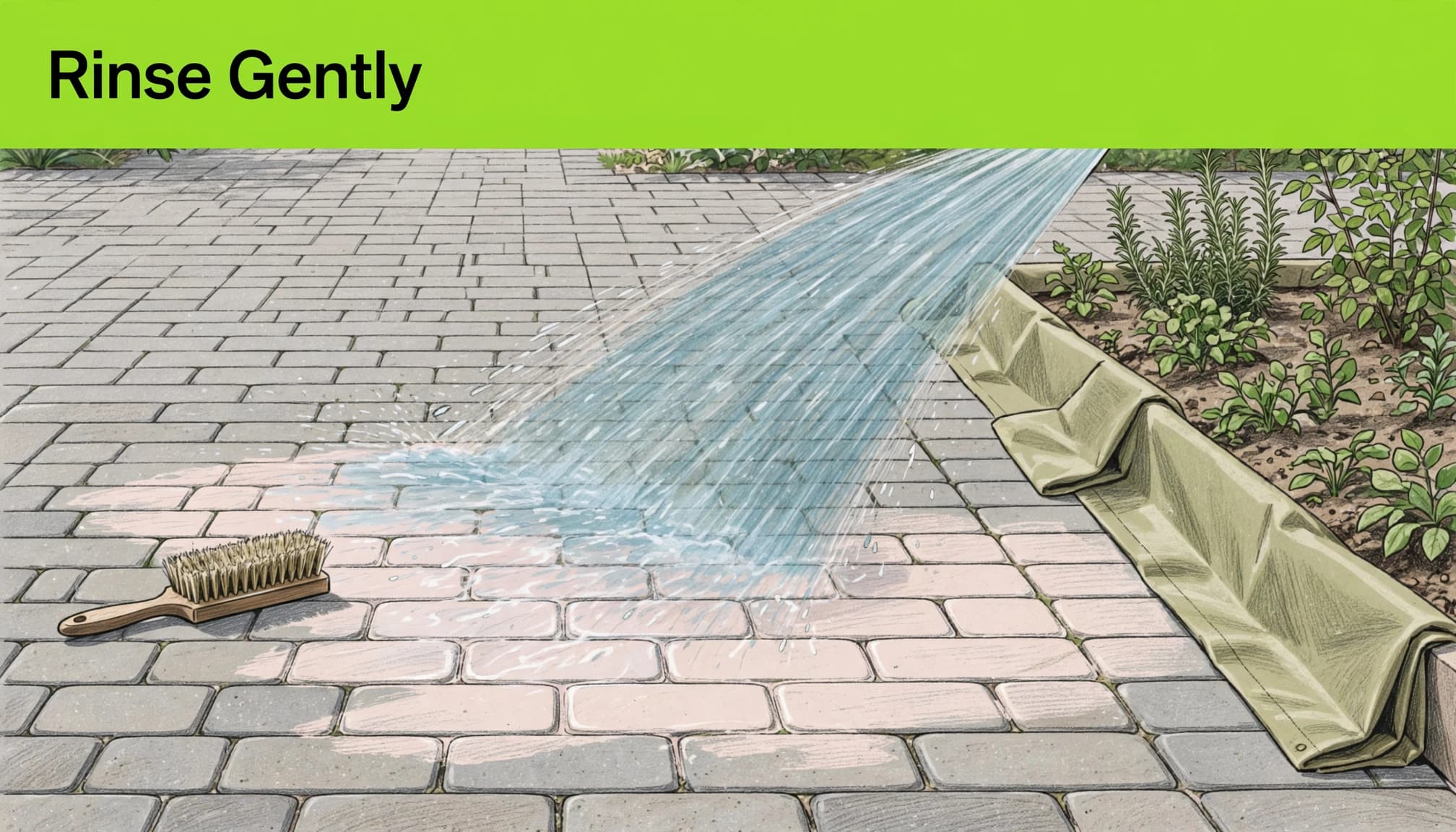
A garden hose may provide enough rinsing when the remover’s directions permit it. Chemical compatibility and residue collection matter more than water pressure.
Pressure washing brick requires a method matched to the material, condition, and coating. Even 1,500 to 2,500 PSI with a 25- to 40-degree nozzle can scar some surfaces or remove joint sand. No PSI or nozzle setting is universally safe.
Where pressure washing is appropriate, start with the lowest effective pressure and a broad fan. Begin well back, keep the wand moving, and avoid spraying directly into joints. Don’t use a narrow jet or turbo nozzle for routine joint-preserving cleaning.
Stop if sand moves, stripes appear, or the surface becomes rough. Our brick paver maintenance guidance covers the broader condition checks needed after washing patios and brick driveways.
Collect Paint Waste and Solvent-Soaked Rags
Keep paint sludge, contaminated absorbents, and leftover solvent out of drains and soil. Don’t hose them off the property.
Solvent-soaked rags need controlled handling because vapors can ignite. Keep them in a suitable, closed waste container away from the house and ignition sources. Never leave them piled together.
If the applicable disposal instructions require outdoor drying, keep rags separated in a secure location away from buildings, children, pets, and flames. Drying doesn’t automatically make contaminated rags suitable for household trash.
The EPA’s household hazardous waste guidance explains safe management of leftover paints, solvents, and cleaners. Business-generated waste may have different requirements from household waste.
Don’t combine leftover chemicals in one container. Keep original labels available so the contents remain identifiable during disposal.
Address Clean Patches and Remaining Discoloration
Paint removal can leave a lighter patch because the treatment also removes surrounding dirt. It may also expose an area where the sealer was stripped.
Let the patio dry before deciding what to do about the difference. If ordinary dirt caused the contrast, gentle cleaning around the affected area can feather the boundary. Don’t spread concentrated solvent across clean paving to make the color match.
A clean patch may become less noticeable over a season or roughly six months, but weathering isn’t guaranteed. Missing sealer or etched stone won’t reliably correct itself.
Inspect joints and edges after cleaning. Missing sand, rocking pavers, or a damaged coating need attention before normal use. Our paver cleaning and sealing guidance explains why surface cleaning and coating restoration are separate decisions.
Don’t apply sealer over remaining residue, cleaning residue, or damp paving.
Frequently Asked Questions
Can Vinegar or Brick Acid Remove Paint?
We don’t recommend either for paint removal. Vinegar can etch calcium-based stone, including travertine and marble, without reliably removing cured paint.
Brick acid can dissolve the surface of acid-sensitive pavers and cause permanent damage. It’s not a suitable paint remover for acid-sensitive stone.
Will Acetone Bleach Brick or Stone Pavers?
Acetone isn’t a bleaching treatment, but that doesn’t make it harmless. It may dissolve sealer, affect surface treatments, or spread paint into surrounding pores.
Test the area and let it dry first. Nail polish remover is a poor fallback because added oils, dyes, or fragrances can cause another stain.
Does WD-40 Remove Paint From Brick?
WD-40 isn’t our recommended starting treatment for porous paving. It can leave oily residue and create another cleaning problem.
For dried paint on brick, choose a paint remover labeled for the masonry and existing finish. Repeat a compatible treatment rather than increasing pressure or using harsher scrubbing.
Protect the Pavers While Removing the Paint
The dependable way to remove paint from pavers is to match the treatment to the surface and test before proceeding. Controlled scrubbing, careful rinsing, and proper waste collection protect more than appearance.
If cleaning exposes loose pavers, damaged joints, or areas needing restoration, Contact Us for a FREE Quote. We can discuss appropriate repair or restoration work for your property.