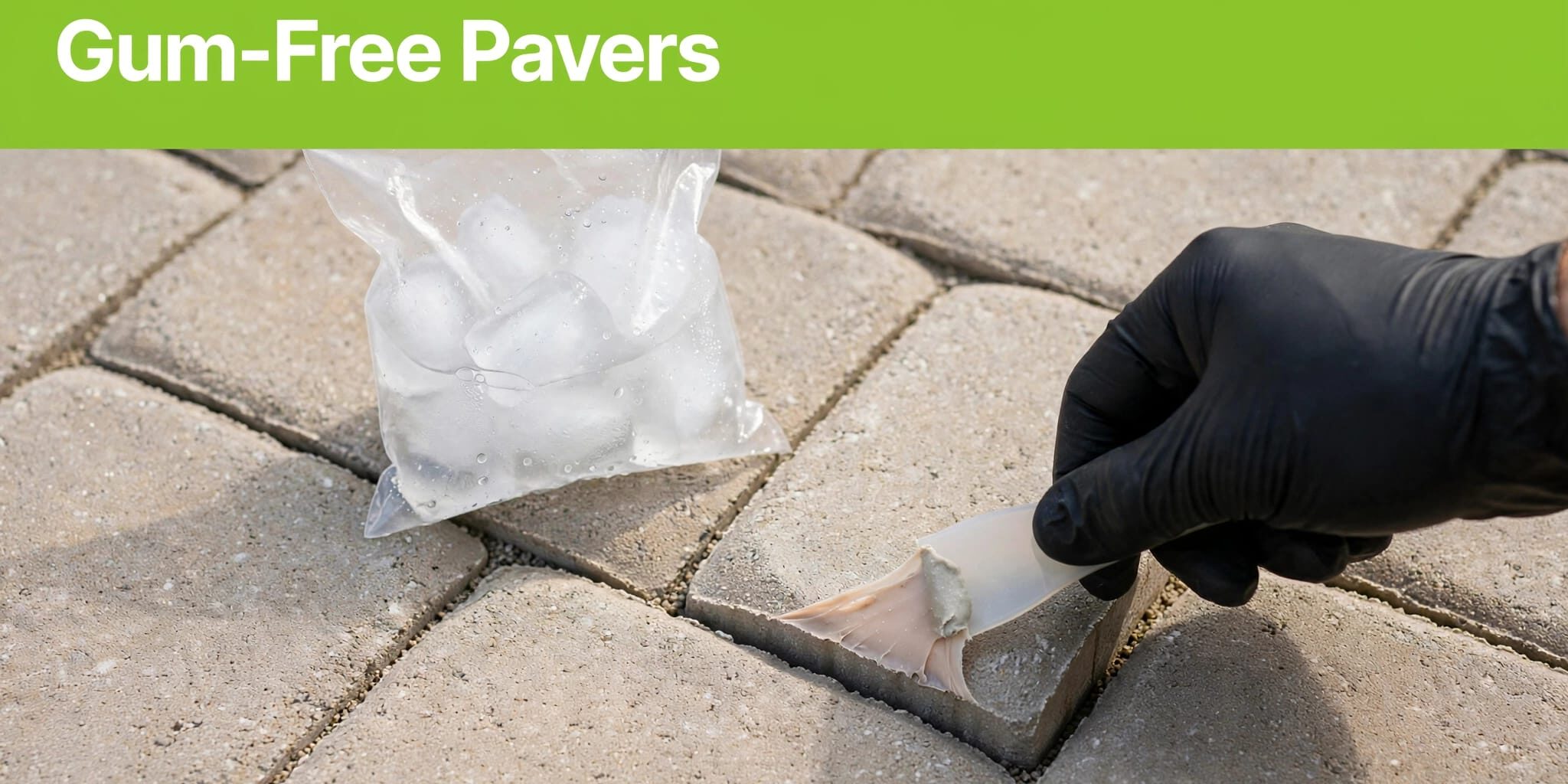
To remove gum from pavers, freeze the spot with bagged ice, lift the gum with a plastic scraper, and wash away residue gently. Start with this method to limit exposure to chemicals and high pressure.
Your walkway’s material, sealer, and joint condition determine what you can safely try if gum residue remains. Protecting the surface and joints matters as much as removing it.
Key Takeaways
- Start with freezing and a plastic tool rather than a steel blade or pressure washer.
- Test cleaners on an inconspicuous area, including any existing sealer, before treating visible spots.
- Rinse carefully and stop if sand moves, the finish changes, or the surface develops marks.
Fresh gum is easier to remove before foot traffic presses it into the paver texture. Keep the area clear while you work.
Check the Pavers Before Cleaning
Identify the Material and Finish
Brick pavers may be clay brick or brick-shaped concrete. Natural stone, including travertine and marble, requires different care. Unlike concrete pavers, acid-sensitive stone can be damaged by some cleaners.
A treatment suitable for unsealed concrete may damage stone or soften a coating. Test any cleaner in a small, hidden area. Let it dry completely before comparing color, sheen, and texture. Stop if the treated area looks different.
The Natural Stone Institute’s stone cleaning guidance recommends mild, non-acidic cleaners for acid-sensitive stone.
Protect People and Weak Joints
Sweep away grit without digging into the joints. Note loose pavers, cracked polymeric sand, or gaps before adding water. Cleaning won’t correct movement or recurring washout.
Wear gloves, eye protection, and closed-toe shoes. Keep children, pets, and customers away until the walkway is clean and safe underfoot. Collect debris rather than rinsing it toward drains, planting beds, or another section of paving.
Freeze Gum Before Scraping
Freezing makes chewing gum firmer and more brittle, so it lifts with less smearing. This freezing method is our preferred starting point for one or two spots. Fresh gum is easier to remove before it’s pressed into the paver texture.
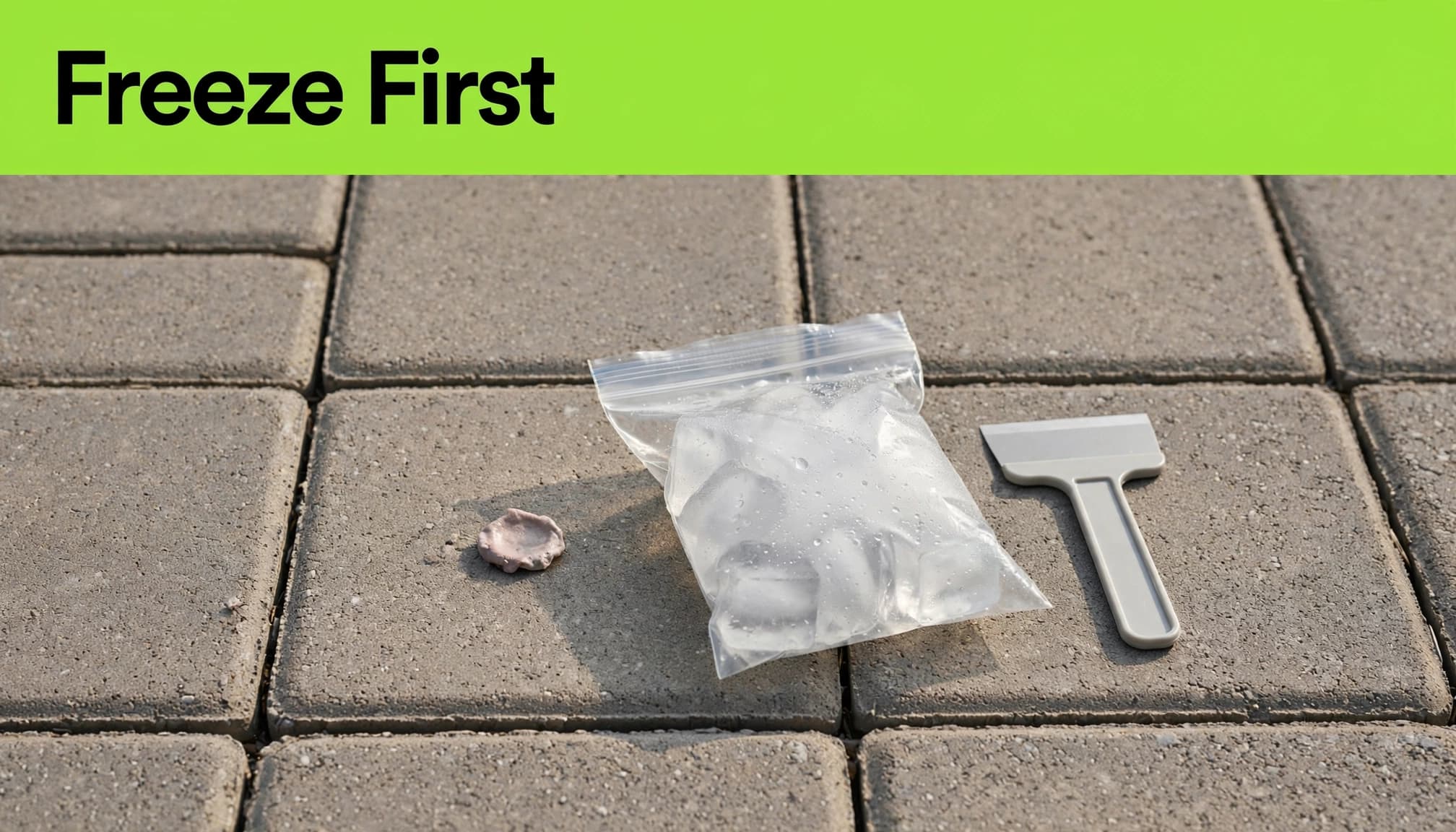
- Place ice cubes in a sealed plastic bag and set it directly over the spot.
- Leave the bag in place until the residue feels hard rather than stretchy. Add fresh ice if needed.
- Slide a plastic scraper under an exposed edge.
- Lift small pieces and collect them. If hardened gum softens during scraping, repeat the freezing step.
Keep the scraper nearly flat, roughly 10 to 15 degrees above the surface. Peel from the edge instead of pressing downward into the pores. Don’t force the blade against raised edges.
Avoid steel scrapers and wire brushes. They can scratch the surface, and steel particles left in concrete pores can develop rust stains.
An aerosol freeze spray is another option. Use a product approved for the surface and follow its application directions. It’s convenient for isolated spots, but repeated cans become expensive across a large walkway.
Treat the Remaining Gum Residue
Remove most of the gum before applying a cleaner. This reduces residue and the amount of product you need to manage.
Start With Soap and a Nylon Brush
Apply mild, acid-free detergent or compatible dish soap. If the product directions allow, leave it on for 15 to 20 minutes, then scrub with a stiff nylon or fiber-bristle brush.
Keep the solution from drying. Rinse with a gentle, broad spray instead of a concentrated hose jet. Soap can loosen greasy gum residue, but may not remove hardened material completely.
Use WD-40 Carefully
WD-40 can loosen remaining gum, but its oily residue may darken porous paving or affect a sealer. Test it on a small, hidden area first.
Spray a small amount directly onto the residue. Wait two to three minutes, then lift it with a plastic putty knife. Blot excess product and wash away the oily film with compatible detergent. Keep solvents away from hot-water or steam equipment.
Consider a Citrus Gum Remover
A commercial gum remover or citrus degreaser can help with stubborn residue. Choose a product approved for your paving, not simply the strongest formula.
For fresh gum, use an undiluted spot treatment only if the label allows it. Leave it for about 10 minutes when directed, or follow the product’s stated dwell time.
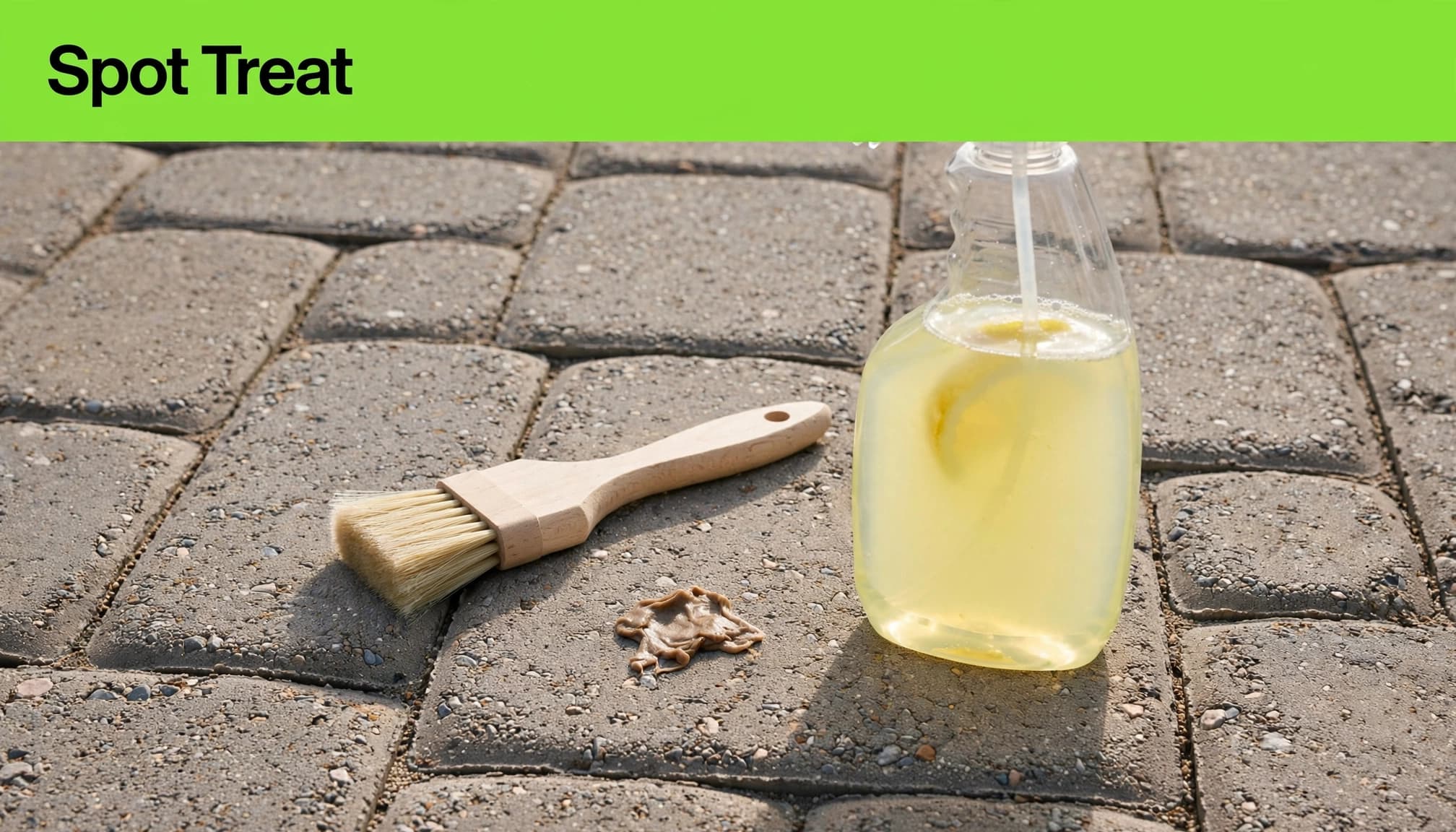
If treatment leaves a visibly cleaner patch, gently clean the surrounding area with the same degreaser at its approved maintenance dilution. Don’t spread concentrated solvent over clean paving.
Use Pressure Washing Only When Necessary
A pressure washer can remove gum, but excessive force can scar pavers, strip sealer, and dislodge ordinary sand, polymeric sand, or weakened mortar.
Control Pressure, Distance, and Direction
Equipment rated at 3,000 PSI or higher can damage pavers at full output. That rating isn’t a safe minimum for this job. There is no universal safe pressure setting for every paver and finish.
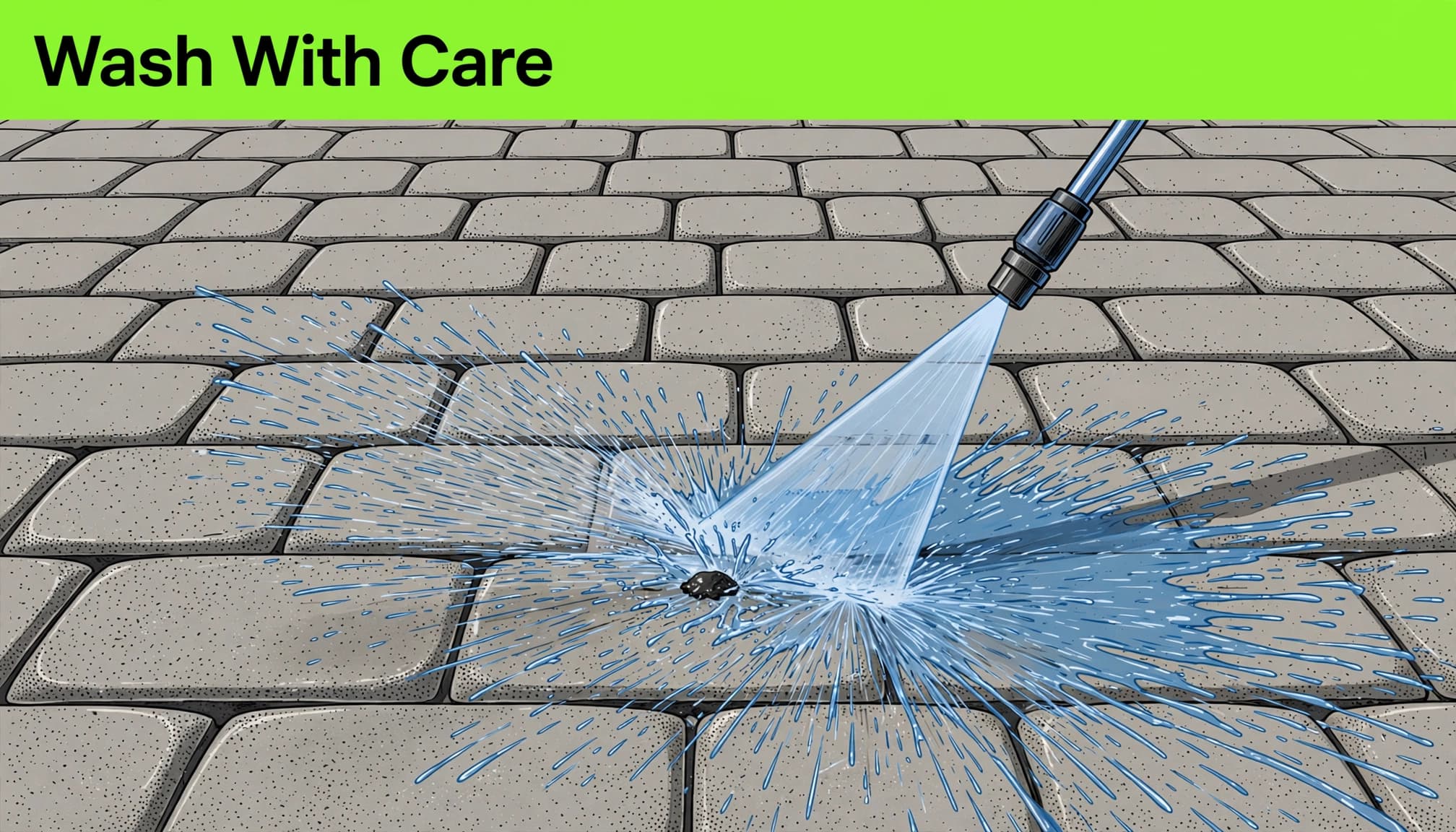
Where a pressure washer is appropriate, begin with the lowest effective pressure and a broad fan nozzle. Start well back, keep the nozzle moving, and avoid working closer than 12 inches without surface-specific guidance.
Approach residue from its edge instead of directing a concentrated jet straight down. Never spray into joints. Stop if sand moves, the finish develops stripes, or gum spreads across the surface.
The CDC’s pressure washer safety guidance also addresses the serious injury risks associated with high-pressure equipment.
Choose Heat Instead of More Force
For widespread gum, hot water pressure washing is generally faster than cold-water washing because heat softens the residue. A professional hot box may also suit selected surfaces, but check compatibility, especially over sealers.
A cold-water turbo nozzle can remove gum more slowly, but its concentrated rotating spray increases the risk of wand marks and joint loss. Avoid a turbo nozzle for routine brick pressure cleaning when preserving joint sand matters. The same caution applies to concrete pavers.
Avoid Vinegar and Acid Shortcuts
A Toothbrush Scrub Isn’t a Reliable Treatment
A toothbrush scrub is sometimes suggested for gum trapped in pores. Mixing vinegar with baking soda creates fizz, but the ingredients neutralize each other. That reaction doesn’t establish effective gum removal. Baking soda doesn’t make vinegar an effective gum treatment.
Acidic cleaners can etch acid-sensitive stone and damage concrete, mortar, or coatings. We don’t recommend them as a general treatment for travertine, marble, or limestone paving. A small nylon brush and an approved cleaner offer a more controlled approach.
Reserve Acids for Professional Assessment
Acid cleaners are a last resort for a correctly identified, compatible masonry-cleaning problem. They aren’t a sensible next step simply because residue remains.
Phosphoric and sulfamic formulations may be less aggressive than muriatic acid, but they can still damage concrete, stone, mortar, and coatings. SPEC MIX’s masonry cleaning precautions warn against muriatic acid because of surface damage.
Any professional acid treatment requires chemical-resistant gloves, splash goggles, and respiratory protection appropriate to the product’s safety data sheet. A basic dust mask isn’t a substitute for a required respirator. Never mix cleaners.
Choose Suitable Equipment for Large Areas
A business entrance with dozens of gum spots needs a different approach than a single piece on a residential walkway. Repeated freezing and scraping can take time.
Professional hot-water equipment or a steam cleaner may be more practical for widespread gum buildup. A hot box heats water supplied by a petrol- or diesel-powered pressure washer. The hot box’s temperature, output, and operating requirements vary by unit.
We wouldn’t choose equipment based on an isolated temperature claim or an old purchase price. Check whether the pavers, concrete, or any coating can tolerate the treatment.
Laser cleaning is also marketed as a water-free, chemical-free alternative. It requires specialized equipment, and laser cleaning’s compatibility with a particular paver or coating must be confirmed before use. Claims that laser cleaning removes residue without streaks don’t prove it will suit every surface. For ordinary property maintenance, controlled gum removal is the more practical starting point.
Rinse Carefully and Inspect the Walkway
Once the gum lifts, rinse away any remaining cleaner before it dries. Use a broad, gentle rinse over the paver faces, and avoid directing water across the joints for too long.
Contain chemical residue and keep contaminated wash water out of storm drains and pools. Don’t rinse oily cleaner onto adjacent paving.
Our guidance on cleaning without removing joint sand covers controlled washing in more detail.
Let the surface dry before judging the result. A dark mark may be moisture, oily residue, or a remaining stain rather than gum. Don’t repeat the treatment with a stronger product right away.
Inspect the joints and edges afterward. Missing joint material, rocking pavers, or recurring washout need attention before regular use resumes. The same precautions apply to patios and brick driveways. Our brick paver maintenance guidance explains the broader condition checks that support dependable paving.
Frequently Asked Questions
What Is the Best Way to Remove Gum From Pavers?
For isolated gum spots, freeze with bagged ice and lift with a plastic scraper. Follow with mild, paver-safe soap to protect the surface and joints.
Can WD-40 Remove Chewing Gum After It Dries?
WD-40 can loosen dried residue, but it may leave an oily mark or affect a coating. Test a small area first, then clean with a compatible detergent.
Can Polymeric Sand Withstand Pressure Washing?
Polymeric sand can lose material if joints are worn or sprayed with too much pressure. Use low pressure, avoid spraying directly into joints, and stop if sand moves.
Keep Gum Removal Gentle and Controlled
Freezing, plastic scraping, and a compatible cleaner can remove many small spots without aggressive washing. Increase treatment strength only if the paver surface and finish can tolerate it.
Protect sound joints as well as the pavers’ appearance. If washing exposes loose pavers, damaged joints, or areas needing repair, Contact Us for a FREE Quote. We can discuss the appropriate paver repair or restoration work for your property.