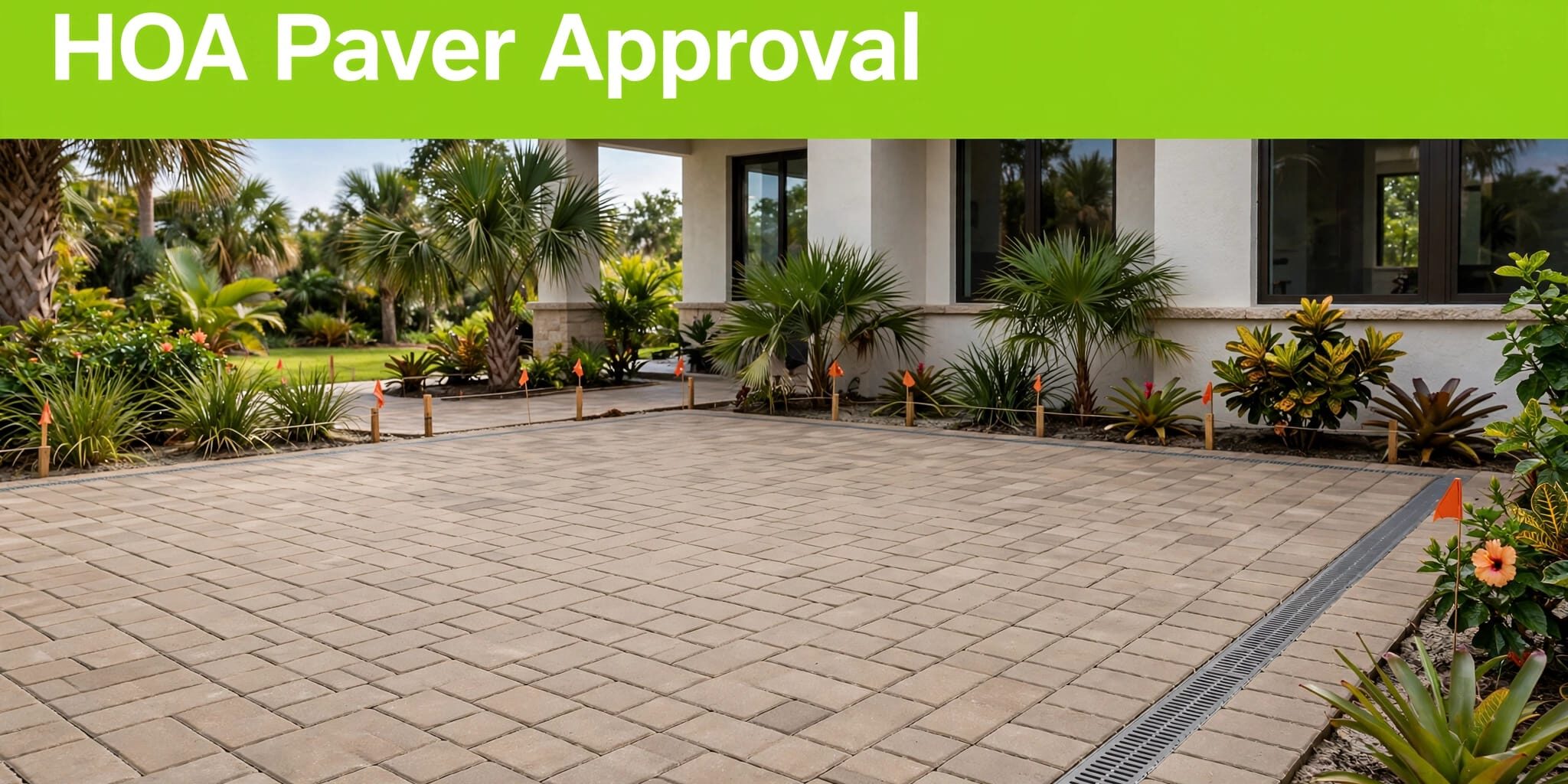
A paver project can be delayed before work begins if your HOA application leaves important questions unanswered. HOA paver approval is easier to manage when the proposal clearly identifies the materials, intended use, property boundaries, and drainage plan.
We’ve served Southwest Florida since 1999, and we recommend confirming written approval before ordering materials or scheduling work. Your association’s decision and any required government permits are separate approvals.
Start with your community’s current governing documents, then prepare a submission that accurately describes your project.
Key Takeaways
- Review your HOA’s governing documents and confirm in writing which paver changes require approval before ordering materials or scheduling work.
- Make the project’s materials, dimensions, intended use, property boundaries, landscaping impacts, and drainage plan clear and consistent across your application documents.
- HOA approval and local permits are separate requirements. Check with the correct city or county and confirm applicable drainage and right-of-way rules for your property.
- Keep copies of submissions and written decisions, follow approval conditions, and address a denial by requesting the specific rule and concern before revising your plan.
Check the Community Rules Before Choosing Materials
HOAs review exterior modifications to maintain community appearance standards and address interests such as property values. Their authority comes from governing documents, not a general right to reject any improvement.
Read the Declaration and Architectural Guidelines
Request the declaration of Covenants, Conditions, and Restrictions, commonly called CC&Rs, along with the current architectural guidelines and application form. These governing documents explain property restrictions and the approval process for proposed work.
Under Florida Statutes Section 720.3035, architectural review authority must be stated or reasonably inferred in the declaration or authorized published guidelines. The association must apply authorized standards reasonably and equitably.
Check approved paving materials, colors, driveway dimensions, setbacks, design guidelines, landscape guidelines, and maintenance requirements. Ask the management office whether patios, pool decks, walkways, or driveway work have separate rules.
Confirm Which Changes Need Review
Don’t assume that replacing an existing surface is automatically exempt. A different color, border, footprint, or finish may require approval, even when the paved area stays the same.
Describe the full scope when requesting guidance. If the work is limited to brick pressure cleaning, ask whether it qualifies as routine maintenance. Include any planned sealing or color treatment, since those may change the surface’s appearance.
We recommend resolving these questions before selecting products. Our paver design consultation can help organize your layout, material choices, and known HOA requirements.
Classify Walkways and Driveway Extensions Clearly
A paver walkway beside a driveway can raise questions about whether it creates additional parking or serves as a driveway extension. Make the intended use clear through the drawing and proposed use, not just a label.
Show the Pedestrian Route
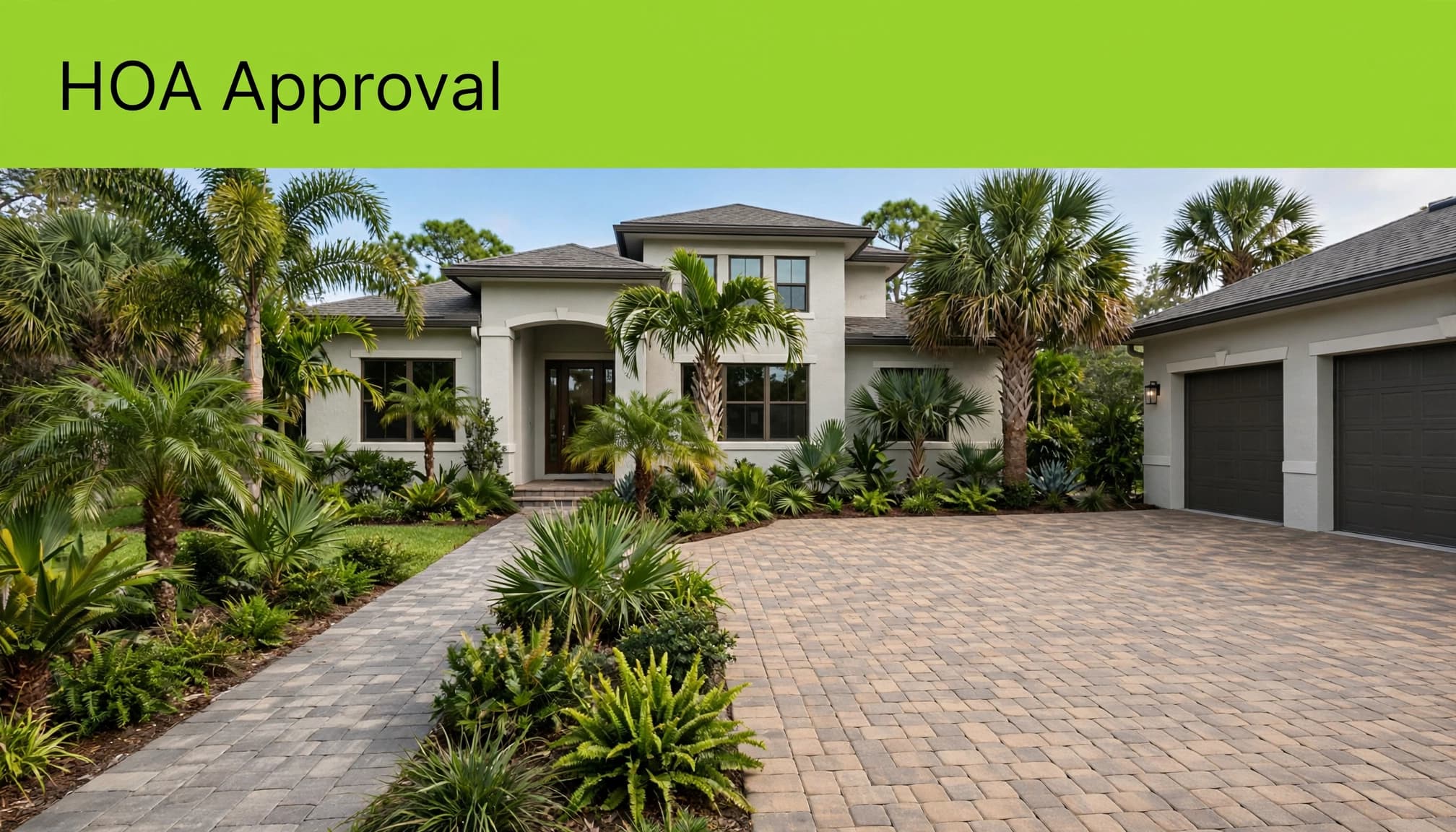
For a walkway, identify where it begins and ends, its width, and its connection to the entrance, gate, or garden. Show the existing driveway separately.
Include nearby planting beds or other features that distinguish the pedestrian route from vehicle space. Explain whether landscaping will remain, be relocated, or be removed.
A board may question a walkway if its dimensions and location allow vehicle parking or maneuvering. Decorative pavers alone don’t determine whether an area can accommodate vehicles. Calling an area decorative doesn’t resolve a conflict with a written driveway restriction.
Disclose Changes to Vehicle Areas
If you want additional parking or turning room, identify the project as a driveway extension. Hiding that purpose can create problems during review and after completion.
For brick driveways, show the existing and proposed widths, garage connection, street connection, and total paved footprint. Mark any section that extends beyond the current driveway.
An HOA may deny an expansion that conflicts with an authorized restriction. Whether a walkway can be treated as vehicle space depends on the actual proposal and governing standards.
We recommend asking for written classification guidance when the boundary between pedestrian use and vehicle use is unclear.
Build a Complete HOA Paver Approval Submission
Your association’s application requirements control the submission. This checklist can help you prepare complete submittal packages without assuming every community asks for the same documents.
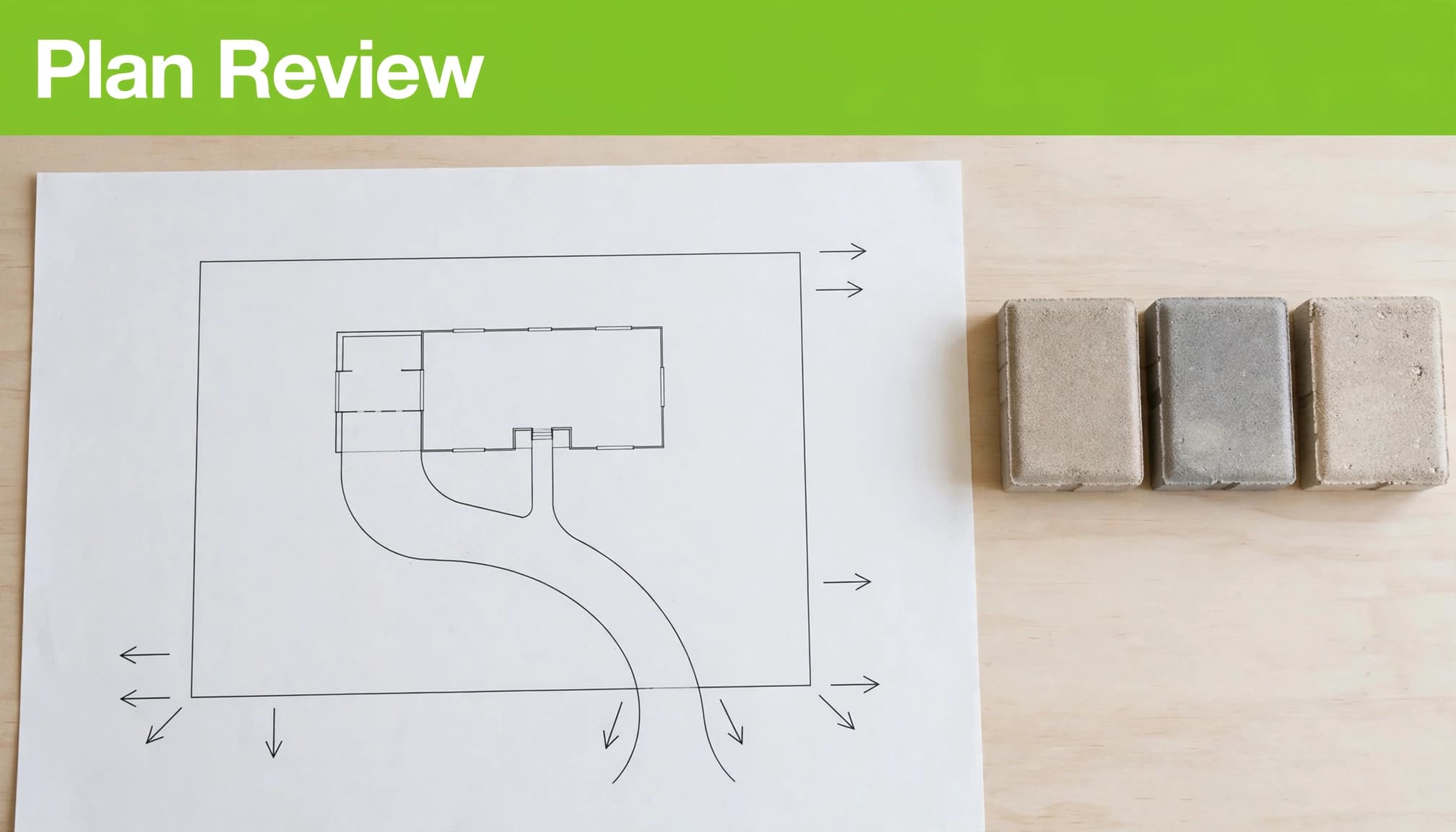
Include the information needed to evaluate the proposal:
- Complete the application with the property address, owner information, and a clear description of the requested change.
- Provide the survey or site plan requested by the HOA, identifying property boundaries, setbacks, easements, utilities, existing surfaces, and proposed hardscape additions.
- Show dimensions, square footage, and boundaries for each impervious surface being added or expanded.
- Attach current photographs that show the work area and its relationship to the home, street, and neighboring properties.
- Identify the manufacturer, product, color, finish, pattern, and border for decorative pavers. Include samples or product sheets where requested.
- Describe grading and stormwater management, along with any affected turf, mulch beds, hedges, trees, or irrigation.
- Supply contractor details, insurance documents, fees, and proposed scheduling information if the application requires them.
Use the product’s precise material description so the committee can understand what you’re proposing.
Keep your estimate, plan, and application consistent. Different dimensions or product names across documents can leave the committee uncertain about what you’re requesting.
We also recommend dating each drawing. A revised plan should be easy to distinguish from an earlier version.
Confirm Southwest Florida Permits and Drainage
HOA approval doesn’t replace a local permit. Check with the applicable city or county about building permits and stormwater management before setting a schedule.
Check the Correct Local Authority
A Fort Myers mailing address doesn’t always show which government handles the work. Confirm whether your property is within city limits or unincorporated Lee County. Make the same address check in Naples, Cape Coral, and nearby communities.
Lee County requires permits for work within county right-of-way. Its driveway standards include a 5-foot side-lot-line separation for the specified driveway portion between the pavement edge and right-of-way line.
Collier County requires permits for work in public right-of-way or easements provided for public use. Its published residential driveway guidance identifies a maximum width of 24 feet.
These are separate local standards, not statewide dimensions for every project. Confirm how they apply to your address, road connection, and proposed layout.
Explain Where Rainwater Will Go
Southwest Florida applications should address heavy rainfall, existing swales, roof runoff, and drainage easements. Include a stormwater management plan that identifies existing drains and explains whether the proposal changes water flow.
Grade changes, added impervious surface, flood-zone conditions, or connections to public drainage can require additional review. A patio shouldn’t block an existing drainage route or redirect runoff onto neighboring property.
Don’t assume pavers qualify as permeable simply because they have joints. Permeable systems require suitable site conditions and a planned water-management system. High groundwater can limit their usefulness.
Our paver patio drainage planning guidance covers the site information worth reviewing before you finalize the approval package.
Submit the Application and Protect the Schedule
Send the complete package through the association’s required channel. That may be an online portal, management office, or architectural review committee.
Keep a copy of everything submitted and request confirmation of receipt. Ask how to follow up during the approval process, whether the package is complete, and when it will be reviewed. Confirm how questions or revisions will be communicated and who will issue the written decision. Depending on the HOA, that may be the board of directors or another group.
Don’t assume there is a universal Florida deadline for paver applications. Review periods, meeting schedules, and any provisions about unanswered requests depend on the governing documents and applicable law. Silence shouldn’t be treated as approval without confirming those provisions.
An informal conversation with a board member isn’t a dependable substitute for the association’s documented decision.
An approval with conditions may require a revised plan or another review before work can begin. Read the conditions before accepting delivery dates.
Check whether the approval has an expiration date or requires a completion inspection. Confirm approved colors, dimensions, borders, and landscape changes against the contractor’s final scope.
If the material becomes unavailable, don’t substitute another product without checking whether renewed approval is required. The same applies to changes in footprint or drainage.
Build the project timeline around completed approvals, material availability, and weather. Southwest Florida rain can affect the project timeline, so don’t treat the HOA review date as a guaranteed start date.
Respond to a Denial With Clear Documentation
A denied application doesn’t always mean the project must be abandoned. First, understand the restriction and determine whether you can revise the proposal.
Request the Rule and the Specific Concern
Ask the board of directors for a written explanation identifying the governing restriction and the part of your proposal that conflicts with it. If the issue is a driveway extension, request clarification about the dimensions, location, or intended use that led to that classification.
A revised plan may resolve the concern by reducing the footprint, maintaining landscaping, or clearly separating pedestrian access.
Avoid beginning work while a disagreement remains unresolved. Under Florida’s homeowners association law, a violation notice can lead to enforcement proceedings and fines, subject to statutory requirements.
Keep correspondence factual and focused on the requested improvement.
Compare Earlier Approvals Carefully
Existing builder-installed pavers can help explain the community’s appearance, but they don’t automatically establish permission for your project. An original installation may have been approved under different standards or circumstances.
Document comparable properties by address, photographs, layout, and approval history where available. Compare actual use and dimensions, rather than color alone. These details can help assess whether selective enforcement is a concern.
Selective enforcement concerns require more than showing that another property has pavers. Ask the association to explain any differences between genuinely similar installations and your request.
Florida law requires reasonable and equitable enforcement, but an inconsistent-looking decision doesn’t automatically invalidate a denial. Don’t characterize a decision as capricious and arbitrary without supporting facts or legal advice. Follow the association’s reconsideration process. For a continuing dispute, consult a Florida community-association attorney before making legal claims or proceeding.
Move Forward With a Documented Plan
A dependable paver project starts with a clear scope and written decisions. Your application should identify what will change, how the area will be used, and how it affects landscaping and drainage.
We recommend confirming association approval and any required local permits before materials are ordered. That keeps an unanswered approval question from becoming a project delay.
If you’re planning a driveway, walkway, patio, or pool deck in Southwest Florida, Contact Us for a FREE Quote to discuss your project and the information needed for planning.