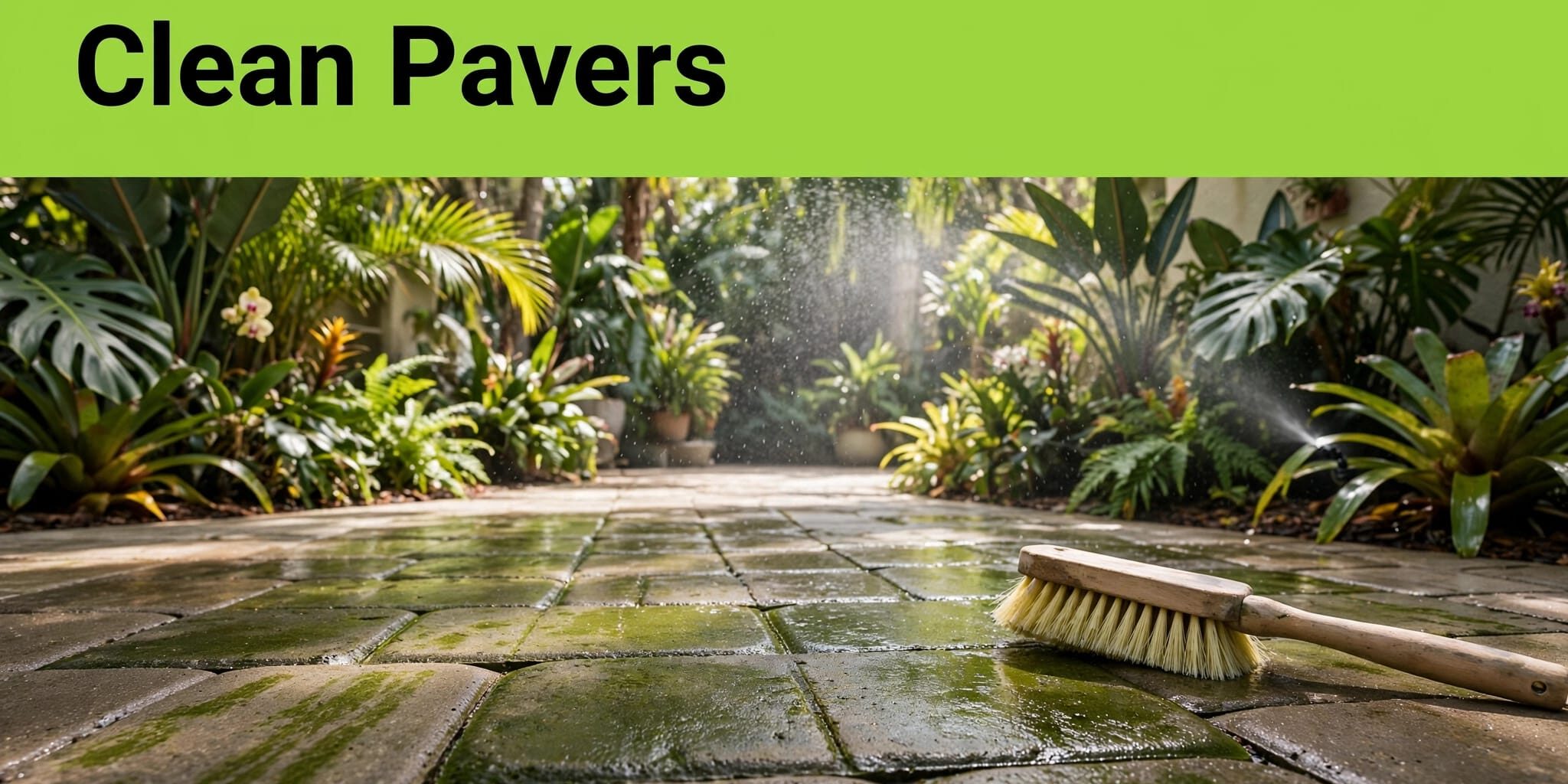
Green growth can make your patio, walkway, or driveway slippery before it looks heavily stained. In Southwest Florida, humidity, shade, frequent rain, and irrigation overspray can keep pavers damp and encourage regrowth.
We recommend gentle cleaning first, followed by an inspection of the joints and drainage. A garden hose, suitable brush, and compatible cleaner can remove buildup without the risks of aggressive washing.
Start by checking the surface and identifying why it stays wet.
Key Takeaways
- Start with a nylon-bristle brush and controlled rinsing before trying a stronger cleaning method.
- Match the cleaner to the paver material, joint sand, and existing sealer, then test a small area.
- Reduce repeated wetting and keep drains clear because cleaning alone won’t correct persistent moisture problems.
Why Florida’s humidity encourages recurring growth
Florida’s warm, humid conditions make regular outdoor maintenance important. Shade, rain, irrigation, and debris can contribute to moisture buildup on lanais, pool decks, and walkways.
Repeated wetting supports growth
Rain isn’t the only moisture source. Sprinklers, leaking irrigation lines, roof runoff, and pool splash can repeatedly wet the same section.
Leaves and landscape debris also hold moisture against the surface. Check where the green buildup appears, because its location often helps identify the source.
Growth concentrated beneath a downspout calls for a different response than a shaded patio that stays damp throughout.
Identify the buildup before treating it
Algae commonly appears as a green film or slippery coating. Moss is usually thicker, while mold on pavers and other organic growth may appear dark or patchy.
Appearance alone doesn’t identify every type of growth or stain. Orange irrigation marks and white mineral deposits need different treatments, so don’t apply one chemical across unrelated discoloration.
Restrict access to slippery areas while planning the cleaning, especially around business entrances and pool decks.
Check the paver material and joints first
The term “brick pavers” can describe clay brick or brick-shaped concrete pavers. Natural stone pavers may need different cleaners, too, so match the product to the surface.
Confirm the material and existing finish
Check your project records or ask the paver manufacturer for care instructions. Nearby travertine, marble, coping, and metal fixtures may need separate protection.
An existing sealer also affects cleaner selection. A product suitable for uncoated concrete may not suit the coating already on your patio.
Test an inconspicuous area and let it dry before judging the result. Check for changes in color, texture, or finish.
Look for weak joints and movement
Inspect for shallow joints, loose sand, rocking pavers, and spreading edges. Uneven or irregular pavers may signal movement. Pay attention to drains, downspouts, and tire paths on brick driveways.
Damaged joints need extra care because even rinsing can carry loose material away. Cleaning won’t correct unstable paving or repeated washout.
Our guidance on cleaning while protecting joint sand covers these precautions. Address movement before washing rather than trying to conceal it with additional sand.
Remove green algae with gentle scrubbing
For light or localized buildup on patio pavers, start with manual cleaning. Use a stiff nylon or fiber-bristle scrub brush, not a wire or grill brush, which can scratch the surface.
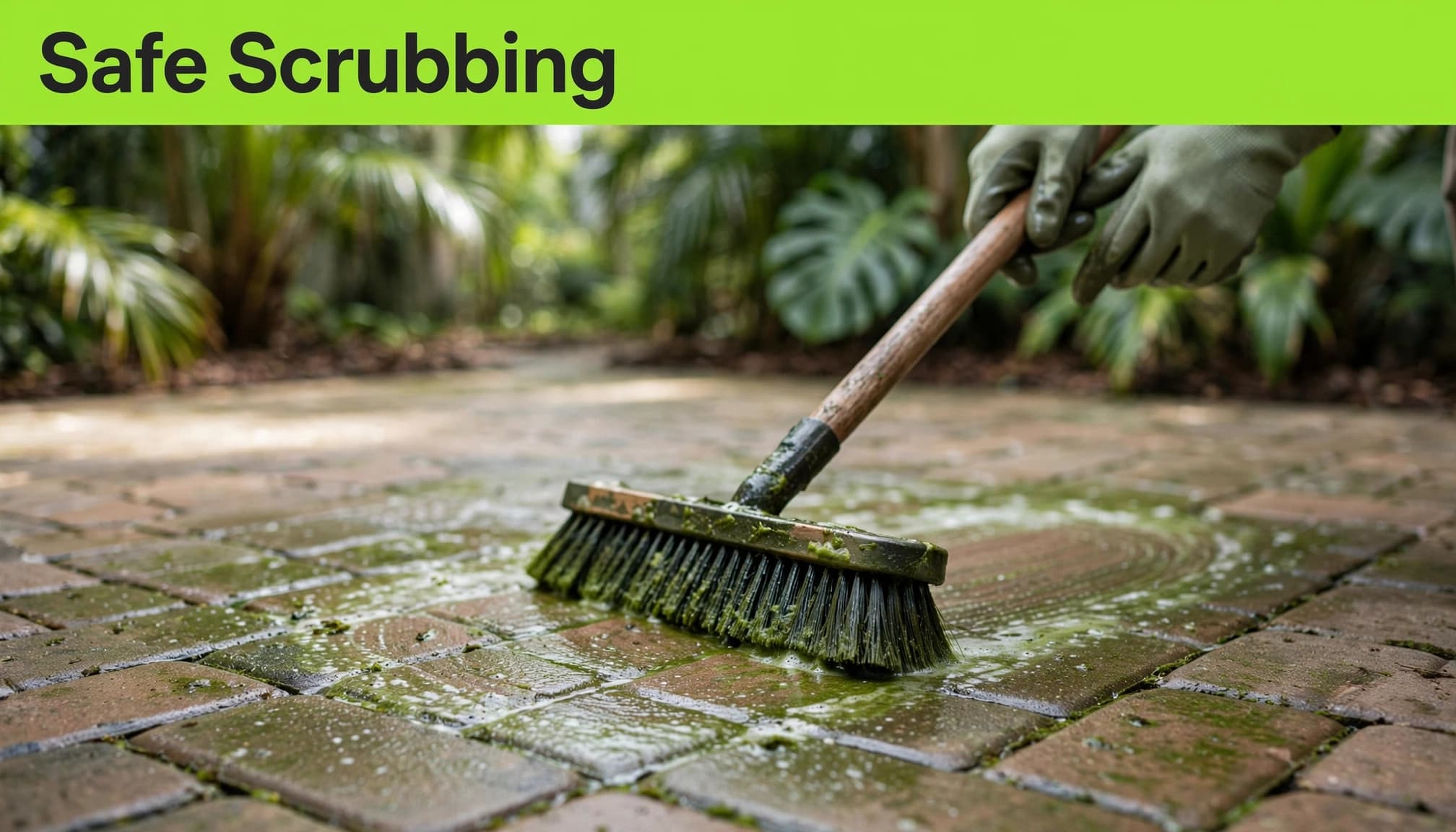
Work in manageable sections so the cleaning solution doesn’t dry before you finish. Choose a time when the surface isn’t hot from direct sun.
- Move furniture and planters, then sweep leaves and loose debris without digging into the joints.
- Lightly dampen the paver faces if the cleaner’s instructions require it. Avoid flooding the area.
- Apply an approved cleaner at its stated dilution. For light grime, mild, acid-free soap may be suitable when the paver and sealer instructions allow it.
- Scrub the surface with controlled strokes and lighter pressure near joints. Follow the product’s stated contact time.
- Rinse as directed using a gentle, broad hose spray. Stop if sand begins collecting in the runoff.
Mild soap may loosen dirt without removing established algae. If green growth remains, choose a compatible algae treatment rather than scrubbing harder or increasing water pressure.
Let the test area dry and inspect it before treating the full patio. A wet surface can hide uneven cleaning or finish damage that becomes visible afterward.
Choose algae cleaners carefully
There isn’t one chemical treatment suitable for every Florida patio. We select cleaning methods based on the paver material, coating, surrounding features, and condition.
Follow the product label
Choose chemical methods only when the product label covers the affected surface, finish, and type of growth, including mold on pavers. Check dilution, application conditions, contact time, rinsing, and plant-protection requirements.
Don’t assume stronger mixtures or longer contact times will improve the result. They can create problems that the label’s directions are intended to avoid.
An approved treatment may require repeat applications. Follow those directions instead of combining products or applying a second cleaner over remaining residue.
Treat bleach as a compatibility question
Bleach isn’t a universal recommendation for colored concrete, clay brick, or natural stone. Confirm compatibility with both the paver and sealer manufacturers before using it.
The CDC’s bleach safety guidance warns against mixing bleach with other cleaners or disinfectants because dangerous vapors can result.
Wear the protective equipment required by the label. Protect plants and nearby fixtures as directed, and keep children and pets away during treatment.
Avoid improvised bleach recipes. A household cleaning dilution doesn’t establish that the mixture is appropriate for your paving.
Use pressure washing without scarring the surface
Power washing can remove heavy buildup, but poor technique can strip joint sand, scar pavers, or leave uneven patches. Brick pressure cleaning requires a method suited to the actual surface.
There isn’t one safe pressure setting for every paver. Material, age, finish, nozzle, distance, and operator technique all affect the result.
If the manufacturer permits pressure washing, use the lowest effective pressure and a broad spray. Test first, keep the wand moving, and avoid directing water into joints.
Don’t use a narrow jet or turbo nozzle for routine cleaning intended to preserve existing joint material.
A surface-cleaner attachment doesn’t automatically protect joint sand. Some restoration procedures deliberately empty joints, which is a different job from routine algae removal.
Stop if you see scarring, stripes, or joint material washing away. Increasing pressure isn’t a dependable substitute for choosing the correct treatment.
Control rinse water and inspect the cleaned area
Before washing, identify where the water will travel. Keep water runoff, which can carry suds or treatment residue, away from pools, doorways, planting beds, and storm drains.
The EPA’s driveway runoff guidance explains how washing suds can carry wastewater into the street and storm drainage system. Plan collection or containment according to the product label and local requirements.
Use enough water to remove residue without creating a strong current across the joints. For extensive chemical cleaning, ask the contractor how wastewater will be collected and disposed of.
After the surface dries, inspect for remaining growth, uneven color, missing joint sand, and loose pavers. Suitable joint material may need replenishing, but movement deserves assessment first.
Our brick paver maintenance guidance covers care beyond surface cleaning. A clean appearance shouldn’t hide a condition that needs repair.
Reduce moisture to slow algae regrowth
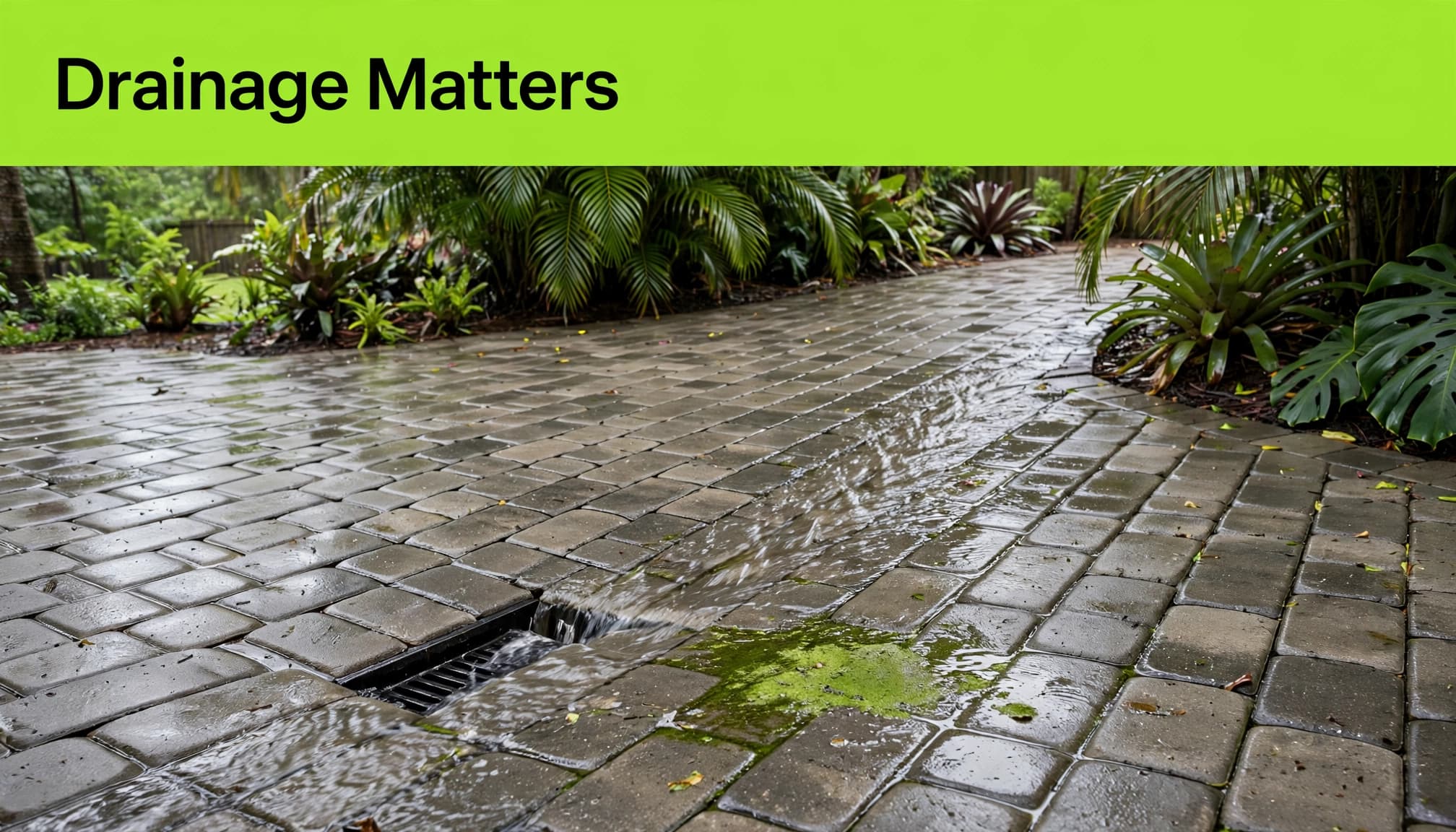
Cleaning removes existing buildup. Lasting improvement also depends on giving the paving a reasonable opportunity to dry between wet periods. Proper drainage and clear outlets can limit repeated dampness and slow regrowth.
Correct routine sources of dampness
As preventive maintenance, adjust sprinklers that repeatedly spray paving, repair irrigation leaks, and remove leaves before they collect in shaded corners. Keep existing drain grates and accessible outlets clear.
Check the area after heavy rain and tropical storms. Note pooling, fresh sand loss, and water moving toward the building.
Use an exposure-based maintenance schedule. Our Florida paver cleaning schedule explains why shaded and frequently wet areas need closer attention than well-drained paving.
Investigate persistent pooling
If the same section stays wet after nearby paving dries, water pooling or irregular pavers may warrant a drainage assessment. Consider roof runoff, blocked outlets, low spots, sub-base materials, and the original hardscape installation.
UF/IFAS site-drainage guidance emphasizes directing water away from the home. Its lawn-preparation guidance isn’t a paver specification, but that drainage principle remains relevant.
A French drain system may help with some subsurface moisture problems, but the water source and a suitable outlet should be assessed first. Surface runoff may require a different approach.
No drainage change guarantees that algae won’t return. It can address repeated wetting that makes cleaning less effective.
When professional paver care makes sense
Arrange an assessment when growth covers a large area, the finish is uncertain, or the paving shows movement. Commercial entrances and heavily used pool decks also need careful scheduling and access control.
Ask whether the quote includes algae treatment, wastewater handling, joint inspection, and any necessary repairs. Cleaning, joint work, and resealing are separate tasks unless the proposal includes them.
For paver condition concerns in Fort Myers and surrounding Southwest Florida communities, Contact Us for a FREE Quote. We can discuss your property’s needs and the scope of appropriate paver work.
Frequently Asked Questions
Can a garden hose wash out joint sand?
Yes. A concentrated jet or prolonged flow can displace loose sand, especially in shallow or worn joints. Use a broad, gentle spray and watch for sand collecting downstream.
Does polymeric sand make pressure washing safe?
No. Properly cured polymeric sand can resist washout, but cracked or deteriorated material remains vulnerable. Follow the paver and sand manufacturers’ maintenance instructions rather than relying on the binder alone.
Will sealing prevent algae from returning?
A compatible sealer may help protect color and reduce staining, but it doesn’t replace cleaning or correct persistent moisture. Don’t seal over active growth or unresolved drainage problems. Confirm that the surface and joints meet the sealer’s preparation requirements.
Keep pavers clean without unnecessary damage
Removing algae starts with a surface-safe method and careful rinsing. Protecting the finish and joints matters as much as removing the green film.
We recommend addressing repeated wetting alongside routine care. Clean, stable pavers with clear drainage paths provide a more dependable surface for your home or business.