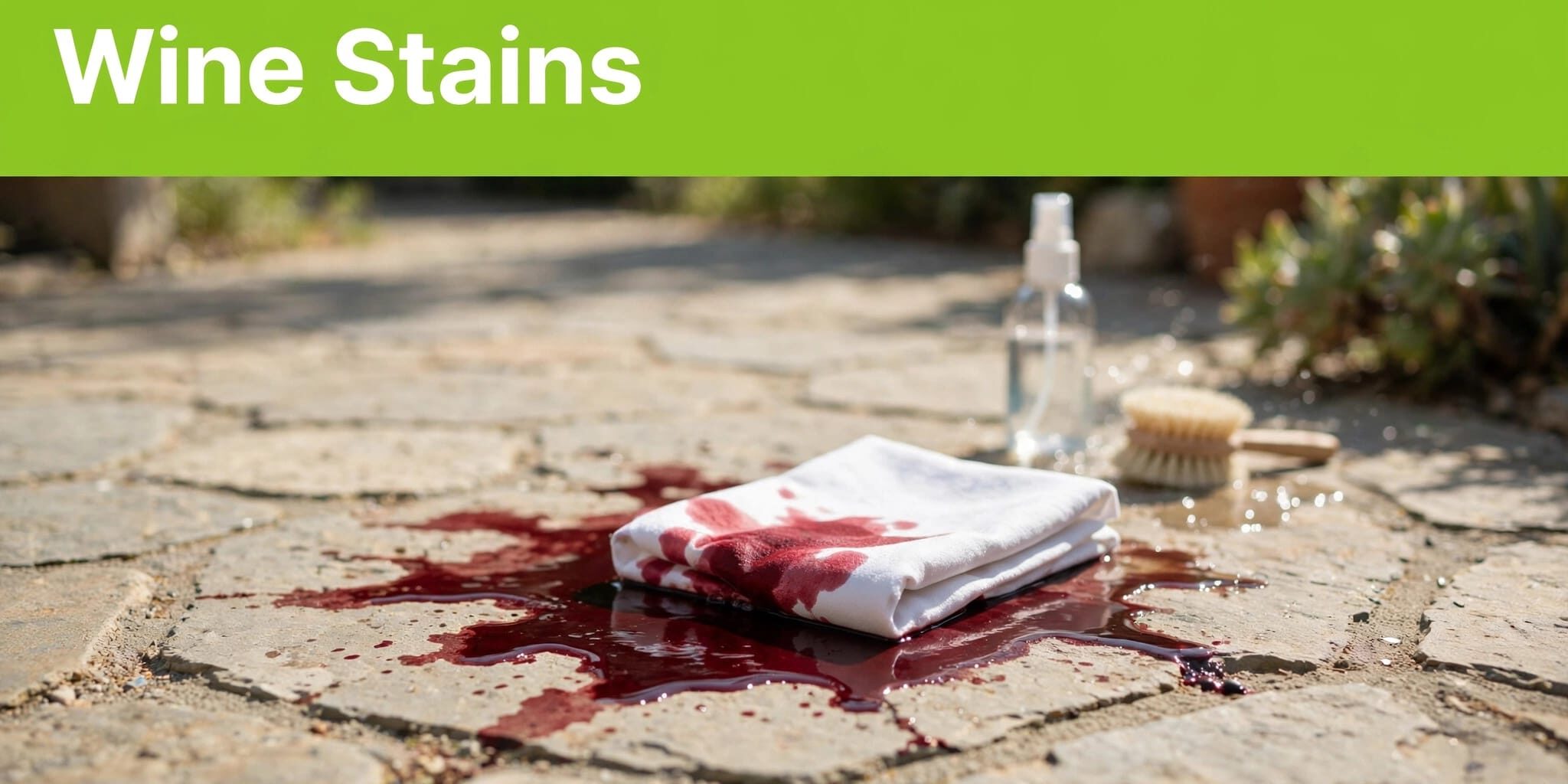
To remove red wine stains from pavers, blot the spill, wash with a compatible mild cleaner, and treat remaining discoloration according to the paving material. We recommend starting gently because a strong cleaner can damage the paver or its sealer.
Surface compatibility matters more than cleaner strength. Cement-based pavers, clay brick, and marble need different treatment, so identify the surface before moving beyond basic cleanup.
Key Takeaways
- Blot fresh wine from the outside inward, then rinse gently rather than spreading it across adjoining pavers.
- Match baking soda, peroxide, or commercial treatments to the paver surface and its existing finish.
- Judge results only after drying. Stop if the surface changes color, becomes rough, or develops a cloudy finish.
Identify the Pavers and Existing Finish
Separate Concrete, Clay, and Natural Stone
The term “brick pavers” can describe fired-clay brick or brick-shaped cement-based pavers. Natural stone patios may contain travertine, limestone, marble, or other stone, each with different cleaning requirements.
An invoice, product name, or leftover paver can help identify the material. Color alone isn’t dependable because cement-based pavers can resemble clay or stone.
For acid-sensitive stone, we recommend a neutral stone cleaner or compatible mild detergent. The Natural Stone Institute’s cleaning guidance explains why cleaner selection depends on the stone rather than the stain alone.
Test the Cleaner and Sealer Together
A product suitable for bare cement-based pavers may soften or discolor an existing coating. Gloss, peeling, or cloudy patches also affect the cleaning plan.
Test the intended cleaner and dilution in a hidden area. Let it dry completely, then compare color, sheen, and texture with untreated pavers. Wet pavers can temporarily conceal damage.
Stop if the test leaves a pale patch, tackiness, or roughness. Stronger treatment won’t correct a damaged finish.
Blot Fresh Wine Before Washing
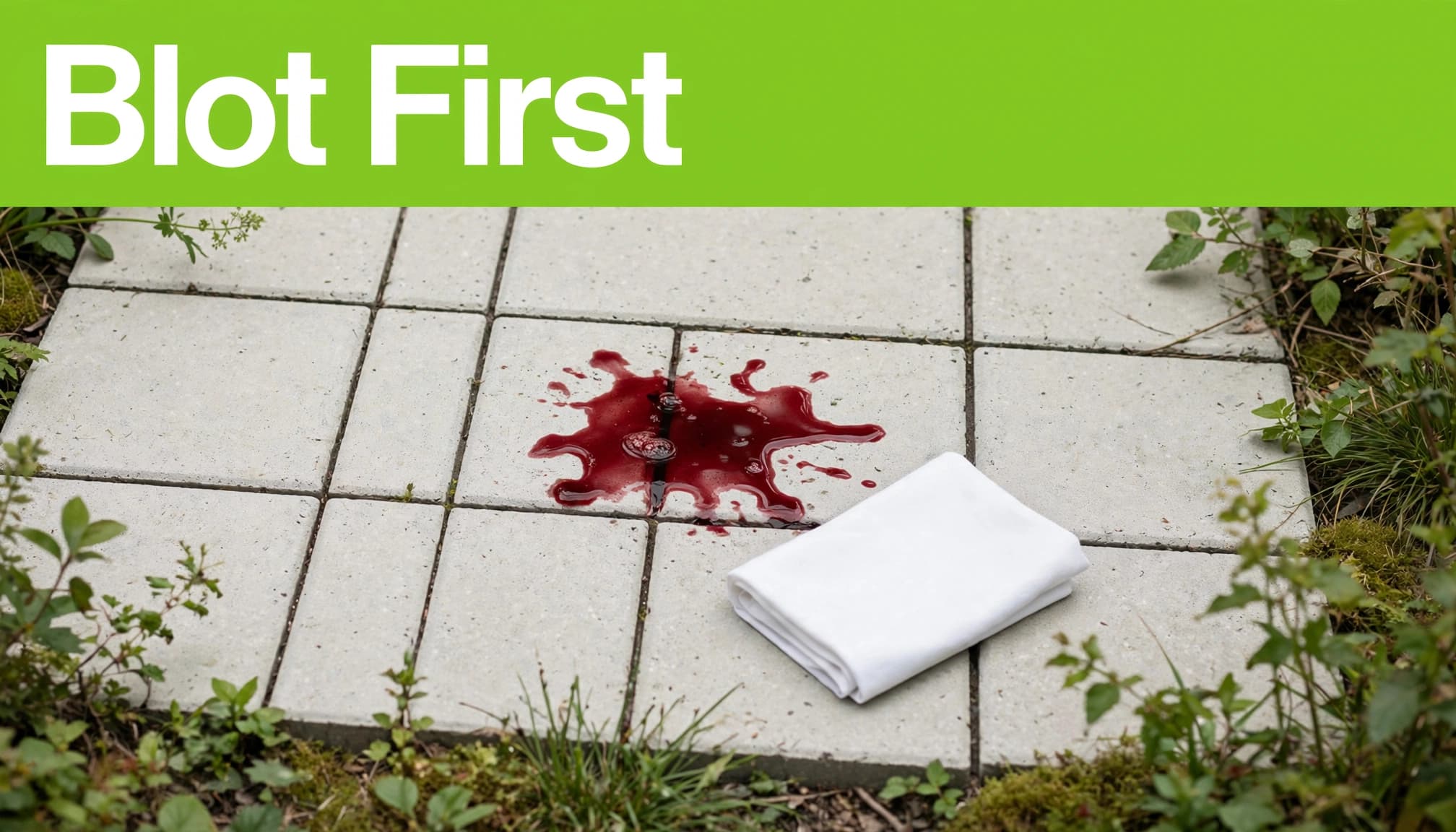
We recommend collecting as much wine as possible through blotting before introducing water. Wiping carries pigment across the surface, while an uncontrolled hose spray can spread the spill.
- Press a clean, absorbent cloth onto the wine. Work from the outside edges toward the center without rubbing.
- Turn to a fresh section of cloth and repeat until no more wine transfers.
- Apply a small amount of diluted, mild, acid-free soap if the paver and sealer allow it. On marble, use a soft cloth rather than a scrub brush.
- Collect loosened residue, rinse gently with a garden hose, and let the area dry before assessing the remaining mark.
Wear gloves, eye protection, and closed-toe shoes. Keep children, pets, and customers away until the paving is clean and safe underfoot.
Hot, soapy water often removes sticky, sugar-rich spills such as soda, and coffee responds to the same blot-then-wash sequence covered in our guidance on removing coffee stains from brick pavers. However, the wine pigments can leave discoloration that needs a targeted treatment after ordinary washing.
Remove Red Wine Stains From Concrete Pavers
Start With a Baking Soda Poultice
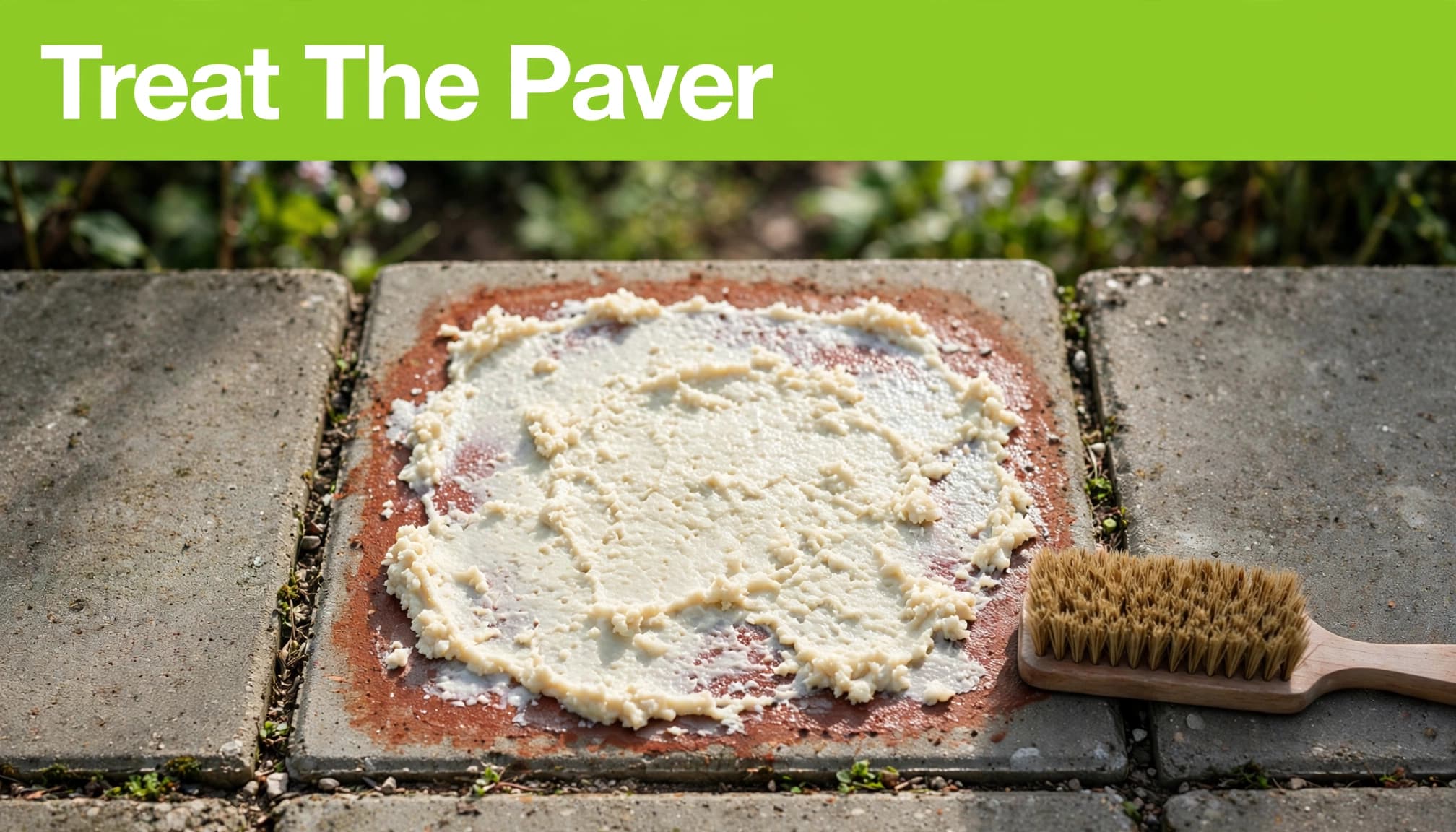
For a remaining mark on compatible, unsealed pavers, mix baking soda with enough water to form a spreadable paste. Apply it over the stain and leave it for 15 to 20 minutes.
Then scrub with a stiff brush with nylon or fiber bristles. Avoid wire brushes, which can scratch the surface or leave metal particles behind. Collect the residue and rinse gently.
Let the surface dry before deciding whether another application is worthwhile. Repeat only if the first treatment improved the stain without changing the surface.
Use a Concrete Cleaner for Stubborn Marks
If discoloration remains, choose a labeled concrete cleaner that’s compatible with these pavers and the existing finish. Oxygen-based products can help with organic residue when their labels permit that use.
Cleaners containing trisodium phosphate, or TSP, are another option for compatible pavers. The CMHA concrete stain-removal guidance discusses cleaning agents for concrete masonry, but its guidance isn’t blanket approval for every decorative paver or coating.
A diluted bleach solution is sometimes used on stubborn stains. Use only a product labeled for the surface, follow its stated dilution and contact time, and test it in a hidden area first. Household bleach strengths vary, so there’s no universal patio recipe.
Treat Clay Brick and Other Stone Separately
For clay pavers, begin with compatible mild soap, a nylon brush, and gentle rinsing. If color remains, use a stain remover expressly approved for clay and any existing sealer. Don’t assume a cleaner approved for one paver material is suitable for another.
Travertine and limestone require the same caution around acidic cleaners as marble. Other stones also need material-specific treatment rather than a household recipe applied across the patio.
If wine-colored marks appeared beneath fallen vegetation rather than after a spill, our guidance on removing leaf stains from pavers addresses another common organic stain.
Remove Wine Stains From Marble Carefully
Act Quickly, Without Treating Timing as a Guarantee
Marble is porous, and wine can produce both absorbed discoloration and acid etching. During the first minute, much of a fresh spill may remain near the surface. After around 30 minutes, pigment may already have penetrated.
After several hours, removal can become difficult, and some staining may persist. These are practical reminders to act promptly, not fixed deadlines that determine whether every marble stain is permanent.
A dull or rough patch may be etching rather than remaining wine.
Use Baking Soda Without Scrubbing
For a faint remaining mark, apply a baking soda-and-water paste after testing a hidden area. The paste is alkaline rather than acidic, but rubbing its particles against a polished finish can scratch it.
Cover the paste with cling film and leave it for 24 hours. Then gently lift away the material, rinse, and dry. Don’t scrape with metal or scrub the marble.
The Natural Stone Institute’s stain guidance distinguishes absorbed stains from other surface problems and explains why poultice treatment may require more than one application.
Limit Peroxide to a Tested Spot Treatment
On compatible marble, standard pharmacy-strength 3% hydrogen peroxide is a possible treatment for a set organic stain. After a successful hidden-area test, apply a small amount for five minutes, blot with a damp cloth, and dry thoroughly.
Don’t use higher concentrations for this household method. Test colored marble and decorative stones, including green onyx, red marble, and honey onyx, because peroxide can change their appearance.
Avoid Cleaners and Pressure That Damage Pavers
Keep Acids and Cleaning Chemicals Separate
Don’t use vinegar or lemon juice on marble, limestone, or travertine. Vinegar is acidic and can etch these stones, while lemon juice can cause the same damage, which may be more noticeable than the wine.
Avoid full-strength bleach on stone because it can harm the stone, grout, or surrounding materials. Test any permitted diluted bleach first. Never mix bleach with ammonia, acids, peroxide, or other cleaning products.
OxiClean and hydrogen peroxide appear in carpet stain-removal advice, but that doesn’t establish paver compatibility. OxiClean’s wine-stain directions include fabric and carpet applications, which shouldn’t be transferred directly to paving.
Protect Joints During Rinsing
Brick pressure cleaning isn’t the first step for a localized wine spill. Begin with controlled washing rather than increasing pressure to chase discoloration.
Before rinsing, note low joints, cracked joint material, and loose pavers. Use a broad, gentle hose spray, and stop if joint material begins moving.
Keep contaminated wash water away from pools, planting beds, and storm drains. Collect cleaning residue rather than pushing it onto clean pavers.
Clean and Dry Before Considering Sealing
A compatible sealer can help seal the surface and reduce absorption, but it won’t remove an existing red wine stain or make pavers stain-proof. Treat the stain first, then promptly wipe future spills and use outdoor coasters or a table covering.
Choose a sealer compatible with the paver material and existing finish. A penetrating sealer may suit the surface, but the right product also depends on the desired appearance and exposure.
Before you reseal, make sure the paving meets the product’s cleaning and drying requirements. Don’t coat over discoloration, sticky residue, or an unexplained cloudy finish.
Our brick paver maintenance guidance covers broader upkeep for patios and brick driveways. Include the joints and drainage areas in routine inspections, because cleaning alone won’t correct movement or repeated washout.
Frequently Asked Questions
Are Red Wine Stains on Pavers Permanent?
Not always. Surface residue often responds to prompt cleaning, while absorbed pigment can need repeated, compatible treatment. A changed sealer or etched stone surface may require restoration rather than further stain removal.
Complete removal isn’t guaranteed, especially when discoloration has penetrated porous material.
What Removes Dried Red Wine Stains?
Remove loose residue, then test a material-compatible cleaner in a hidden spot. Apply it to the stain, rinse gently, and let the area dry before judging the result.
A baking soda poultice or approved organic-stain cleaner may suit some pavers. Use a tested stone treatment on marble.
An overnight stain isn’t automatically permanent. Stop if another permitted application produces no change.
How Should a Large Concrete Driveway Stain Be Treated?
Blot any remaining liquid, then treat manageable sections with a material-compatible cleaner. Contain the residue rather than spreading it along the driveway.
For marble with persistent staining or etching, consult a specialist in stone restoration who can use specialized poultices or polishing. Resealing can follow appropriate restoration, but it doesn’t remove the stain itself.
Remove the Stain Without Sacrificing the Surface
The dependable approach is to blot promptly, identify the material, and use the least aggressive compatible treatment. Let the pavers dry between attempts so you can distinguish improvement from a temporarily darker surface.
If discoloration remains or the finish changes, Contact Us for a FREE Quote so we can assess your paver restoration needs. Further cleaning should protect the paving, not replace one visible mark with another.