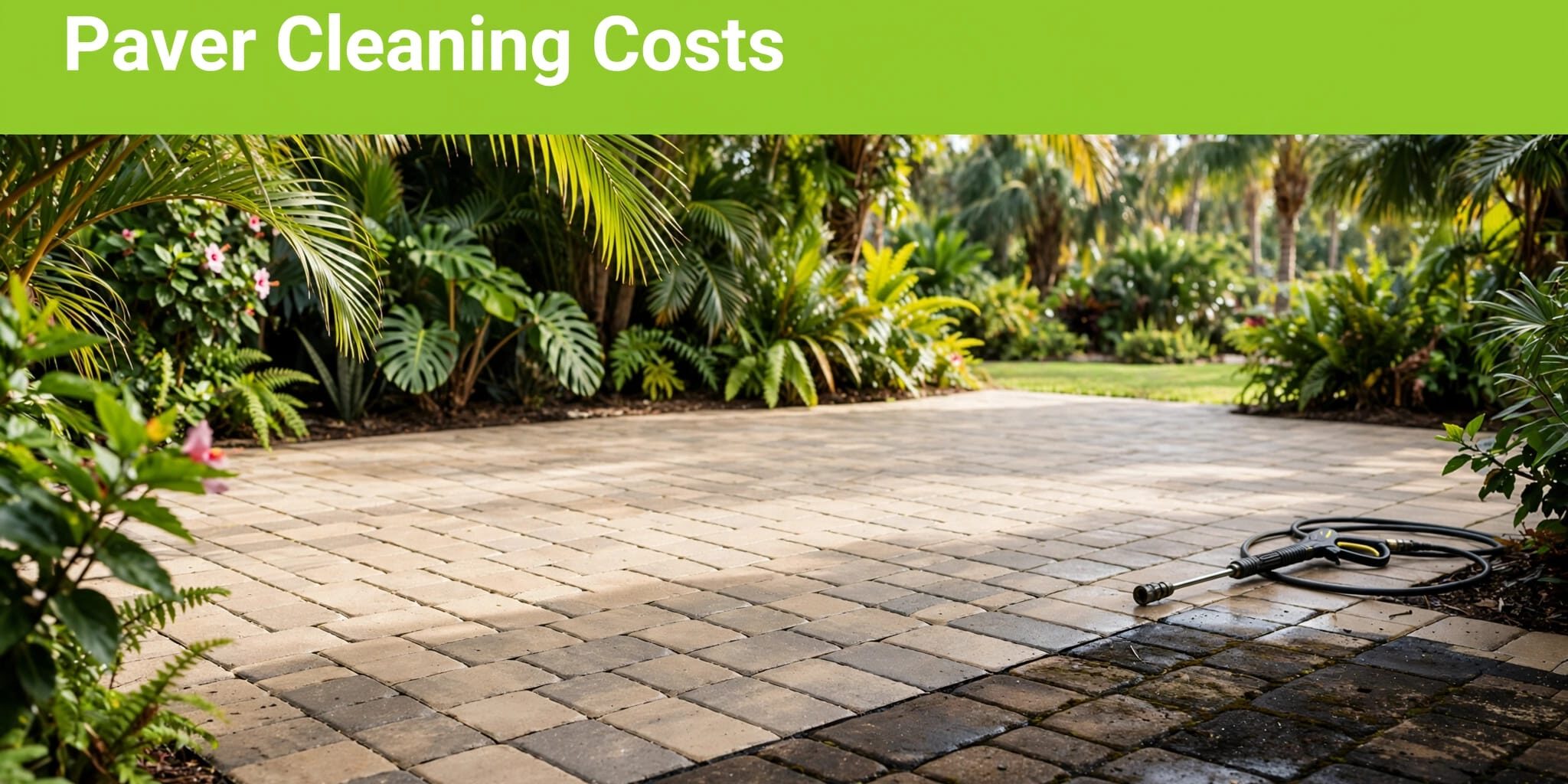
The average cost of professional service for a 200- to 500-square-foot patio is $200 to $400; larger patios can cost $400 to $800 or more. Use these patio cleaning cost ranges as a budgeting guide, not a guaranteed Southwest Florida quote.
Your total depends on what the quote includes, especially stain removal, joint sand, and sealing. Before comparing bids for your driveway, patio, or commercial entrance, separate routine washing from restoration.
Key Takeaways
- Patio cleaning generally costs $100 to $250 for small areas, with larger or heavily stained surfaces costing more.
- Sealing adds another expense, commonly budgeted at $0.75 to $2.50 per square foot.
- Compare preparation, stain treatment, joint care, and repairs before choosing the lowest price.
Paver Cleaning Cost by Patio Size
Surface area provides a useful starting point, although condition and access affect the final estimate. These are general patio-cleaning planning ranges, not guaranteed local quotes.
| Patio size | Cleaning budget |
|---|---|
| Up to 200 square feet | $100 to $250 |
| About 200 to 500 square feet | $200 to $400 |
| Over 500 square feet | $400 to $800 or more |
The larger range is open-ended because a spacious pool deck or commercial courtyard can require substantially more work than a residential patio.
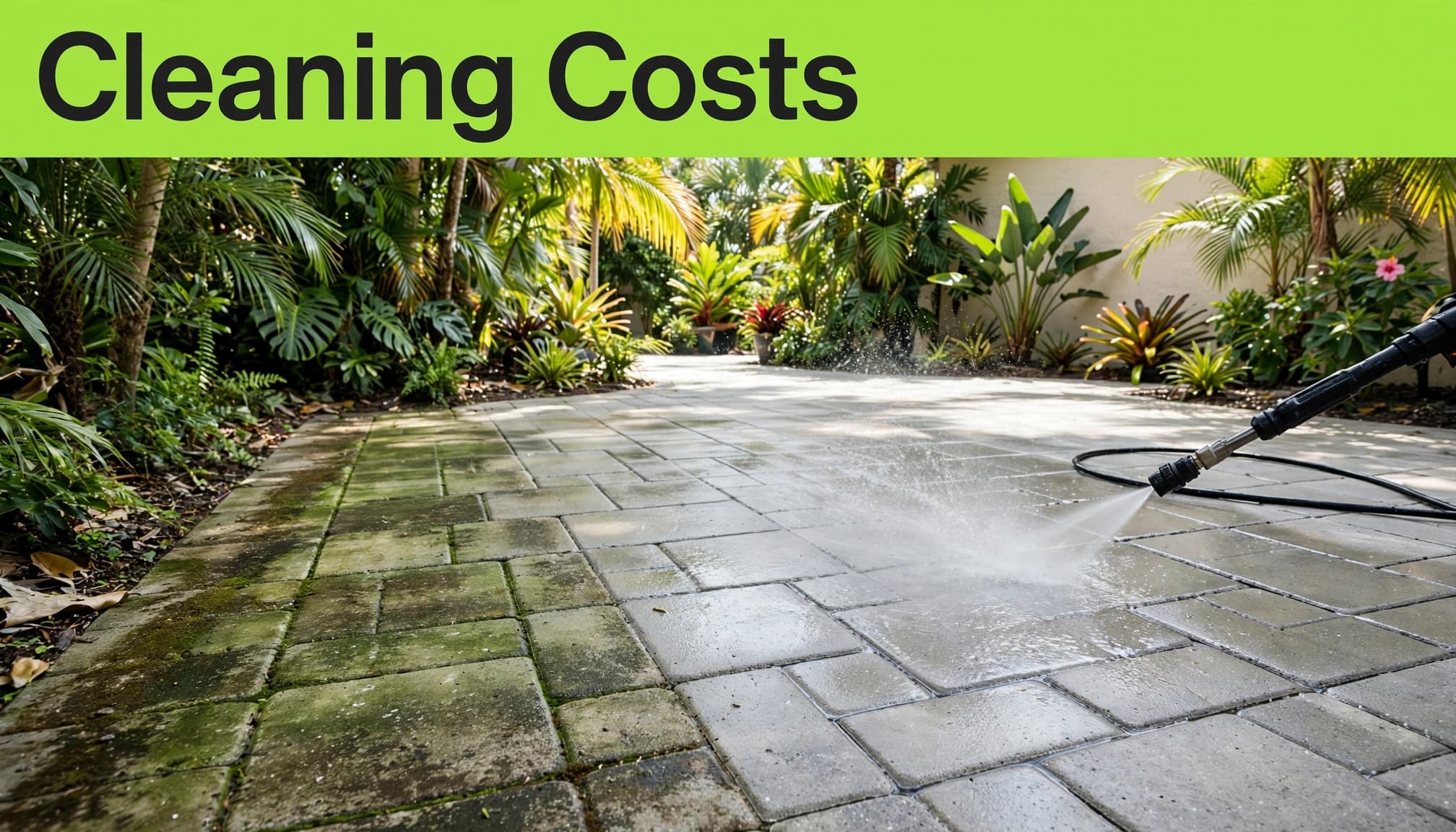
We recommend measuring the actual paved area before comparing estimates. Include connected walkways or steps only when they belong in the cleaning scope.
Also, distinguish surface cleaning from specialty work. Oil treatment, rust removal, furniture handling, and sand replacement can change the total. A lower cleaning price may exclude those services, while another proposal includes them.
What a 20-by-20-Foot Paver Patio Costs
A 20-by-20-foot patio covers 400 square feet. Using the size-based range above, cleaning alone would carry a planning budget of $200 to $400.
For that particular size, the calculation equals $0.50 to $1.00 per square foot. This is a worked example, not a universal cleaning rate for Southwest Florida.
Sealing pavers is commonly budgeted separately. For 400 square feet, the cost to seal pavers is $300 to $1,000, based on a rate of $0.75 to $2.50 per square foot.
If cleaning and sealing are separate charges, the combined budget is $500 to $1,400. Some packages for sealing after cleaning include washing, while others charge for it separately, so check the scope before adding both figures.
Smaller, straightforward jobs may carry a $200 to $600 sealing-after-cleaning charge. For any size, the written scope should explain whether that includes cleaning, joint work, and all coats.
Why Cleaning Quotes Change Between Properties
Material and Stains Affect Treatment
Concrete pavers, clay brick, and natural stone don’t all tolerate the same cleaners or washing methods. Older surfaces and worn finishes also require more cautious treatment.
Brick pavers with light dirt need less work than paving affected by oil, grease, rust, and algae stains. Adjacent wood decking and sensitive landscaping may also need protection.
For brick driveways, vehicle leaks and tire marks can add separate treatment steps. Increasing water pressure isn’t a dependable substitute for a stain-specific cleaner.
We recommend identifying the stains before selecting treatment. Our guidance on removing algae from pavers also explains why recurring moisture matters.
Access and Moisture Change the Work
An open driveway generally allows easier equipment access than a courtyard behind a screened lanai. Narrow gates, nearby furniture, and limited drainage can increase handling and cleanup time.
Southwest Florida’s weather conditions, including shade, humidity, irrigation overspray, and heavy rain, affect buildup and drying. Areas that remain damp often need more attention than sunny, well-drained paving.
Cleaning frequency matters as well. Routine care usually involves less treatment than a surface left until thick growth or stubborn staining develops.
We also look beyond the discoloration. If a low area repeatedly holds water, cleaning can improve its appearance without correcting the underlying drainage problem.
Which Cleaning Method Fits the Surface?
Pressure Washing for Suitable Pavers
Professional pressure washing is a common choice for patio cleaning when the pavers can handle controlled water pressure.
A pressure washer can scar brick or remove joint sand if the pressure is too high. Use the lowest effective setting and test a small area first.
Our advice on cleaning brick pavers safely covers protecting the surface and joints during routine maintenance.
Soft Washing and Targeted Treatments
For delicate natural stone or older patios, soft washing may be a better fit when the cleaning solution suits the material and finish.
Chemical treatments can address mold, algae, and stubborn stains before rinsing. Low-pressure cleaning still requires compatible products and careful runoff control.
Compare estimates by checking the stated method and any specialty stain treatment. The term “pressure washing” alone doesn’t show what work the crew will complete. Power washing is a familiar alternate name, but the label alone doesn’t define the method or scope.
What Sealing and Restoration Add
Joint Sand, Repairs, and Failed Coatings
Paver sealing prices depend on the sealant type, preparation, and labor. Joint-stabilizing sealers can help hold sand in place and reduce weed growth, but they don’t eliminate all weeds.
Crews may refill suitable joints with polymeric sand before sealing. The material needs proper application and curing, so joint restoration should appear separately in the scope.
Failed coatings can increase costs substantially. Southwest Florida planning ranges for stripping failed sealer and restoration can reach $3 to $5 or more per square foot.
Loose pavers, settlement, and damaged edges need repair rather than another wash or coating.
Dry Weather and Correct Application
Pavers must be clean and fully dry before most sealers go on. Sealing over moisture or dirt can cause haze, peeling, and poor adhesion.
Plan for a warm, dry day and at least 24 to 48 hours without forecast rain, subject to the product’s requirements. Local weather conditions affect drying time. The National Weather Service’s July 2026 regional climate summary describes variable rainfall associated with summer thunderstorms.
Thin, even coats are important. Overapplication can leave sticky or excessively glossy residue that attracts dirt.
A coating applied before the pavers dry can turn a routine sealing job into a stripping and restoration expense.
DIY Cleaning Versus Hiring a Professional
Light Dirt Can Suit DIY Care
DIY cleaning commonly carries a $50 to $150 allowance for rental equipment and supplies. That figure doesn’t account for your time, repairs, or sealing.
For light dirt, we recommend starting with a compatible mild cleaner, a nylon or fiber brush, and gentle rinsing. Sweep first, and judge the result after the surface dries.
Regular debris removal and prompt spill cleanup can reduce the need for stronger treatment later.
Larger Problems Favor Professional Work
Professional care makes more sense when stains cover a large area, the existing finish is unknown, or the joints need attention. Commercial entrances also require safe access during cleaning and drying.
DIY sealing materials typically cost $0.30 to $1.00 per square foot. Although materials cost less than professional service, application mistakes can cause peeling, discoloration, or an expensive redo.
We recommend comparing complete scopes before deciding that DIY offers the better value.
How Often Cleaning and Resealing Are Needed
For many well-drained Southwest Florida properties, annual cleaning is a practical starting point. Shaded, heavily used, or persistently damp areas may need cleaning twice yearly.
Our Florida paver maintenance schedule explains how exposure and surface condition affect that timing.
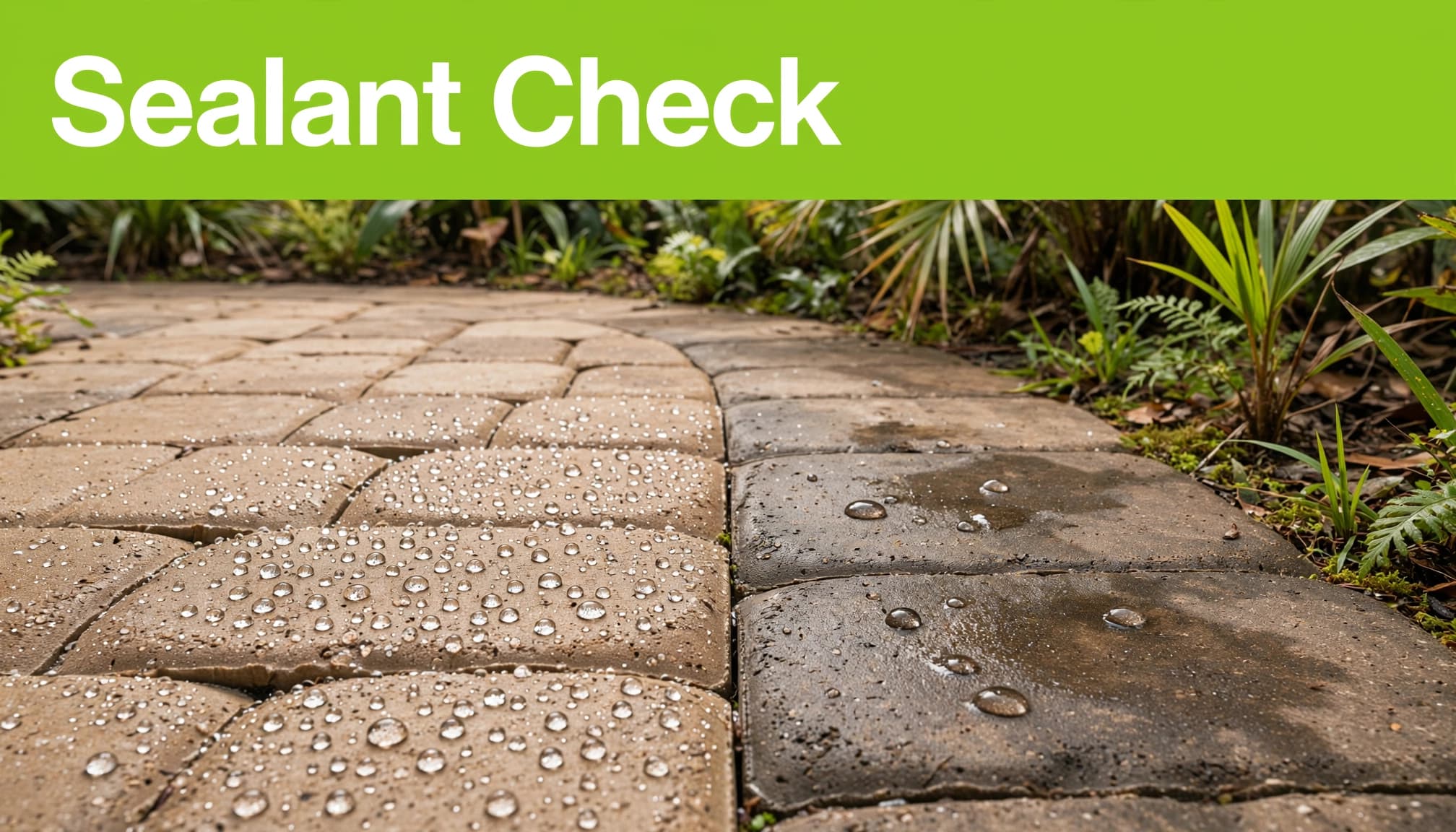
Resealing follows a different schedule. Around two years is a reasonable review point in high-exposure conditions with intense sun and heavy rain. Driveways and walkways with heavy foot traffic commonly need resealing every two to three years.
Milder conditions may allow three to five years. Sheltered, lightly used patios or garden paths can sometimes reach four to five years, but that shouldn’t be the default assumption for exposed Florida paving.
If water previously beaded but now darkens the pavers and soaks in, the protection may have worn. However, some penetrating sealers don’t produce obvious beads, so consider the product and overall condition.
To control costs, maintain a regular cleaning schedule and compare multiple proposals. Bundling patio cleaning with driveway or house washing may reduce setup costs. Seasonal discounts can also help when offered, provided suitable drying weather remains part of the plan.
Frequently Asked Questions
Why Does a Small Patio Cost More Per Square Foot?
Equipment setup, travel, and cleanup still take time on a small job. As a result, minimum service charges can produce a higher unit price than a larger, accessible project.
What Should a Professional Cleaning Quote Include?
The proposal should identify the measured area, cleaning method, stain treatment, and cleanup. It should also state whether joint sand, repairs, sealing, furniture handling, and wastewater management are included or separate.
We recommend choosing a company with appropriate insurance, required licensing, good customer reviews, and experience with your paver material.
Does Cleaning Fix Loose or Uneven Pavers?
No. Washing removes surface buildup, but it doesn’t correct settlement, spreading edges, or missing support. Those conditions need assessment and appropriate repairs before sealing. Aggressive washing can also expose weak joints that already needed attention.
Budget for the Complete Scope
The most useful paver cleaning estimate separates routine washing from stain removal, joint care, and sealing. Compare the same work before deciding which price offers better value.
We can assess stubborn stains, missing sand, and restoration needs across Southwest Florida. Contact Us for a FREE Quote to discuss the condition of your driveway, patio, or pool deck and the appropriate scope of work.