To remove bird droppings from brick pavers, dampen the deposit, lift away the excess, and wash with mild soap. Use gentle scrubbing and a controlled rinse before trying stronger treatments.
We recommend protecting the paver surface and the material filling the joints throughout the cleaning process. A stubborn stain needs a compatible cleaner, not automatically more water pressure.
Start by identifying the paving material and checking the condition of the joints.
Key Takeaways
- Dampen dried droppings before removal, and lift the material without spreading it across adjoining pavers.
- Start with mild dish soap, a nylon brush, and gentle rinsing.
- Test stronger cleaners in a hidden area, and stop if the surface changes or joint sand starts moving.
Before Cleaning Bird Droppings From Pavers
Identify the Material and Finish
“Brick pavers” can mean clay brick or brick-shaped concrete. Nearby coping or borders may be travertine, marble, or another natural material in the same category. These materials don’t all tolerate the same chemicals.
An existing sealer also affects cleaner compatibility. Test a small, inconspicuous spot and let it dry completely. Compare the color, sheen, and texture before treating the visible stain.
Look for rocking pavers, depleted joints, or repeated washout. Cleaning won’t correct unstable paving, and those areas need attention before aggressive washing.
Prepare the Area Safely
Wear gloves, eye protection, and closed-toe shoes. Keep children, pets, and customers away until the area is rinsed and safe underfoot.
Lightly dampen dried bird poop before disturbing it. Don’t dry-sweep, blow, or aggressively brush droppings into airborne dust. Heavy accumulations beneath a roost require professional cleanup rather than routine patio washing.
Work during cooler conditions so the cleaning solution doesn’t dry on hot paving. Move outdoor furniture, including wood pieces, and collect nearby leaves before treating the deposit.
How to Remove Bird Droppings From Brick Pavers
We recommend working on one small area at a time so loosened residue stays contained.
1. Lift Away Excess Material
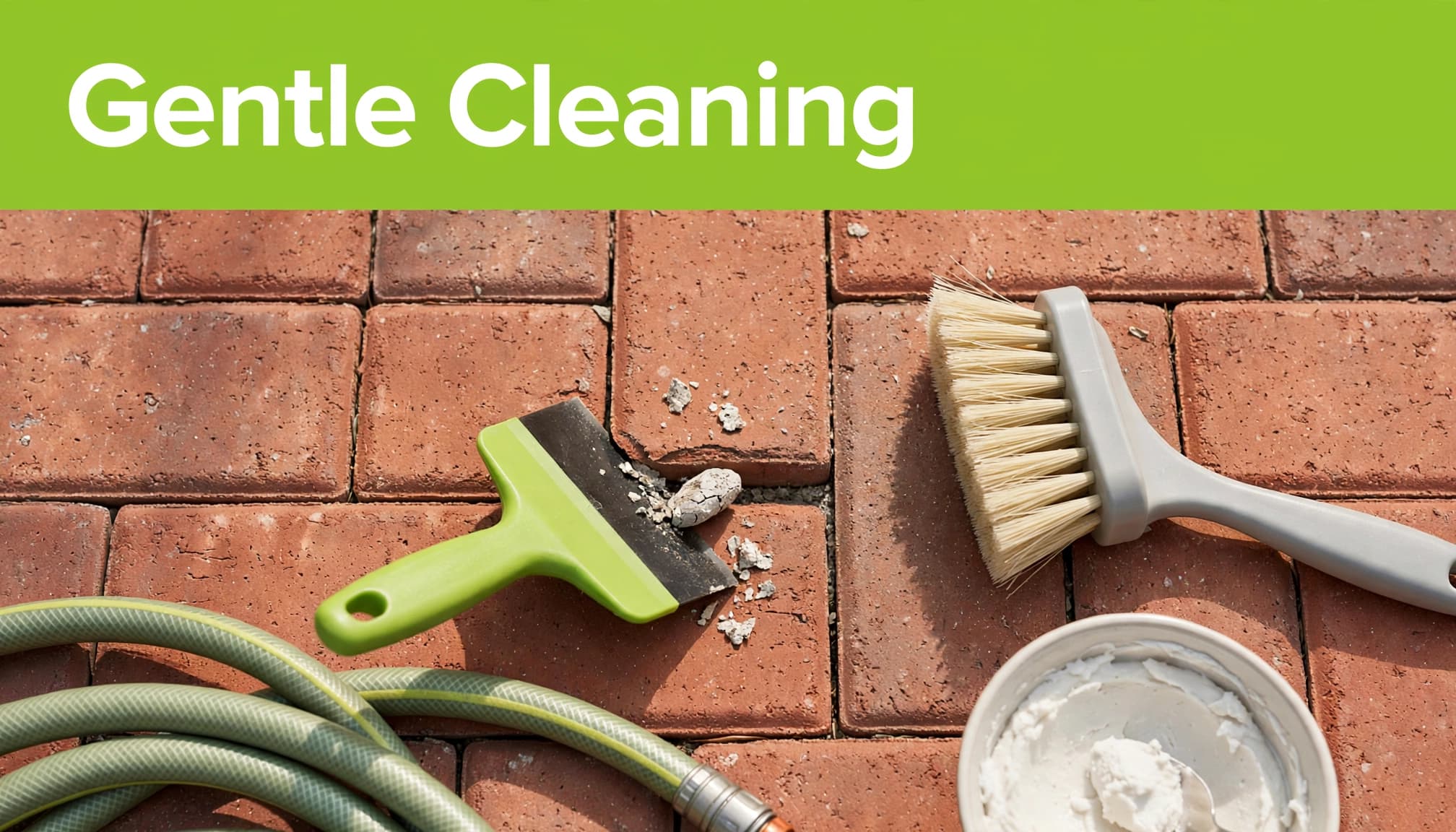
Use a plastic scraper, dull plastic knife, or old credit card to lift excess wet or softened droppings. Work beneath the material rather than making a sideways scrape across the paver, which can enlarge the stain.
Collect the waste before rinsing. Plastic is gentler than metal on both of those paving materials.
For dried material, dampen it first and let it soften. Use controlled strokes with a firm nylon-bristle brush. An old toothbrush works well for small textured areas.
2. Wash With Diluted Dish Soap
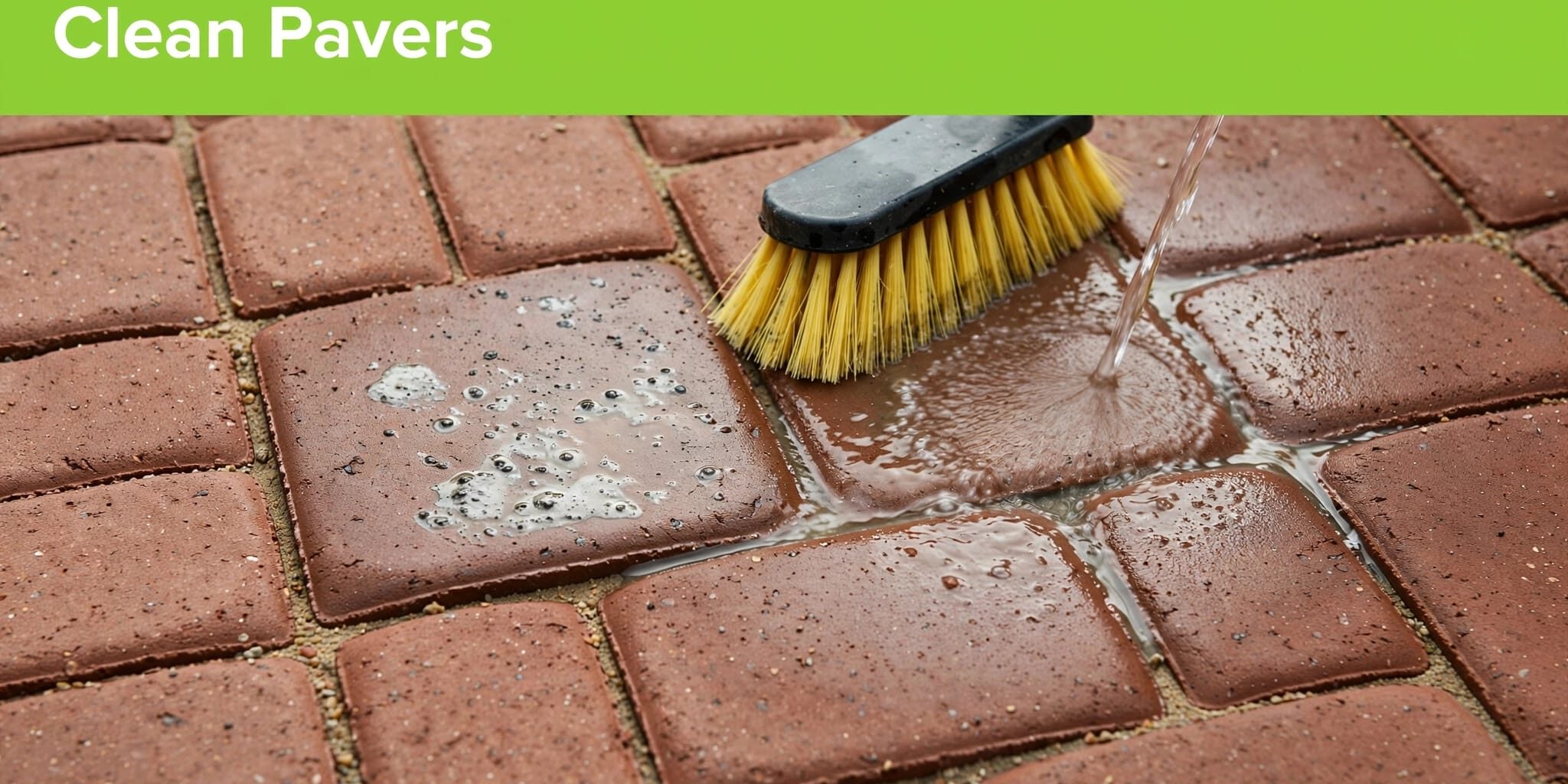
Before applying cleaner, shield nearby plants and keep runoff out of planting beds. Mix 1 tablespoon of mild dish soap with 2 cups of water. Use a compatible, acid-free product without bleach or abrasive additives.
Apply it with a spray bottle or pour a small amount directly over the stain. Let it sit briefly without drying, then sponge the area and blot loosened residue rather than rubbing it across clean paving.
Scrub lightly with the nylon brush, then rinse with a broad, low-flow spray. Avoid wire brushes, which can scratch pavers or leave metal particles behind.
3. Loosen Crusted Residue With Baking Soda
For either compatible paving material, mix 2 tablespoons of baking soda with enough water to make a thick paste. No fixed water measurement is needed.
Warm water is sufficient; avoid boiling water, especially on an unknown coating. Spread the paste over the remaining residue and leave it for about 10 minutes.
Loosen it gently, collect the residue, and hose away the paste with a broad, low-flow spray. Don’t concentrate water on the joints.
Match the Cleaning Method to the Surface
Use the material, not the stain alone, to choose a treatment.
| Surface | Suitable starting method | Main precaution |
|---|---|---|
| Clay brick pavers | Mild soap, nylon brush, gentle rinse | Use only compatible cleaners and controlled pressure. |
| Concrete pavers | Mild soap; baking soda paste after testing | Acids and aggressive washing can damage the surface. |
| Natural stone | A neutral cleaner approved for that surface | Avoid vinegar on acid-sensitive surfaces. |
| Plastic furniture | Mild soap and a soft sponge | Abrasives can scratch the finish. |
| Glass | Soapy water and a nonabrasive cloth | Avoid metal scraping and abrasive pads. |
| Stained or finished wood | Finish-compatible soap and a soft brush | Avoid peroxide and oxygen bleach on finished wood. |
The Natural Stone Institute’s cleaning guidance recommends neutral cleaners, stone soap, or mild dishwashing detergent for these surfaces. Don’t assume a treatment suitable for one paving material also suits marble or travertine.
Treat Remaining Bird Poop Stains Carefully
Let the paving dry before deciding whether another treatment is necessary. Wet pavers can hide discoloration, and a dark patch may simply be moisture.
Rinse away the previous cleaner before using another product. Never mix cleaning chemicals.
Club Soda and Hydrogen Peroxide
Plain club soda or seltzer can help loosen remaining residue. Pour a small amount over the spot and leave it for a few minutes. Then work gently with a nylon brush or plastic scraper and rinse.
Hydrogen peroxide is another option for light-colored, compatible surfaces. Apply a small amount with an eyedropper and rinse after a few minutes.
Peroxide can discolor dark paving and affect finishes. We don’t recommend applying it across colored pavers without a successful hidden-area test. A pale patch can be more noticeable than the original stain.
Oxygen Bleach and Vinegar Precautions
An oxygen-based bleach treatment mixed with cool water may help with organic staining. Some methods call for at least 30 minutes before blotting, but use that dwell time only when the product label permits it.
Choose a cleaner approved for the paving and finish. Follow its dilution and rinsing directions, and don’t extend contact time because a stain remains. Avoid oxygen bleach on stained or finished wood.
Equal parts white vinegar and water, soaked for a few minutes, is a common home remedy. We don’t recommend it as a general paver treatment. Acid can attack concrete components, etch calcium-based material, and affect coatings.
Protect Joint Sand During Pressure Cleaning
A pressure washer can remove residue lodged in brick texture. It can also scar the surface, leave stripes, and dislodge joint fill.
Our guidance on cleaning while protecting joint sand covers controlled washing for routine maintenance.
When Controlled Pressure May Help
Only power wash after scraping, soaking, and gentle scrubbing leave material behind. Use the lowest effective pressure, generally within a low-to-medium range, rather than starting at maximum power.
Keep a broad fan spray moving over the paver faces. Avoid narrow jets, turbo nozzles, and direct spraying into joints. No universal pressure setting suits every material, coating, and joint condition.
Brick pressure cleaning also requires a dry inspection afterward. Look for uneven joints, damaged edges, or loose units before returning the area to regular use.
When to Stop or Hire a Professional
Avoid pressure washing where joints are already shallow, loose, cracked, or washing out. Cured polymeric sand isn’t immune to aggressive spraying.
Stop if runoff carries sand away or the paver surface changes. More pressure isn’t a dependable treatment for an embedded stain.
Professional cleaning is an option for large patios, commercial walkways, or persistent marks. Our information on preparing for professional paver cleaning explains how to leave problem areas accessible.
If cleaning exposes movement, damaged joints, or restoration needs, Contact Us for a FREE Quote. We can discuss appropriate repair or restoration work for your property.
Reduce Repeat Bird Droppings on Pavers
Prevention starts with identifying where birds perch above the affected area. Look at railings, roof edges, signs, and nearby branches.
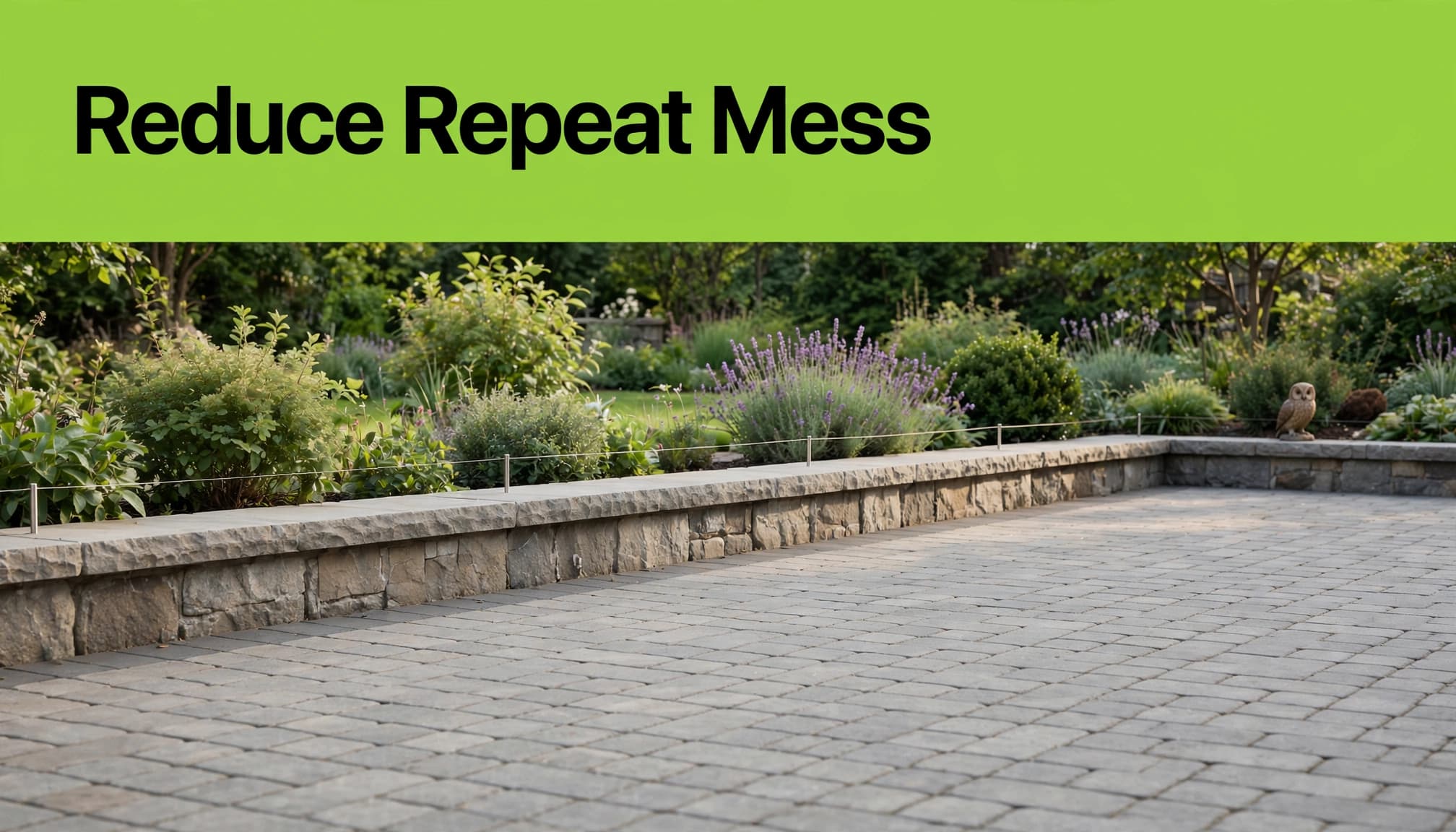
Move bird feeders away from patios and brick driveways, and collect spilled seed. Keep outdoor waste containers closed. The Wisconsin Clean Marina guidebook explains that feeding encourages birds to gather and become regular visitors.
Fake predator birds and owl decoys may help temporarily, but birds often become accustomed to stationary objects. Moving a decoy occasionally may improve its short-term usefulness.
Properly selected bird spikes or deterrent wire can discourage landing on narrow ledges. Spikes can be visually intrusive, so placement matters. Use humane deterrents, and don’t disturb active nests.
Prompt spot cleaning remains useful even when deterrents reduce the problem.
Frequently Asked Questions
Does Dawn Remove Bird Poop Stains?
Dawn or another compatible mild dish soap can remove surface residue and help loosen bird droppings. It doesn’t guarantee complete removal of discoloration absorbed into porous paving.
Use the diluted soap method first, then judge the result after the surface dries. If a mark remains, use a paver-approved organic-stain cleaner instead of repeatedly increasing the soap concentration. More detergent can leave residue that needs additional rinsing.
Can a Garden Hose Wash Sand Out of Paver Joints?
Yes. A concentrated hose jet or prolonged flow can move loose joint sand, particularly where joints are already depleted.
Use a gentle shower or broad spray over the paver faces. Watch for joint material in the runoff, and stop if it collects downstream. Even without a pressure washer, flooding one location can create additional maintenance work. Keep contaminated wash water out of storm drains, pools, and planting beds.
Keep the Surface Clean and the Joints Sound
The dependable approach is to soften, lift, wash, and rinse gently. Stronger treatments should match the paving material and finish.
We recommend judging the result only after the area dries. If a stain remains, choose a compatible treatment rather than stronger pressure.
A successful cleanup leaves both the paver faces and joints in sound condition.