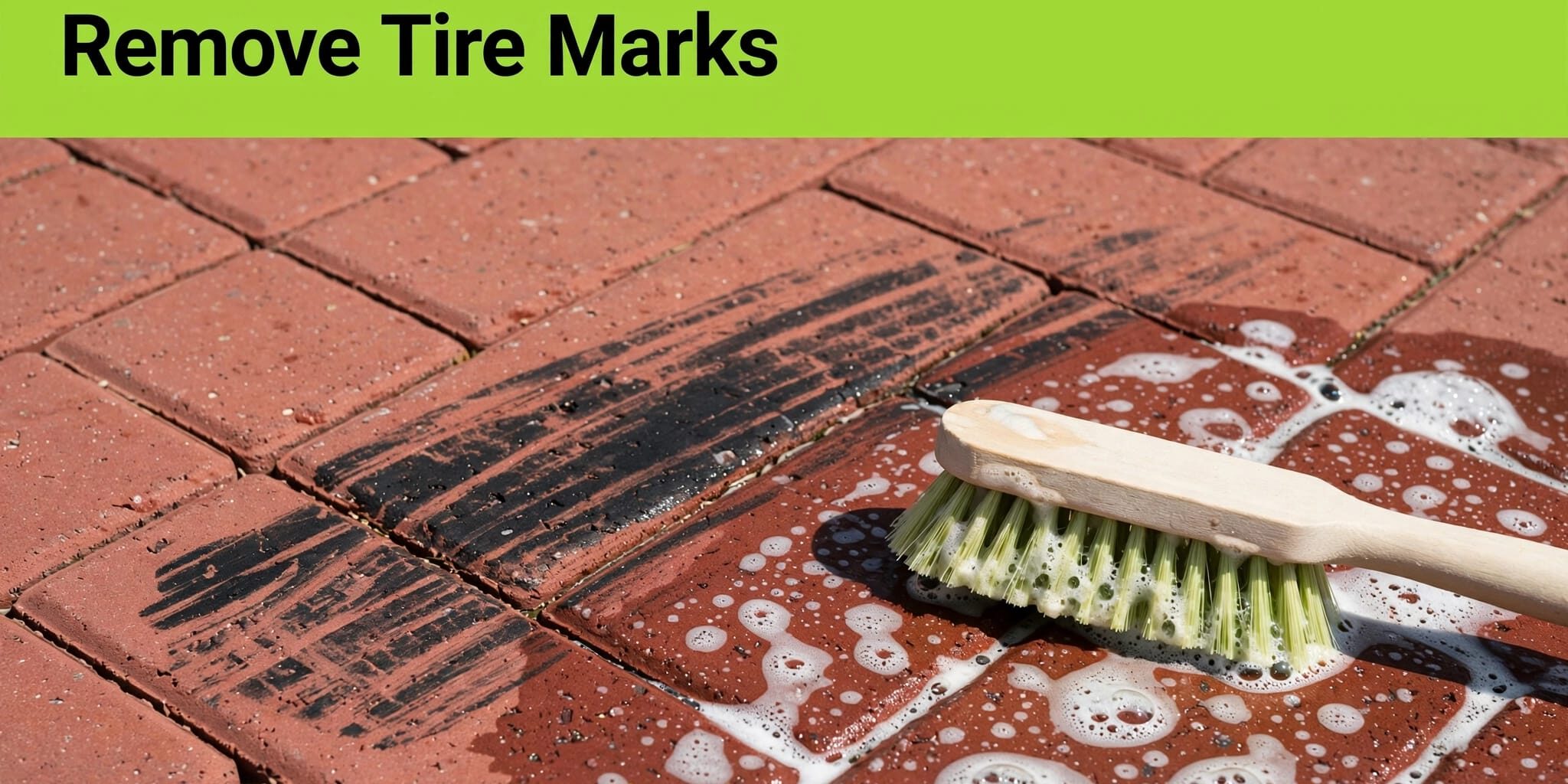
Fresh rubber transfer may respond to mild soap and a nylon brush. For stubborn marks, use a compatible degreaser if needed. We recommend gentle cleaning first, because strong chemicals and excessive pressure can damage the finish and disturb joint sand.
Newly sealed driveways need extra care. A dark mark may point to soft or peeling sealer, which needs a different approach than fresh rubber transfer. Check the sealer’s condition before choosing a treatment.
Why Tire Marks Appear on Brick Driveways
Rubber Residue and Plasticizer Migration
Tire marks can appear where vehicles brake, turn, or park after driving. Heat and friction transfer rubber-related material onto the paving.
Surface Logix attributes some discoloration to plasticizer migration. Heat softens compounds in tire rubber, allowing material to transfer into the paver surface or coating.
A flat black scuff on a firm, intact surface is a reasonable candidate for gentle cleaning. A mark accompanied by peeling, tackiness, or a change in sheen needs a different approach.
Hot Tire Pickup After Sealing
Hot tire pickup involves a coating that softens or loses adhesion beneath vehicle tires. It can leave discoloration, tire impressions, or areas where the coating has lifted.
Black Diamond Coatings’ tire-mark guidance explains that strong sun and hot paving can cause sealer to flash dry. Moisture becomes trapped underneath, and the finish remains soft.
We don’t recommend scrubbing tacky sealer. Keep vehicles off the affected area and arrange an assessment if the finish is lifting or remains soft.
A cleaner may remove rubber residue, but it can’t replace sealer that has pulled away from the pavers.
Choose a Cleaner for the Paver Material
Brick-shaped paving may be fired clay or colored concrete. These materials and any existing sealer can respond differently to the same cleaner.
Start With Mild, Acid-Free Soap
For light surface marks on fully cured sealer, diluted mild soap may be sufficient. Use a stiff nylon or fiber-bristle brush, then rinse thoroughly.
Dawn dishwashing liquid is among the suggestions shared in online cleaning discussions. It may loosen surface grime, but it isn’t a dependable treatment for deeply absorbed residue.
Test any paver-safe cleaner in an inconspicuous area. Check that it’s compatible with both the paving material and its coating. Let it dry, then compare the color, sheen, and texture with the surrounding paving. Stop if the test causes softening, discoloration, or roughness.
Use a Compatible Degreaser for Stubborn Marks
For remaining rubber-related residue, use a degreaser approved for the paver material and coating. Surface Logix identifies Cobble Clean as one option.
Online recommendations also include F9 Grounds Keeper, Karcher tire mark remover, and sodium hydroxide with hot water. These aren’t interchangeable instructions. Harsh acids, solvents, and strong alkaline chemicals can damage coatings or create handling hazards. Hot water doesn’t make an unsuitable cleaner safe.
We don’t recommend improvised caustic mixtures. Follow the selected cleaner’s stated dilution, protective equipment, and contact time.
How to Remove Tire Marks From Brick Pavers
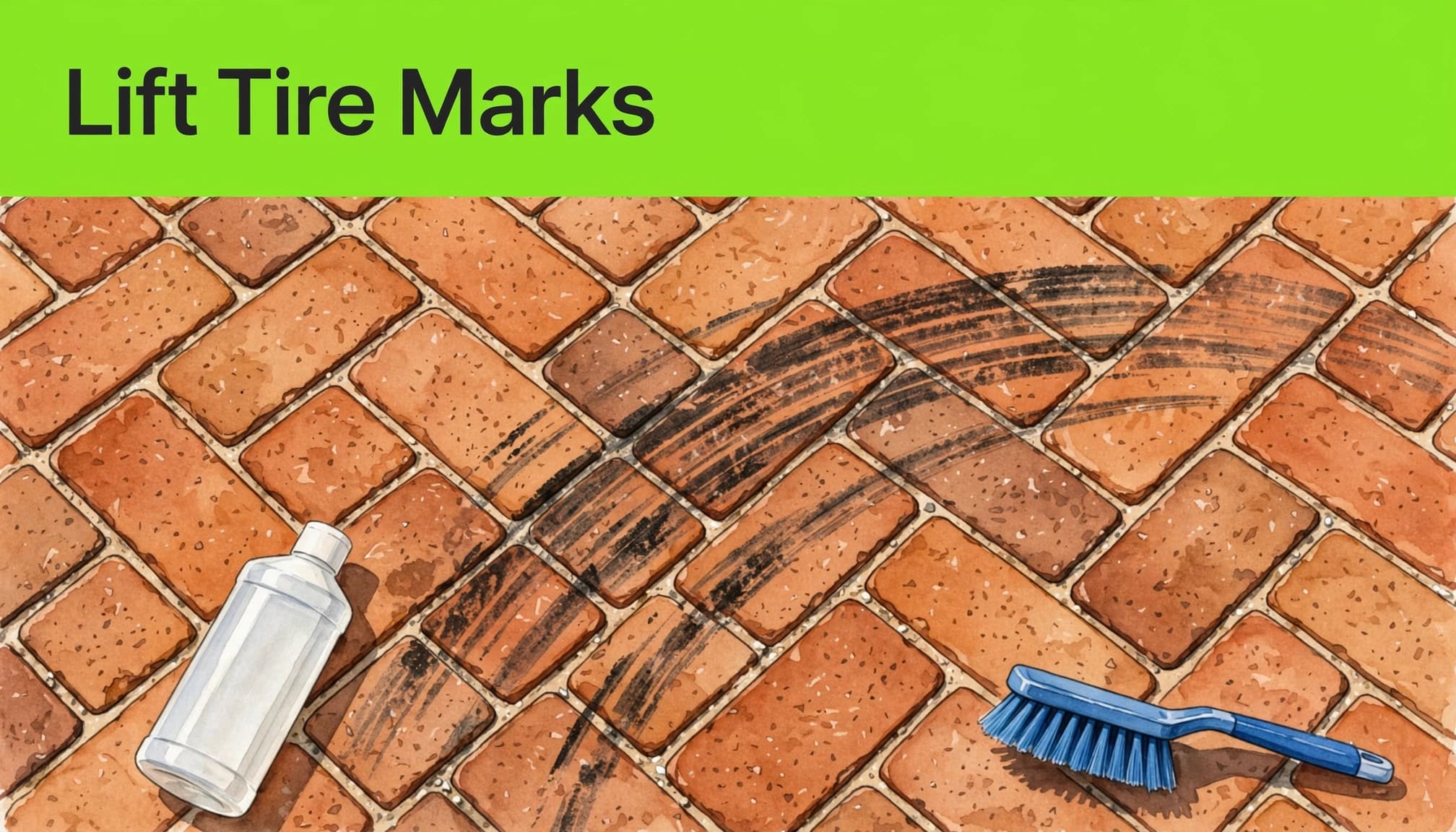
Work during cooler conditions, preferably out of direct sun. Cleaner that dries too quickly can leave residue or affect the finish.
Surface Logix’s paver-cleaning method uses degreaser, a short contact period, circular scrubbing, and thorough rinsing. Follow this controlled sequence:
- Sweep away grit, leaves, and loose debris. Gently dry-brush fresh rubber transfer before using a cleaner.
- Test warm water and mild detergent on an inconspicuous area. Scrub gently, rinse, and let it dry before deciding whether stronger treatment is needed.
- If residue remains, apply the compatible paver-safe cleaner discussed in section 2. Treat a manageable area, and protect nearby plants and surfaces as the product directs.
- Follow the product’s stated contact time. Surface Logix describes about one minute, or up to five minutes for stubborn marks. Don’t let the cleaner dry.
- Scrub in circles with a nylon or fiber-bristle brush. Use lighter strokes near joints. Repeat only as the product directions allow.
- Collect loosened oily residue where practical, then rinse thoroughly. Keep contaminated wash water out of storm drains and inspect the paving after it dries.
Wet paving can hide remaining discoloration. Judge the result only after the treated area has dried completely.
If another permitted treatment produces no improvement, stop rather than increasing chemical strength or scrubbing pressure.
Use Pressure Cleaning Only When Needed
A garden hose may be sufficient after detergent treatment. Only pressure wash if residue remains after gentler cleaning, especially on unsealed, porous paving. Maximum pressure isn’t the starting point.
When using a power washer on brick, use the lowest effective pressure, keep the spray moving, and choose a method suited to the surface and finish. Avoid narrow, concentrated sprays, and don’t direct water into joints.
Surface Logix recommends holding the wand at a 45-degree angle when rinsing, with the spray directed away from people. That angle doesn’t make excessive pressure safe.
Stop if sand starts moving or the paver face changes. After washing, inspect joints and edges before returning the driveway to regular use. Our guidance on cleaning without removing joint sand covers these precautions.
Avoid a wire brush and drill-mounted wire attachments. They can scratch paving and leave metal particles that may rust. We also don’t recommend bleach for tire residue because it can discolor colored concrete or affect sealer.
Prevent Tire Marks After Sealing
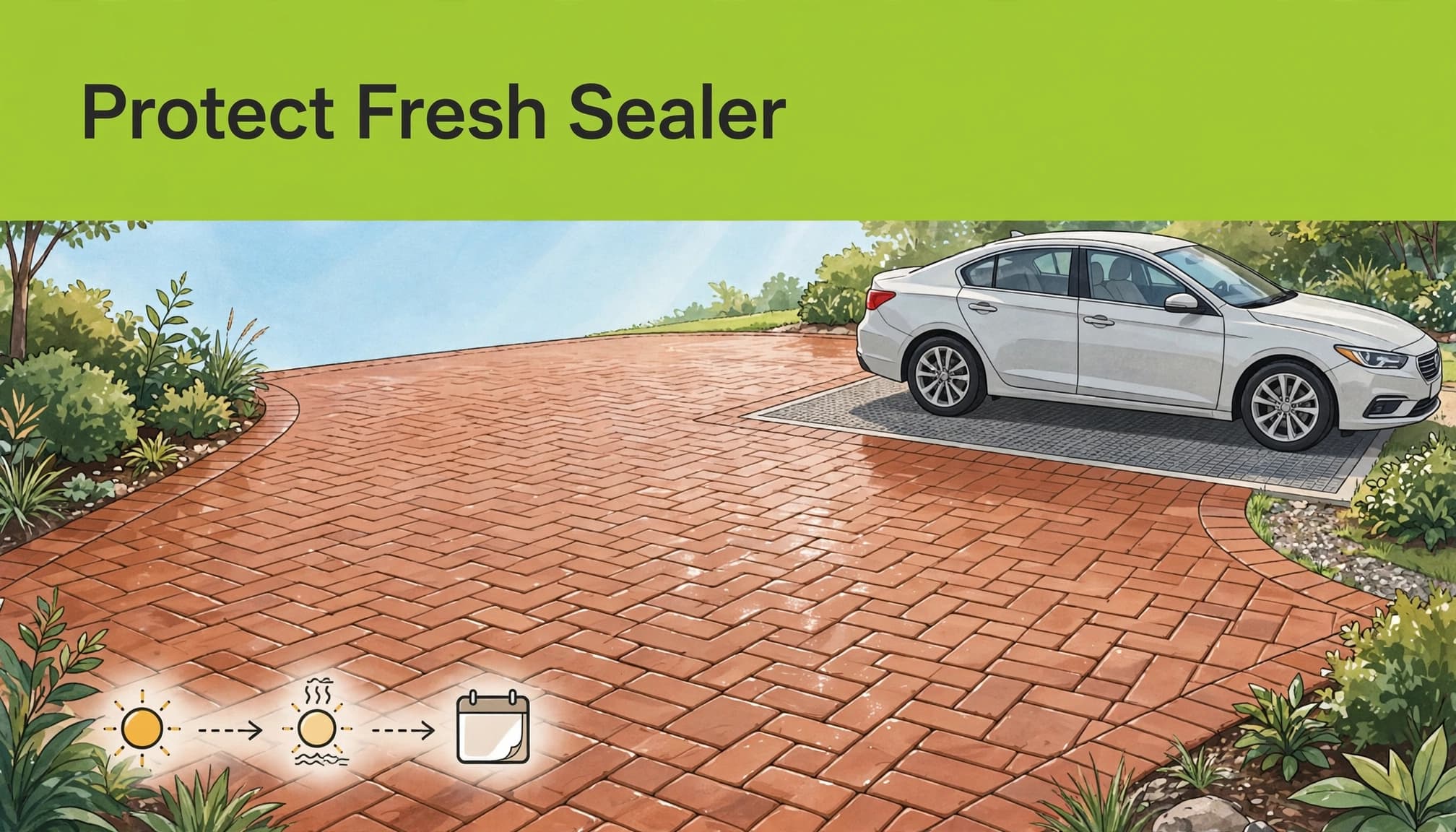
Allow the Full Vehicle-Traffic Cure Period
Black Diamond states that about 90% of sealer curing occurs during the first 24 hours. It says final hardening can take several weeks, particularly in hot, humid weather.
Those figures describe its guidance, not every sealer. Keep vehicles off a newly sealed driveway until the selected paver sealer’s stated cure time has passed. A surface that feels dry may still be vulnerable.
Black Diamond’s separate advice for newly sealed asphalt is at least 48 hours before driving or parking, extended to 72 hours in hotter or more humid conditions. These asphalt figures aren’t universal paver cure times.
In Southwest Florida, high humidity and afternoon rain can affect curing, so include local conditions in maintenance planning.
Prepare Properly and Apply Thin Coats
Sealer belongs on properly prepared paving that meets the product’s moisture requirements. Black Diamond recommends thin coats to reduce excess material sitting on the surface.
Its preparation test uses a dime-to-quarter-size water drop that should absorb in under 30 seconds. It recommends further cleaning when absorption is slower. However, an existing coating or naturally dense material can also slow absorption, so repeated cleaning isn’t always the answer.
Once the sealer has fully cured, avoid turning tires while the vehicle is stationary. Include tire paths and coating condition in your Southwest Florida paver maintenance schedule.
Choose Sealer With Tire Contact in Mind
We recommend a penetrating sealer suited to your paver material when it meets the driveway’s protection needs. Concrete and fired clay can respond differently to treatments, so check the product label for both.
Different sealer types have different limitations.
| Sealer type | Tire-related consideration |
|---|---|
| Acrylic sealer | Forms a surface film that can wear under traffic or retain rubber discoloration. |
| Epoxy coating | Can experience hot tire pickup when adhesion or moisture conditions are unsuitable. |
| Penetrating sealer | Works within the pores rather than relying on a surface film that tires can lift. |
The choice should account for the paving material, existing treatment, and desired appearance.
RadonSeal’s sealer comparison describes acrylic coatings as thinner than a human hair and prone to traffic wear. It also discusses moisture-related hot tire pickup with epoxy.
RadonSeal describes penetrating treatments as immune to coating-related hot tire pickup, resistant to scrubbing and pressure washing, and capable of lasting up to 15 years. These are manufacturer claims, not guarantees for every brick driveway.
A penetrating treatment doesn’t prevent every rubber deposit or make aggressive washing safe. Some water-repellent sealers also provide limited protection against oil.
RadonSeal recommends parking mats and garage runners for tire-contact areas. Use suitable mats only after the finish has fully cured.
Key Takeaways
- Start with compatible mild soap, then use a paver-approved degreaser for remaining tire residue.
- Protect the finish and joints with nylon bristles, controlled rinsing, and the lowest effective pressure.
- Treat soft or peeling sealer as a coating problem before attempting stronger cleaning.
Frequently Asked Questions
Will Tire Marks Fade Without Cleaning?
Some light surface scuffs may become less visible through normal weathering and washing. Embedded discoloration or damaged sealer can remain. We recommend gentle treatment rather than relying on fading.
Can Fully Cured Sealed Pavers Be Easier to Clean?
Yes. Light marks on intact, fully cured sealer may respond to mild detergent because residue remains near the surface. Unsealed paving can hold material in its pores and may need compatible degreaser and controlled pressure washing.
What If Tire Marks Remain After Cleaning?
Let the area dry completely before judging it. If the surface is intact, another label-permitted treatment may help. Stop if the finish becomes cloudy, tacky, rough, or lighter than adjacent paving. Persistent stains or signs of coating damage may warrant professional advice.
Don’t cover remaining marks with another coat of sealer. That can leave the discoloration visible beneath the new finish.
Keep Tire-Mark Removal Gentle and Controlled
The dependable approach is to identify the surface condition, start gently, and increase treatment only when the material allows it. Protecting the pavers and joint sand matters as much as removing the dark mark.
We can help assess stubborn staining, damaged finishes, and paver restoration needs. Contact Us for a FREE Quote when routine cleaning isn’t enough.