A driveway can look great on installation day and still fail early if the foundation is too thin. For Florida properties, the right foundation depth keeps a driveway level, stable, and ready for regular vehicle traffic.
Plan for more than the visible brick pavers. The soil, aggregate base, compaction, edging, and drainage work together to reduce settling, loose pavers, standing water, and costly repairs later.
Key Takeaways
- Most Florida residential driveways need 6 to 8 inches of compacted aggregate base, measured after compaction.
- Weak soil, poor drainage, heavy vehicles, or frequent traffic may require 8 to 12 inches of compacted base.
- Build the base in controlled 2- to 4-inch lifts, compacting each layer before adding the next.
- Use angular crushed aggregate, about 1 inch of bedding sand, suitable pavers, and geotextile fabric where soil conditions require separation.
- Establish a 1% to 2% slope away from structures so water moves away from the home and garage.
Paver Base Depth for Florida Driveways
For most residential Florida driveways, we recommend 6 to 8 inches of compacted aggregate base. The paver base should be measured after compaction, not by the loose material depth before compaction.
Heavier vehicles, frequent traffic, poor drainage, or weak soil often require 8 to 12 inches. Traffic loads vary by vehicle type. Delivery trucks, RVs, trailers, and work vehicles stress pavement more than passenger cars.
Florida generally has fewer freeze-thaw cycles than northern climates, so frost heave is not usually the primary concern. Moisture, drainage, soil strength, and vehicle use matter more for most Florida driveways.
Standard driveway base requirements
A reliable driveway system usually includes these layers:
- Compacted subgrade soil at the bottom of the excavation.
- Geotextile fabric where the soil needs separation and support.
- Crushed limestone, limerock, or dense-graded crushed stone for the structural layer.
- About 1 inch of bedding sand.
- Vehicle-rated driveway pavers, commonly 2 3/8 inches thick for vehicle areas.
Patio pavers and other pedestrian areas generally experience different loads, so their foundation requirements may differ.
This foundation is not a place to cut corners. Sand is useful as a thin leveling layer, but it is not a primary structural layer. Stone dust, loose screenings, and rounded river rock also cannot replace stable, compacted support.
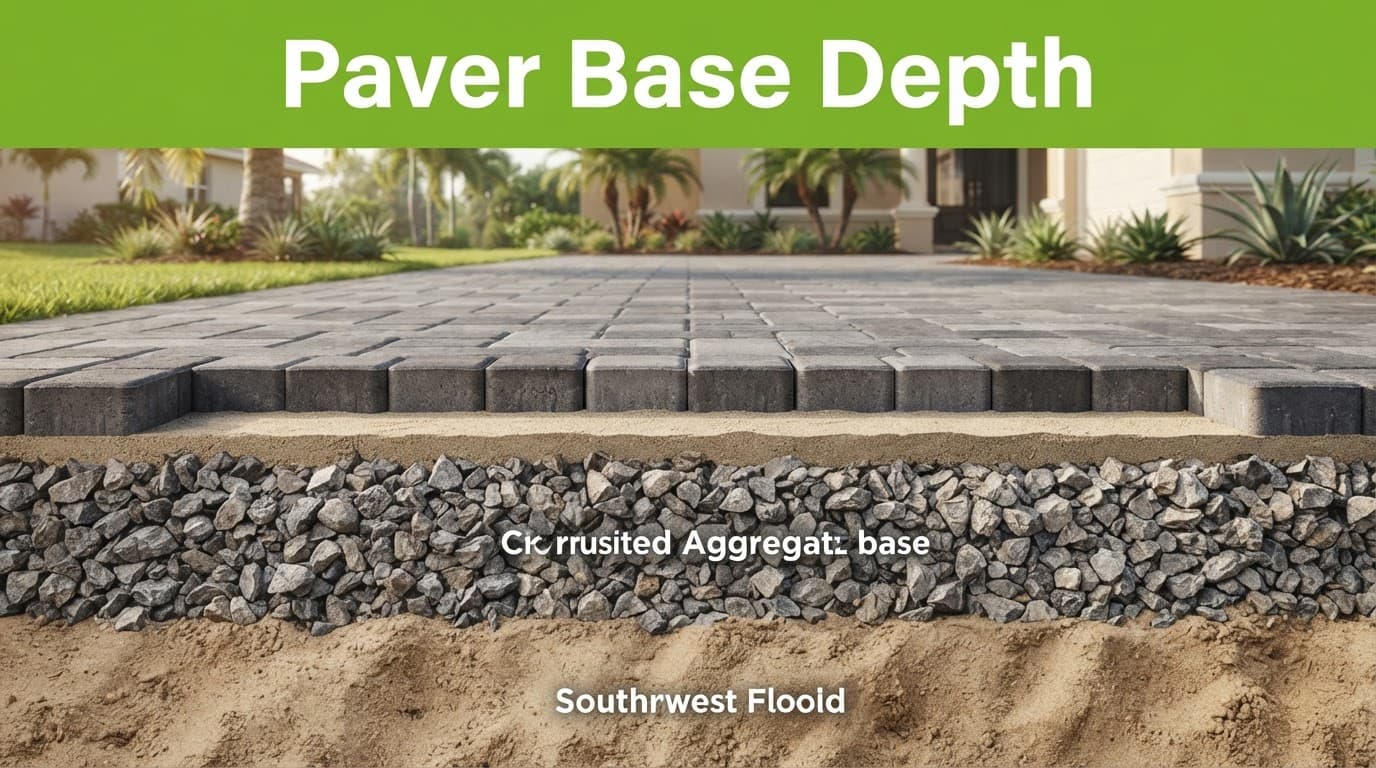
A successful brick paver driveway installation relies on careful paver installation, proper grading, and a compacted foundation. The finished surface only performs as well as the layers below it.
A driveway can have quality pavers and still settle if the foundation is too thin or compacted poorly.
Calculate the Total Excavation Before Digging
The total excavation must include every layer while still ending at the planned driveway height. The excavation depth must accommodate the compacted base, bedding layer, and pavers, while loose aggregate needs extra allowance before compaction.
For a typical 6-inch compacted base and 2 3/8-inch pavers, excavation is often around 9 to 10 inches below the finished surface. Vehicle areas usually require more excavation than pedestrian areas, especially when the base is 8 inches or greater.
A simple depth calculation
Use this basic formula:
Compacted aggregate base + 1 inch of bedding sand + paver thickness = approximate excavation requirement
For example, an 8-inch base, 1-inch bedding layer, and 2 3/8-inch paver call for about 11 3/8 inches of excavation depth. Contractors may allow additional room for grading and fine adjustments.
Final elevation matters as much as depth, so check garage thresholds, sidewalks, and drainage before excavation. A driveway installed too high can hold water near the garage, sidewalk, or home. It can also create an awkward step at the entrance.
Florida roadway standards are written for public work, not residential paver projects. Still, FDOT driveway and drainage standard plans show why grade control and drainage details should be addressed before pavement goes down.
Build the Base in Compact Layers
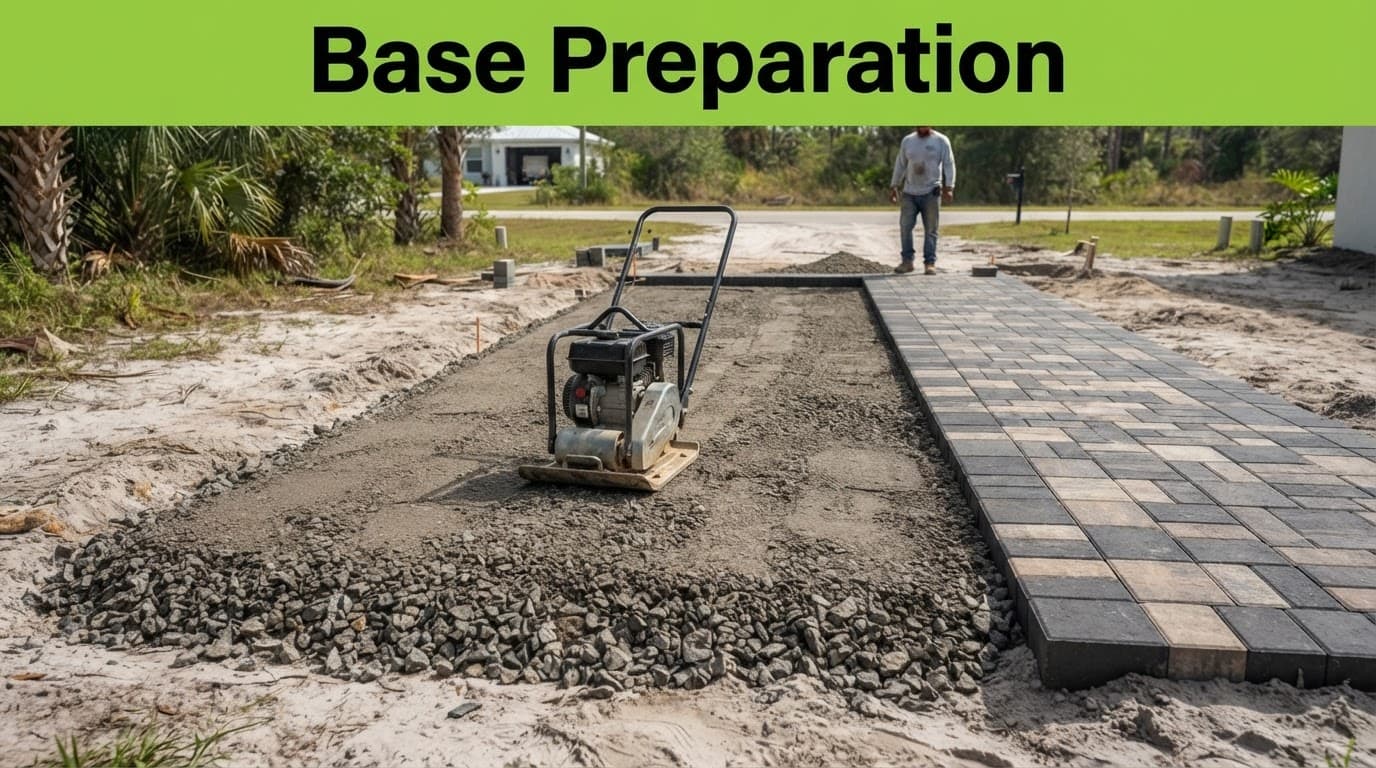
Aggregate must be compacted in thin lifts. We typically place the base material in controlled 2- to 4-inch compaction lifts, then compact each lift before adding the next.
Trying to compact the entire depth at once leaves soft areas below the surface. The top may feel firm, but lower material can shift when vehicles pass over it. Run a compactor over each lift before placing the next.
Use the right base material
Florida driveways need angular aggregate that locks together during compaction. Crushed limestone and limerock are common choices, while a dense-graded base provides a tightly graded, drainable structure.
Native sand may be common in Southwest Florida, but it shouldn’t replace the angular aggregate. Loose sand moves under repeated loads and can migrate into the base, while compacted crushed stone remains stable over time.
Pinellas County roadway specifications include graded aggregate and crushed concrete base requirements for roadway work. The same basic principle applies to a paver driveway: use material that compacts into a firm, consistent layer.
After the aggregate base is fully compacted, place approximately 1 inch of bedding sand before setting the pavers. Don’t use extra bedding sand to correct a poorly graded or poorly compacted foundation.
When geotextile fabric is needed
Separation fabric is a good choice over weak, wet, sandy, or clay soil, as well as recently disturbed soil. It goes between the aggregate base and subgrade soil.
The fabric helps keep aggregate from sinking into the soil. It also keeps soil from mixing upward into the aggregate. That separation supports better drainage and helps the base stay intact.
During base preparation, we inspect the existing ground before aggregate placement. Soil stability determines the recommended depth, not just the paver type. A stable, well-compacted site may work with a 6-inch base, while soft or poorly draining areas need more support. These separation and drainage principles also help address movement concerns in colder regions. Frost heave isn’t usually the main Florida design issue.
Drainage Should Be Built Into the Base
Florida rain can expose a poor installation quickly. Water should move away from the home, garage, and other structures, with the drainage slope established in the subgrade and aggregate base, not only in the pavers.
A slope of 1% to 2% away from structures is a practical target for most driveways. At 2%, the surface drops about 1/4 inch per foot.
In areas with clay soil or poor drainage, grading and water management need extra care. Saturated soil and settlement are generally bigger Florida concerns than frost heave, but water still needs to move away from structures.
Protect the edges and joints
Strong edge restraints limit lateral movement under vehicle traffic. Joint sand also helps lock the pavers together once the surface is compacted.
After installation, regular sweeping and prompt attention to stains help protect the finished driveway. If you need brick pressure cleaning later, avoid aggressive pressure that removes joint sand or leaves uneven cleaning marks. Professional cleaning should include a plan to restore sand where needed.
Brick driveways can remain attractive for years, but drainage and base preparation need to be correct from the start.
Frequently Asked Questions
How deep should a paver base be for a Florida driveway?
Most residential Florida driveways need 6 to 8 inches of compacted aggregate base. Weak soil, poor drainage, heavy vehicles, or frequent traffic may require 8 to 12 inches.
Is the paver base depth measured before or after compaction?
The recommended base depth is measured after the aggregate has been compacted. Loose material needs additional depth to account for compaction and should be installed in controlled lifts.
Can sand replace the aggregate base under driveway pavers?
No, bedding sand is only a thin leveling layer and should not replace the structural aggregate base. Loose sand can shift or migrate under repeated vehicle loads.
Do Florida driveways need geotextile fabric?
Geotextile fabric can help over weak, wet, sandy, clay, or recently disturbed soil. It separates the subgrade from the aggregate and helps prevent the base from sinking or mixing with the soil.
What slope should a Florida paver driveway have?
A slope of 1% to 2% away from the home, garage, and other structures is a practical target for most driveways. At a 2% slope, the surface drops about 1/4 inch per foot.
A Foundation Built for Florida Conditions
The right paver base depth for a Florida driveway is usually 6 to 8 inches of compacted aggregate base. Sites with weak soil, drainage problems, or heavier traffic may need 8 to 12 inches. In Florida, wet-soil settlement and drainage typically matter more than frost heave.
A properly built paver base supports the finished surface and helps prevent movement. Proper excavation, suitable base material, compaction, and drainage help limit settlement. This foundation gives driveway pavers the support they need to stay level under everyday use.