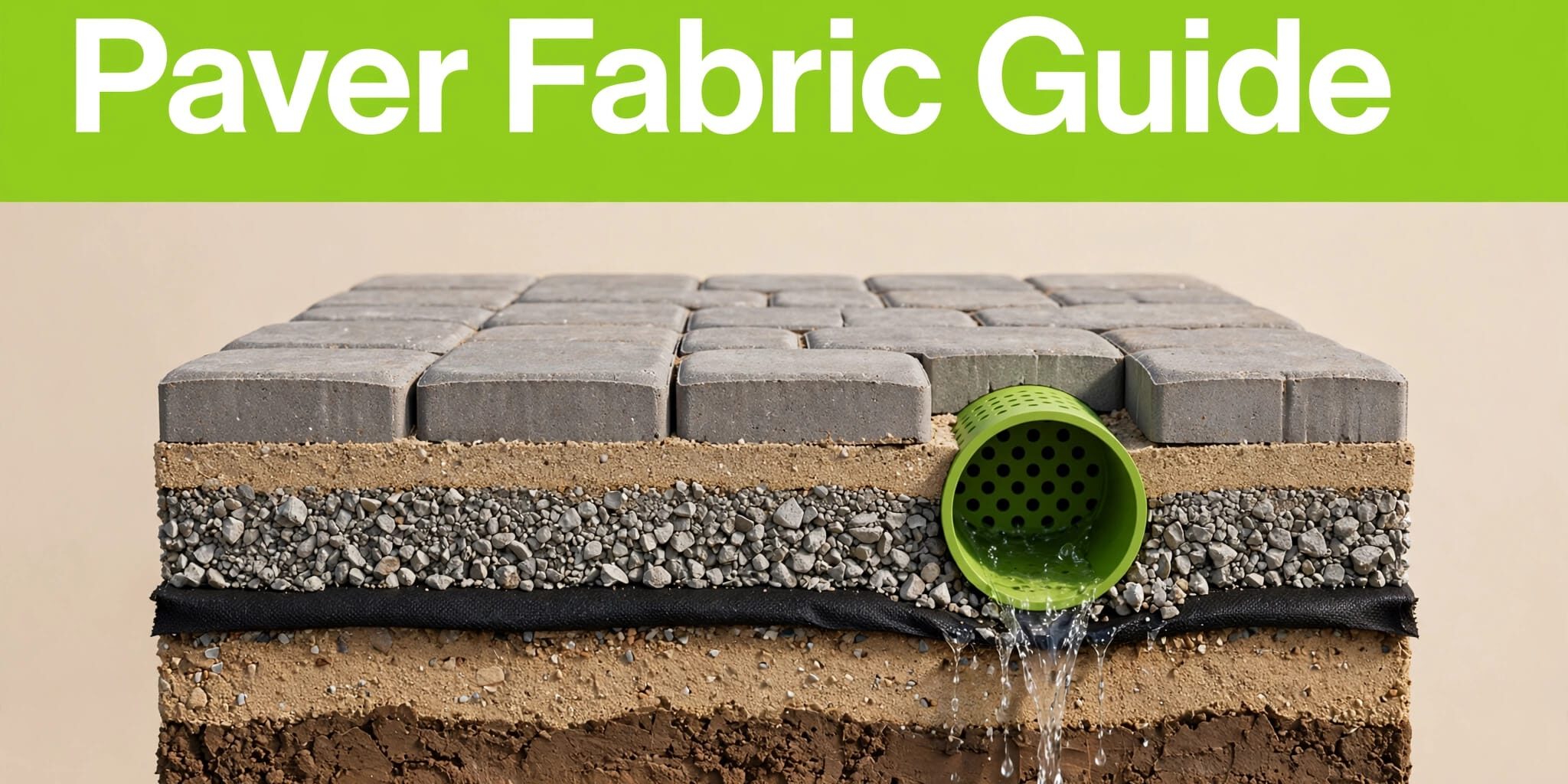
A paver surface can look good on installation day and still settle early if the base below it isn’t prepared correctly. For geotextile fabric pavers, the right answer depends on the soil, drainage, and planned use of the area.
Florida’s heavy rain, variable fill, clay pockets, and soft sandy areas can affect a paver base. Fabric is helpful on many sites, but it isn’t required under every brick patio or walkway. The work starts with an honest look at the ground below the pavers.
Key Takeaways
- Paver underlayment fabric separates unstable soil from the crushed aggregate layer.
- It is most useful over wet, weak, sandy, clay, silty, or recently disturbed subgrade.
- The separated, compacted aggregate forms the paver base that supports the finished surface.
- Proper slope, compaction, edge restraints, and drainage still matter on every project.
Geotextile Fabric Pavers: When Florida Sites Need It
Geotextile fabric provides subgrade separation, keeping fine soil from mixing into the paver base. That mixing can reduce support and thickness in the base material placed above it, while slowing drainage. A paver underlayment fabric, such as a permeable non woven geotextile, suits fine or unstable soil. The FHWA gravel roads guide uses the same basic principle for aggregate placed over weaker subgrade soils.
Stable, Well-Drained Sand
A firm, well-compacted sandy site may not need fabric under a paver patio or beneath walkway pavers. The soil still needs to be graded and compacted before aggregate is placed.
We don’t add fabric automatically because Florida soil is sandy. A stable test area, good drainage, and light foot traffic can support a properly built base without it.
Landscape fabric isn’t automatically suitable for structural separation beneath pavers. A weed barrier is intended primarily to limit vegetation, while construction geotextile is selected for filtration, separation, and project-specific performance.
Soft Soil, Fill, and Wet Areas
Fabric is a good choice where the subgrade feels soft, pumps under equipment, holds water, or contains clay, silt, or loose fill. It keeps aggregate from sinking into the soil and helps prevent soil from working upward into the base.
Fabric supports soil stabilization by separating layers, but it can’t correct saturated soil, buried organic material, or poor grading. Those conditions need to be removed or corrected before base work begins. Standing water also requires a functioning drainage system, not fabric alone. Our paver soil preparation guide explains why the subgrade deserves the same attention as the finished surface.
Choosing Woven or Non-Woven Fabric
The fabric type should match soil conditions and project design. Construction-grade geotextile differs from landscape fabric, which is commonly sold as a garden-bed weed-control product rather than a structural paver separation layer.
Non-Woven Geotextile for Separation
A non woven geotextile is selected when filtration and water passage are priorities. Polypropylene fabric is common in construction geotextiles, but each nonwoven material has specific performance requirements.
This setup can work well beneath patios, walkways, and other areas with variable soil. Retaining wall drainage and filtration are different applications. Water still needs a planned route away from the home, garage, and pool deck.
Woven Geotextile for Added Support
Woven geotextile fabric can provide more strength where soil needs stabilization. Its tensile strength may suit driveways, pumping sand, clay, loose fill, or regular vehicle use.
Where weak subgrades need aggregate stabilization, geogrid reinforcement may provide another option for structural support. Selection should follow site conditions or engineering requirements.
The fabric isn’t the structural base or bedding material. Crushed limestone, limerock, or dense-graded stone carries the load after proper compaction, and product strength alone doesn’t replace adequate base thickness. Road construction follows similar separation principles, but residential paver design still requires site-specific judgment.
Where the Fabric Belongs in the Paver System
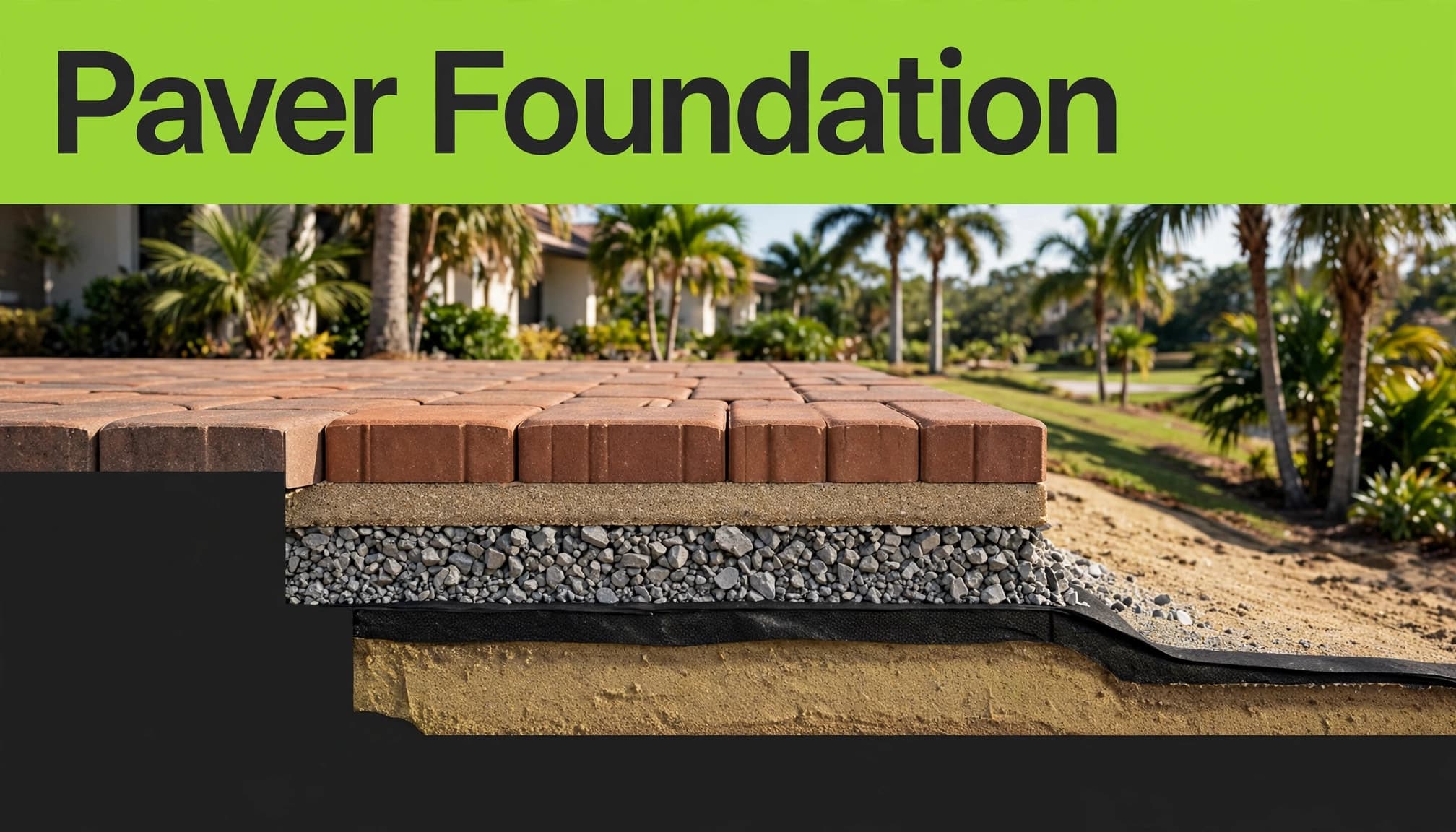
Geotextile fabric, also called paver underlayment fabric, goes on the prepared subgrade below the aggregate. It doesn’t normally go between the paver base and bedding layer.
The same separation and aggregate approach is also used in road construction. Residential sites don’t automatically follow commercial design standards, however.
Correct Layer Order
A dependable brick paver installation usually follows this order:
- Compacted native soil or corrected subgrade.
- Geotextile fabric where separation is needed.
- Compacted paver base made from suitable, durable base material.
- A thin, evenly screeded bedding material, typically about 1 inch of sand.
- Brick pavers, joint sand, and secure edge restraints.
Joint filling may use polymeric sand only when the manufacturer recommends it for the specific paver system.
A non woven geotextile can provide filtration and separation where permeability matters. It doesn’t replace structural aggregate or provide the entire load-bearing capacity.
The bedding layer is for leveling. It shouldn’t correct a soft base or poor slope.
Installation Details That Matter
Verify the excavation level, stable subgrade, and drainage slope before placing fabric. For many Florida driveways, a 1% to 2% fall away from structures is a practical planning range. Confirm local requirements, site drainage, and any engineering specifications.
Lay the fabric flat across the bottom and sides of the excavation. Overlap seams at least 12 inches, with wider overlaps for weaker soil or poor drainage. Place seams so water moves with the overlap, not against it.
Add aggregate in loose 2- to 4-inch lifts. Compact each lift with a plate compactor before placing the next. The Florida driveway paver base depth guide can help you plan the right compacted depth for the soil and traffic.
Where geotextile separation alone isn’t enough, geogrid reinforcement may help distribute loads. Geogrid and geotextile perform different functions, so project-specific design may be needed.
Fabric protects the base from soil contamination. It doesn’t replace drainage, base depth, or compaction.
Why Brick Driveways Need More Care
Brick driveways carry repeated vehicle loads, so they need a properly designed, sufficiently thick paver base. Many residential Florida driveways may use 6 to 8 inches of compacted aggregate as a planning example. Weak soil, heavy vehicles, poor drainage, RVs, trailers, and delivery traffic can require 8 to 12 inches or more. These ranges aren’t substitutes for site-specific engineering, soil evaluation, or local requirements. Repeated loads and drainage deserve the deliberate planning used in road construction, but driveway needs depend on actual site conditions and standards. Florida sites generally face rainfall, saturation, erosion, and weak fill more often than repeated freeze thaw cycles.
A driveway underlayment may help separate the system from unstable or wet soil when site conditions justify it. For higher loads or weaker soils, a heavy duty fabric may be considered, but selection should follow filtration, puncture, tensile, and site requirements rather than marketing labels. Fabric cannot make a thin base suitable for trucks, RVs, trailers, or delivery vehicles. The base material must be suitable for the project and compacted with equipment, such as a plate compactor, that fits the aggregate, access, and project size. Edge restraints also need firm support so pavers don’t spread and open the joints.
After installation, careful brick pressure cleaning helps protect the finished surface. Excessive pressure can remove joint sand, including polymeric sand, so installation and renewal should follow the paver and sand manufacturer’s instructions, with joints checked after cleaning.
Frequently Asked Questions
Does geotextile fabric let water through?
Yes. A quality non woven geotextile is generally permeable, allowing water to pass while separating soil from aggregate. Always check the product specifications, since filtration performance varies between products.
It shouldn’t be replaced with plastic sheeting, which can trap water beneath the pavers. Permeable pavers are a separate designed system, and the EPA’s permeable pavement overview explains that it needs compatible soils, open-graded aggregate, outlet or infiltration planning, and a complete drainage system.
What happens if fabric is skipped?
On stable, well-drained soil, skipping fabric may be reasonable. On weak or wet soil, aggregate can mix with the subgrade, causing contamination and reducing base thickness.
That can lead to low spots, rutting, loose pavers, and washed-out joints.
A Strong Base Supports the Finished Surface
Geotextile fabric is needed when soil requires separation and added support. A non woven geotextile may help where filtration and soil separation are needed, but fabric choice depends on the subgrade and project requirements.
The best results come from the right paver base depth, quality aggregate, careful compaction, secure edges, and a clear water path. Brick pavers perform well when the foundation is built for the conditions below them. Fabric isn’t universal, and landscape weed-control products aren’t interchangeable with construction geotextiles. Site-specific conditions and local requirements should control the final design.